Retirement Portfolio Management in a New Investment Era
For decades, retirement portfolio management followed a relatively predictable formula: a mix of public equities and investment-grade bonds designed around a traditional 60/40 allocation model. Equities provided growth. Bonds provided income and stability. Investors accumulated assets during their working years and gradually transitioned toward income-oriented portfolios in retirement.
That framework is now under pressure.
Persistent inflation volatility, elevated interest-rate sensitivity, rising public market correlations, demographic shifts, geopolitical instability, and growing concerns around retirement longevity have forced investors to rethink how portfolios are constructed. At the same time, alternative investments once reserved primarily for institutions—including private credit, real estate-backed debt, infrastructure, and private income strategies—have become increasingly accessible to accredited investors and retirement-focused portfolios.
The result is a fundamental shift in how affluent investors, family offices, financial advisors, and retirement-focused investors approach portfolio construction.
Retirement portfolio management in 2026 is no longer solely about maximizing returns. It is increasingly centered around:
- Income durability
- Capital preservation
- Inflation resilience
- Diversification beyond public markets
- Tax efficiency
- Reduced volatility
- Long-term purchasing power protection
Institutional investors have already adapted. According to BlackRock, private market allocations among institutional portfolios have steadily increased over the past decade as investors seek diversification and income sources outside traditional fixed income markets. Preqin estimates global private capital assets under management will exceed $18 trillion by 2027, driven significantly by private credit and alternative income strategies.
Individual investors are beginning to follow the same playbook.
For accredited investors and retirement-focused individuals, the modern retirement portfolio increasingly includes exposure to alternative investments, private lending, secured income strategies, and self-directed retirement accounts that provide access to investments beyond stocks and mutual funds.
This article explores how retirement portfolio management is evolving, why diversification has become more important than ever, and how income-focused alternative investments may complement long-term retirement strategies.
What Is Retirement Portfolio Management?
Direct Answer
Retirement portfolio management is the process of structuring, monitoring, and adjusting an investment portfolio to support long-term retirement goals, income generation, risk management, capital preservation, and sustainable wealth accumulation.
It typically involves balancing multiple asset classes, including:
- Equities
- Bonds
- Cash equivalents
- Real estate
- Alternative investments
- Private credit
- Income-producing assets
- Tax-advantaged retirement accounts
Modern retirement portfolio management increasingly focuses on generating reliable income streams while reducing exposure to excessive volatility and inflation-related erosion of purchasing power.
Why Traditional Retirement Models Are Being Reevaluated
The Decline of the Traditional 60/40 Portfolio
For years, the classic 60% stock / 40% bond portfolio served as a foundational retirement strategy. However, structural market shifts have exposed weaknesses in relying exclusively on public markets.
Several macroeconomic realities have contributed to this reassessment:
1. Inflation Risk
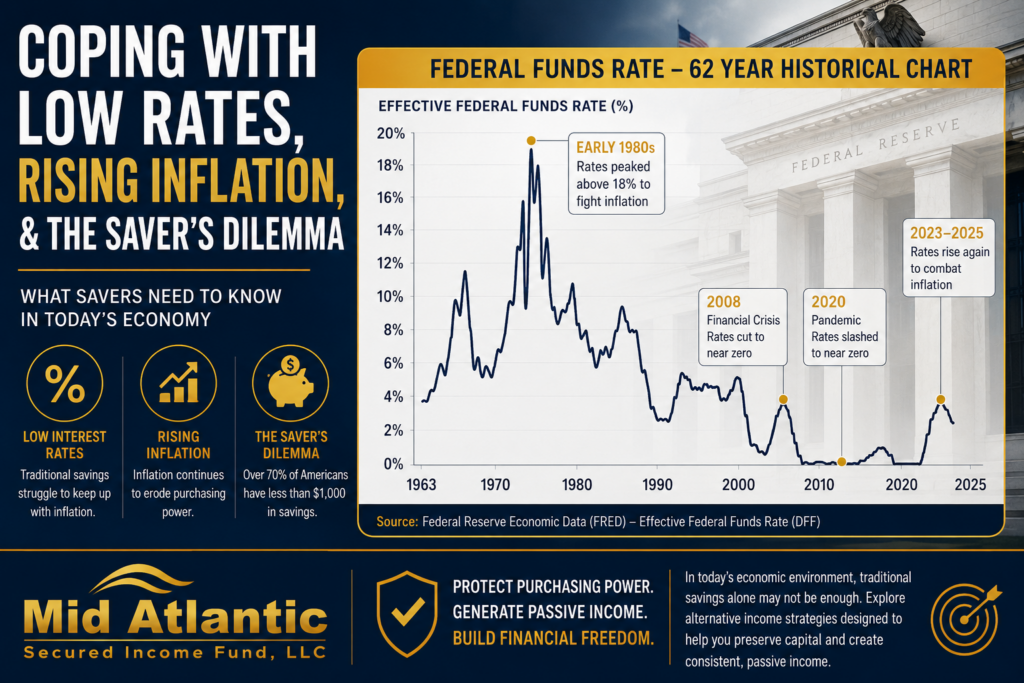
The U.S. experienced its highest inflationary environment in decades between 2021 and 2023. While inflation has moderated, elevated price levels continue to impact retirees disproportionately because retirement income must maintain purchasing power over long periods.
According to the U.S. Bureau of Labor Statistics, cumulative inflation materially increased living costs for healthcare, housing, insurance, and essential services.
Retirees relying solely on fixed bond yields often face declining real returns after inflation.
2. Bond Volatility
Historically, bonds provided stability during equity downturns. However, rising interest rates created unusual volatility in traditional fixed income markets.
According to Morningstar and Bloomberg Fixed Income Index data, many bond portfolios experienced historically poor performance during the recent rate cycle.
This challenged the assumption that traditional bonds alone can fully stabilize retirement portfolios.
3. Longevity Risk
Americans are living longer than previous generations.
According to the Social Security Administration:
- A 65-year-old today has a meaningful probability of living into their 90s.
- Many retirement plans must support 25–35 years of withdrawals.
This increases the need for durable income-producing investments capable of sustaining long-term cash flow.
4. Public Market Correlation
Periods of simultaneous equity and bond declines have highlighted the importance of non-correlated assets.
Institutional investors increasingly use private markets and alternative investments to diversify risk exposures and smooth return profiles.
The Rise of Alternative Investments in Retirement Portfolios
What Are Alternative Investments?
Alternative investments refer to assets outside traditional publicly traded stocks and bonds.
These may include:
- Private credit
- Real estate debt
- Infrastructure
- Private equity
- Real estate-backed lending
- Structured income products
- Hedge strategies
- Asset-backed lending
For retirement-focused investors, income-oriented alternatives have become particularly attractive because they may provide:
- Diversification
- Contractual cash flows
- Reduced public market correlation
- Asset-backed collateral structures
- Potentially enhanced income generation
Why Private Credit Has Gained Attention
Private credit has emerged as one of the fastest-growing institutional asset classes globally.
According to Preqin and BlackRock research:
- Global private credit AUM surpassed $1.7 trillion.
- Institutional investors continue increasing allocations.
- Insurance companies, pension funds, and family offices increasingly use private lending strategies for income-focused mandates.
What Is Private Credit?
Private credit involves non-bank lending directly to businesses, real estate projects, or borrowers through privately structured loans.
Examples include:
- Senior secured real estate loans
- Bridge lending
- Commercial real estate debt
- Asset-backed lending
- Receivables financing
- Construction lending
- Mezzanine debt
Unlike public bonds, private credit investments are typically negotiated directly between lenders and borrowers.
Why Investors Use Secured Income Strategies
Direct Answer
Secured income investments are strategies backed by collateral or underlying assets designed to generate recurring income while emphasizing capital preservation and downside protection.
Examples may include:
- Senior secured real estate debt
- First-lien lending
- Asset-backed credit facilities
- Real estate-backed private credit
- Collateralized commercial loans
These structures often appeal to retirement-focused investors because they prioritize:
- Income generation
- Asset backing
- Contractual payments
- Senior position in the capital stack
- Diversification from equities
How Retirement Portfolios Are Evolving
Modern Retirement Portfolio Construction
Today’s retirement portfolios increasingly blend traditional and alternative investments.
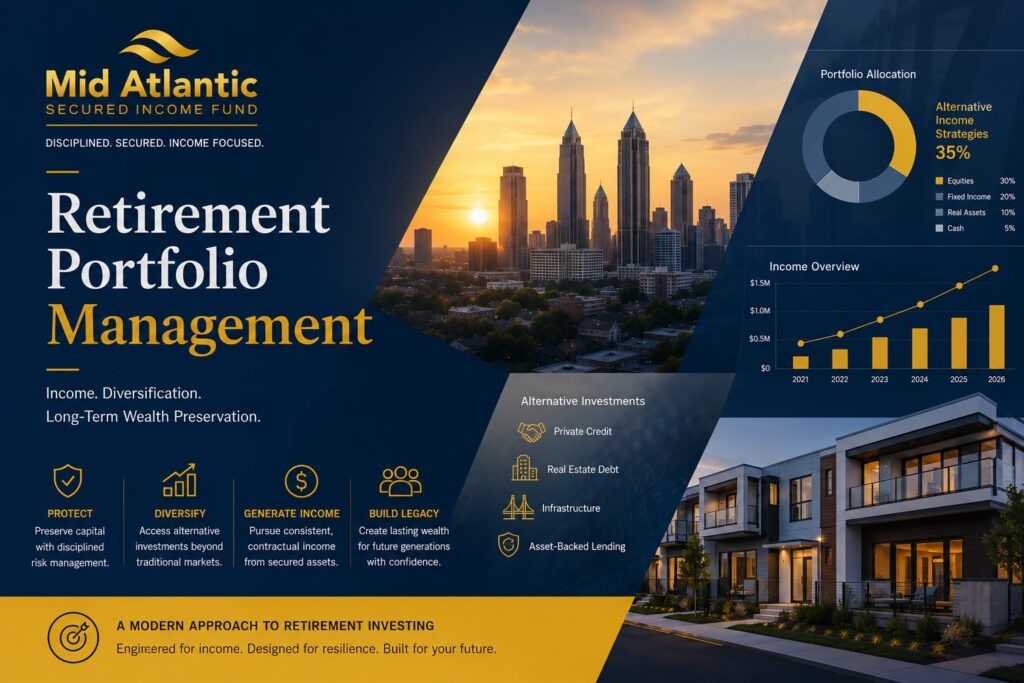
A modern diversified portfolio may include:
|
Asset Class |
Portfolio Objective |
|---|---|
|
Public Equities |
Long-term growth |
|
Investment-Grade Bonds |
Stability and liquidity |
|
Private Credit |
Income generation |
|
Real Estate Debt |
Inflation sensitivity |
|
Cash & Treasuries |
Liquidity reserves |
|
Alternative Income Strategies |
Diversification |
|
Infrastructure |
Long-term cash flow |
|
SDIRA Alternative Assets |
Tax-advantaged diversification |
The Growing Role of Self-Directed IRAs (SDIRAs)
What Is a SDIRA?
A Self-Directed IRA (SDIRA) is a retirement account that allows investors to access a broader range of investments beyond traditional stocks, bonds, and mutual funds.
SDIRAs may allow investments in:
- Real estate
- Private placements
- Private credit
- Real estate debt funds
- Alternative investments
- Secured income strategies
This flexibility has made SDIRAs increasingly popular among accredited investors seeking broader diversification opportunities.
Choosing the Right SDIRA Custodian
Selecting an experienced SDIRA custodian is an important consideration for investors exploring alternative retirement investments.
The Mid Atlantic Secured Income Fund works with several established SDIRA custodians and preferred provider partners, including:
These custodians help facilitate self-directed retirement investing while supporting IRS compliance and alternative asset administration.
Factors Investors Evaluate When Selecting a Custodian
Administrative Experience
Investors often prioritize custodians experienced in alternative assets and private investments.
Fee Structure
Custodians may vary significantly in:
- Annual fees
- Transaction fees
- Asset-based fees
- Setup costs
Investment Flexibility
Some custodians support a broader range of alternative assets than others.
Technology & Reporting
Modern investors increasingly value:
- Online dashboards
- Streamlined transaction processing
- Digital document management
Customer Support
Alternative investments often require more operational coordination than public market assets.
Are Debt Funds Safer Than Stocks?
Direct Answer
Debt funds are not inherently “safe,” but some investors view certain secured debt strategies as potentially lower-volatility alternatives to equities because they may prioritize income generation and capital structure seniority over equity upside participation.
Key distinctions include:
|
Equity Investments |
Secured Debt Investments |
|---|---|
|
Ownership interest |
Lending relationship |
|
Unlimited upside potential |
Income-focused returns |
|
Higher volatility |
Often lower volatility |
|
Last in repayment priority |
May hold senior claims |
|
Greater sensitivity to market sentiment |
Often tied to contractual payments |
However, all investments carry risk, including:
- Illiquidity risk
- Credit risk
- Market risk
- Interest rate risk
- Economic downturn exposure
Why Accredited Investors Use Alternative Income Strategies
Affluent investors and family offices increasingly allocate capital toward alternative income strategies for several reasons:
Diversification Beyond Public Markets
Private assets may behave differently than public equities during periods of volatility.
Income Generation
Many alternative credit strategies focus on recurring distributions or contractual payments.
Inflation Considerations
Certain real estate-backed and floating-rate investments may provide better inflation resilience than fixed-rate traditional bonds.
Capital Preservation Focus
Senior secured lending strategies often emphasize downside protection through collateral structures.
Reduced Correlation
Alternative assets may reduce overall portfolio concentration risk.
Behavioral Finance and Retirement Investing
One of the greatest threats to retirement success is often behavioral rather than mathematical.
Periods of market volatility frequently lead investors to:
- Sell during downturns
- Overreact to headlines
- Abandon long-term strategies
- Concentrate portfolios excessively
Diversified income-oriented portfolios may help some investors remain disciplined by reducing reliance on short-term public market performance.
Institutional investors have long understood that portfolio structure influences investor behavior.
Income Versus Growth in Retirement
The Shift From Accumulation to Distribution
As investors approach retirement, priorities often shift:
Early Career
Focus tends to center on:
- Growth
- Aggressive accumulation
- Equity exposure
Pre-Retirement & Retirement
Focus increasingly shifts toward:
- Income stability
- Volatility reduction
- Wealth preservation
- Sustainable withdrawals
This transition often drives greater interest in:
- Fixed income alternatives
- Private credit
- Secured lending
- Real estate-backed investments
Tax-Efficient Retirement Portfolio Strategies
Taxes can materially impact long-term retirement outcomes.
Strategies commonly used by affluent investors include:
Tax-Deferred Growth
Traditional IRAs and SDIRAs allow tax-deferred compounding.
Roth Structures
Qualified Roth distributions may provide tax-free retirement income.
Asset Location Strategies
Investors often place higher-yield investments inside tax-advantaged accounts.
Alternative Investments in SDIRAs
Some accredited investors use SDIRAs to access private investments while maintaining tax advantages.
Risks Investors Should Understand
No investment strategy is risk-free.
Alternative investments involve important considerations, including:
Illiquidity
Private investments may not offer daily liquidity.
Valuation Complexity
Private assets may be more difficult to price than publicly traded securities.
Credit Risk
Borrowers may default on obligations.
Real Estate Market Exposure
Property values and lending environments can fluctuate.
Manager Risk
Investment outcomes depend significantly on underwriting discipline and portfolio management.
Investors should carefully review offering documents, risk disclosures, and investment objectives.
Strategic Retirement Portfolio Management Principles
1. Diversification Matters
Diversification remains foundational to long-term risk management.
2. Income Stability Is Increasingly Important
Many investors seek investments that prioritize recurring cash flow.
3. Inflation Cannot Be Ignored
Portfolios must account for long-term purchasing power erosion.
4. Alternative Assets Are Becoming Mainstream
Institutional trends increasingly influence individual investor behavior.
5. Risk Management Often Matters More Than Maximizing Returns
Protecting capital during downturns can significantly improve long-term outcomes.
How The Mid Atlantic Secured Income Fund Fits Within a Diversified Strategy
The Mid Atlantic Secured Income Fund focuses on real estate-backed secured lending strategies designed around:
- Income generation
- Asset-backed lending
- Senior secured positions
- Capital preservation discipline
- Diversification beyond traditional public markets
The Fund also maintains relationships with established SDIRA custodians and preferred provider networks to support investors seeking retirement-focused alternative investment access.
Potential investors should review all offering materials and evaluate whether private investments align with their individual objectives, liquidity needs, and risk tolerance.
FAQ Section
What is retirement portfolio management?
Retirement portfolio management is the process of constructing and maintaining an investment portfolio designed to support long-term retirement income, capital preservation, diversification, and sustainable wealth accumulation.
Why are alternative investments becoming more popular in retirement portfolios?
Alternative investments may provide diversification, income generation, and reduced correlation to public markets, which has become increasingly attractive during periods of inflation and market volatility.
What is a secured income investment?
A secured income investment is typically backed by collateral or underlying assets and designed to generate recurring income while emphasizing downside protection and capital preservation.
What is a SDIRA?
A Self-Directed IRA is a retirement account that allows investors to access alternative investments such as real estate, private credit, and other non-traditional assets.
Are private credit investments risky?
Yes. Private credit investments involve risks including illiquidity, borrower defaults, economic downturns, and valuation complexity.
Why do family offices invest in private credit?
Family offices often use private credit for diversification, income generation, inflation sensitivity, and portfolio risk management.
Can retirement portfolios include real estate-backed investments?
Yes. Many investors use real estate-backed debt or private real estate investments as part of diversified retirement strategies.