
Why Financial Security Looks Different in Modern Markets
For decades, traditional portfolio construction followed a relatively simple framework: stocks for growth, bonds for stability, and cash for liquidity. That model defined wealth management for generations.
But the investment landscape has changed dramatically.
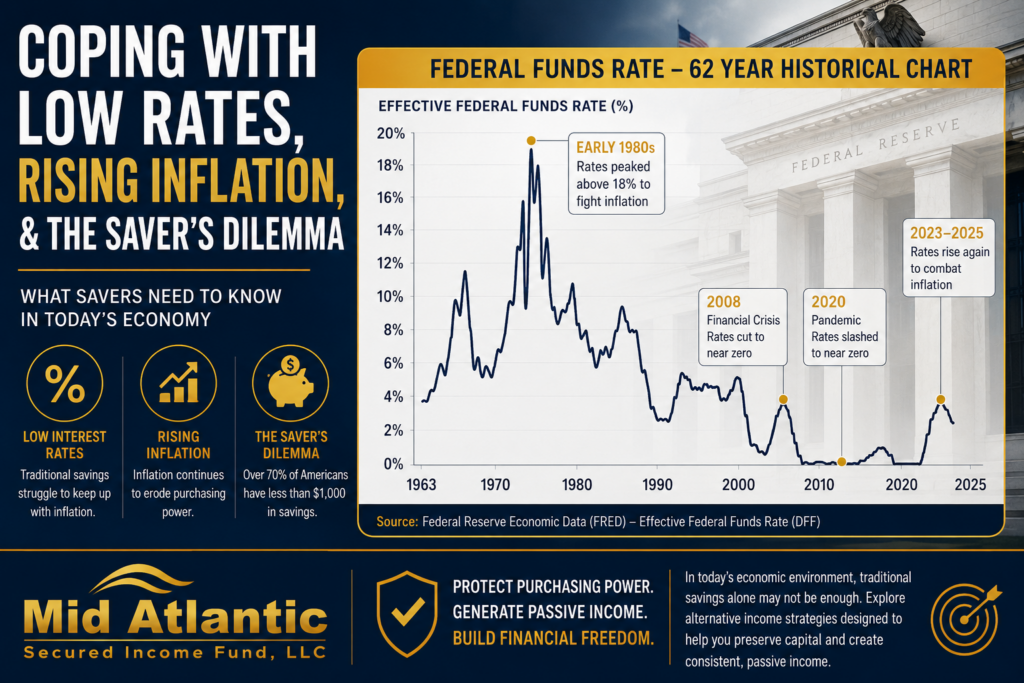
Persistent inflation, elevated interest rates, geopolitical instability, rising government debt levels, banking-sector stress, and increased market volatility have forced affluent investors to rethink how financial security is achieved and maintained.
According to the Federal Reserve’s 2024 Survey of Consumer Finances, high net worth households increasingly allocate capital beyond public equities and traditional fixed income into private markets, real assets, structured credit, infrastructure, and alternative income strategies.
Modern wealth preservation is no longer solely about maximizing returns.
It is increasingly about:
- protecting purchasing power,
- generating resilient cash flow,
- reducing volatility,
- improving downside protection,
- and maintaining flexibility across market cycles.
As a result, diversified portfolios have evolved from simple allocation models into sophisticated institutional-style investment frameworks designed to withstand uncertainty.
For many affluent investors, financial security today is built through:
- diversified income streams,
- alternative investments,
- private credit,
- asset-backed lending,
- real estate exposure,
- disciplined risk management,
- and strategic portfolio construction.
What Is a Diversified Portfolio?
Direct Answer
A diversified portfolio is an investment strategy that spreads capital across multiple asset classes, industries, geographic regions, and risk profiles to reduce concentration risk and improve long-term risk-adjusted returns.
Diversification helps investors:
- lower overall portfolio volatility,
- reduce exposure to any single investment,
- improve income consistency,
- and enhance resilience during economic downturns.
Institutional investors have relied on diversification for decades because market leadership constantly changes across economic cycles.
Why High Net Worth Investors Prioritize Diversification
Concentration Creates Vulnerability
One of the most common risks facing affluent investors is over concentration.
Many investors unknowingly accumulate excessive exposure to:
- a single stock,
- one industry,
- one business,
- commercial real estate,
- or traditional equity markets.
History repeatedly demonstrates the dangers of concentrated wealth.
Examples include:
- the technology crash of 2000,
- the financial crisis of 2008,
- regional banking volatility in 2023,
- and sharp bond market drawdowns during rising-rate environments.
According to JPMorgan Asset Management research, diversification remains one of the most reliable methods for reducing portfolio volatility over long investment horizons.
High net worth investors increasingly recognize that:
preserving wealth often matters more than maximizing speculative upside.
The Institutional Shift Toward Alternative Investments
Why Traditional Portfolios Are Evolving
Institutional capital has increasingly shifted toward private markets over the last decade.
According to Preqin, global private capital assets under management surpassed $14 trillion in recent years and are projected to continue expanding meaningfully through the decade.
This shift is being driven by several factors:
1. Public Market Volatility
Public equities can experience significant short-term fluctuations driven by:
- interest rates,
- earnings revisions,
- geopolitical shocks,
- and investor sentiment.
2. Bond Market Challenges
Traditional bonds historically served as portfolio stabilizers.
However, rising interest rates exposed vulnerabilities in long-duration fixed income portfolios, particularly during 2022’s historic bond market decline.
3. Demand for Income
Affluent investors increasingly seek:
- recurring income,
- predictable distributions,
- and lower-correlation investments.
4. Inflation Concerns
Inflation erodes purchasing power over time.
Real assets and floating-rate lending strategies may offer better inflation resilience compared to fixed-rate long-duration securities.
Core Components of a Diversified High Net Worth Portfolio
Public Equities
Public equities continue to play an important role in long-term wealth creation.
Equities provide:
- growth potential,
- liquidity,
- and participation in economic expansion.
However, sophisticated investors often diversify equity exposure across:
- sectors,
- market capitalizations,
- domestic and international markets,
- and factor-based strategies.
Fixed Income
Fixed income investments help stabilize portfolios and generate income.
These may include:
- Treasury securities,
- municipal bonds,
- investment-grade corporate debt,
- and structured credit.
However, many affluent investors now supplement traditional bonds with alternative income strategies.
Private Credit and Asset-Backed Lending
What Is Private Credit?
Private credit refers to non-bank lending strategies where capital is deployed directly into loans outside traditional public bond markets.
Private credit has become one of the fastest-growing segments of institutional investing.
According to BlackRock and Preqin research:
- private credit assets under management have grown rapidly over the last decade,
- institutional investors increasingly view private lending as a core portfolio allocation,
- and demand continues to rise as banks reduce certain forms of commercial lending.
Why Investors Are Turning to Private Credit
Private credit strategies may offer:
- contractual income streams,
- lower correlation to public markets,
- floating-rate structures,
- collateral-backed lending,
- and enhanced yield potential.
Examples include:
- real estate-backed lending,
- senior secured loans,
- receivables financing,
- bridge lending,
- and specialty finance.
Many sophisticated investors favor senior secured lending structures because:
- loans may be collateralized by tangible assets,
- underwriting standards can be more conservative,
- and capital structures may prioritize downside protection.
How Real Estate Supports Portfolio Stability
Real Assets as Portfolio Anchors
Real estate has historically served as a foundational component of diversified portfolios.
According to NAREIT research, commercial real estate has historically provided:
- income generation,
- inflation sensitivity,
- and diversification benefits relative to traditional equities.
High net worth investors often allocate to:
- multifamily housing,
- industrial real estate,
- residential development,
- stabilized income properties,
- and real estate-backed credit.
Why Cash Flow Matters More Than Ever
The Rise of Income-Oriented Investing
Many affluent investors are increasingly prioritizing:
- recurring cash flow,
- passive income generation,
- and yield durability.
This shift is particularly important for:
- retirees,
- business owners,
- family offices,
- and investors nearing wealth preservation stages.
Income-focused strategies may help reduce reliance on:
- forced asset sales,
- volatile market timing,
- and speculative growth assumptions.
Are Debt Funds Safer Than Stocks?
Direct Answer
Debt funds are generally considered lower volatility investments than equities because they often prioritize income generation and contractual repayment structures rather than capital appreciation alone.
However, risk levels vary significantly depending on:
- underwriting quality,
- leverage,
- collateral,
- loan structure,
- borrower quality,
- and economic conditions.
Senior secured lending strategies may offer additional downside protection because investors occupy higher positions in the capital stack.
That said, no investment is risk-free.
Understanding Risk Mitigation in Diversified Portfolios
Diversification Does Not Eliminate Risk
A common misconception is that diversification eliminates losses.
In reality:
- diversification manages risk,
- reduces concentration exposure,
- and improves resilience across economic cycles.
Institutional portfolio construction focuses heavily on:
- correlation management,
- downside protection,
- liquidity planning,
- and income durability.
How Family Offices Allocate Capital
Family offices increasingly resemble institutional asset allocators.
Modern family office portfolios often include:
- public equities,
- private equity,
- private credit,
- infrastructure,
- real estate,
- structured income strategies,
- and cash management solutions.
According to Deloitte family office research:
- alternative investments now represent substantial portions of many ultra-high-net-worth portfolios,
- particularly among investors focused on long-term wealth preservation.
Inflation and the Search for Real Returns
Why Inflation Changes Portfolio Construction
Inflation remains one of the greatest long-term threats to financial security.
Even moderate inflation can materially erode purchasing power over time.
This has led investors to increasingly seek:
- real assets,
- floating-rate structures,
- income-producing investments,
- and alternative yield strategies.
Real estate-backed lending and private credit have attracted attention because many structures may adjust more effectively during rising-rate environments.
Behavioral Finance and Wealth Preservation
Emotional Discipline Matters
Market volatility often creates emotional decision-making.
Behavioral finance research consistently shows that investors:
- panic during downturns,
- chase performance during rallies,
- and underperform due to poor timing decisions.
Diversified portfolios can help reduce emotional investing by:
- lowering volatility,
- improving income consistency,
- and creating more stable expectations.
Sophisticated investors frequently emphasize process over prediction.
The Role of Accredited Investors in Private Markets
Why Accredited Investors Access Alternative Investments
Accredited investors may gain access to private market investments unavailable to the general public.
These can include:
- private credit funds,
- real estate-backed lending,
- private equity,
- structured income strategies,
- and institutional lending opportunities.
Many affluent investors use private markets to:
- diversify beyond traditional stocks and bonds,
- improve yield potential,
- and enhance portfolio resilience.
Portfolio Construction in 2026
Modern Diversification Is Multi-Dimensional
Sophisticated portfolios today are diversified across:
- asset classes,
- liquidity profiles,
- duration exposure,
- income sources,
- geographic markets,
- and economic sensitivities.
Institutional portfolio construction increasingly emphasizes:
- capital discipline,
- downside protection,
- recurring cash flow,
- and inflation resilience.
Why Secured Lending Has Gained Attention
Asset-Backed Investing and Risk Management
Secured lending strategies are attracting increased investor interest because:
- collateral may provide downside protection,
- underwriting standards may be more conservative,
- and investments may prioritize income generation over speculation.
Examples include:
- first-lien real estate loans,
- bridge lending,
- construction financing,
- receivables-backed lending,
- and asset-backed specialty finance.
For many investors, these strategies represent:
- alternative income opportunities,
- diversification benefits,
- and potential portfolio stabilization tools.
How The Mid Atlantic Fund Approaches Income-Focused Investing
The Mid Atlantic Secured Income Fund emphasizes:
- disciplined underwriting,
- asset-backed lending,
- real estate-focused collateral structures,
- and income-oriented investment strategies.
The fund’s broader philosophy aligns with institutional trends emphasizing:
- downside protection,
- diversification,
- conservative risk management,
- and long-term income generation.
Rather than pursuing speculative growth alone, many modern investors increasingly prioritize:
- resilience,
- predictability,
- and capital preservation.
The Future of Wealth Preservation
Why Diversification Remains Essential
Economic cycles will continue to evolve.
Interest rates, inflation, technology disruption, geopolitical risk, and demographic changes will continue shaping investment markets.
However, one principle has remained remarkably durable across generations of institutional investing:
Diversification remains one of the most important foundations of long-term financial security.
Sophisticated investors increasingly understand that wealth preservation is not built on a single investment.
It is built through:
- disciplined allocation,
- strategic diversification,
- prudent risk management,
- and resilient income generation.
FAQ Section
What is a diversified portfolio?
A diversified portfolio spreads investments across multiple asset classes and strategies to reduce concentration risk and improve long-term portfolio resilience.
Why do high net worth individuals diversify?
Affluent investors diversify to:
- reduce volatility,
- preserve capital,
- improve income consistency,
- and lower exposure to individual market risks.
What are alternative investments?
Alternative investments include:
- private credit,
- real estate,
- hedge funds,
- infrastructure,
- and private equity.
These investments often have lower correlation to public markets.
Is private credit risky?
Private credit carries risk, including borrower defaults and illiquidity. However, certain strategies may offer downside protection through collateral-backed structures and conservative underwriting.
Why are investors moving beyond traditional bonds?
Rising interest rates, inflation concerns, and bond market volatility have caused many investors to seek diversified income alternatives.
How do accredited investors use private markets?
Accredited investors often allocate capital to:
- private lending,
- real estate-backed investments,
- private equity,
- and structured income strategies.
What role does real estate play in diversification?
Real estate may provide:
- income generation,
- inflation sensitivity,
- diversification benefits,
- and tangible asset exposure.