
A great deal of capital is sitting in traditional income vehicles that no longer deliver what many accredited investors need – meaningful yield, lower correlation to public markets, and clearer downside protection. That is why the question what is private credit investing has moved from a niche institutional topic to a practical portfolio discussion.
At its core, private credit investing means providing capital through privately negotiated loans rather than buying publicly traded bonds or equities. The lender may be a private fund, family office, insurance company, or other institutional capital source. The borrower may be a business, a real estate investor, or a developer seeking financing that banks cannot or will not provide on the required timeline or terms.
What makes private credit distinct is not just that it is private. It is that the investment outcome depends heavily on loan structure, borrower quality, collateral coverage, and servicing discipline. For investors focused on income and capital preservation, those details matter more than the label.
What Is Private Credit Investing in Practice?
In practice, private credit is a broad category of non-bank lending. It can include corporate direct lending, asset-based lending, mezzanine debt, specialty finance, and real estate-backed loans. Each segment has a different risk profile, duration, and source of repayment.
For many income-oriented accredited investors, the most understandable form is asset-backed private credit. In that model, investor capital is pooled or deployed into loans secured by specific collateral. In a real estate-backed strategy, that collateral is typically residential or commercial property. The investor is not buying the property and taking on operating risk. Instead, the investor is financing the loan and relying on the borrower’s payments and the collateral value as protection.
This distinction matters. Equity-style real estate investing depends on appreciation, lease-up, market timing, and property execution. Private real estate credit depends first on repayment ability and second on collateral recovery if the loan does not perform as expected.
Why Private Credit Has Grown
Private credit has expanded partly because traditional banks have become more constrained. Following tighter capital and regulatory standards, many banks have reduced exposure to certain types of construction lending, bridge financing, transitional assets, and smaller middle-market loans. Federal Reserve data and broader banking industry reporting have repeatedly shown tightening in lending standards during periods of economic uncertainty.
When banks pull back, borrowers still need capital. Developers need construction financing. Investors need bridge loans to acquire or stabilize assets. Businesses need working capital tied to receivables. Private lenders step into that gap, often pricing loans to reflect the speed, complexity, and flexibility required.
For investors, that supply-demand imbalance can create attractive income opportunities. But the opportunity is only as strong as the underwriting behind it. Higher coupons alone do not make a sound investment. The real question is whether the lender is being paid appropriately for the risk it is taking.
Where Returns Come From
Private credit returns generally come from contractual interest payments, origination fees, exit fees, or other negotiated lending economics. Unlike equity investments, where returns may depend on future growth or multiple expansion, private credit is designed around scheduled cash flow.
That predictability is one reason many accredited investors consider the space. If a loan is underwritten properly and serviced closely, income can be generated through borrower payments rather than market appreciation. In a short-duration strategy, capital may also be recycled more frequently, which can be useful when rates and credit conditions change.
Still, yield should never be viewed in isolation. A 12 percent loan at an aggressive loan-to-value ratio is not automatically better than a 9 percent loan with stronger collateral, lower leverage, and a more experienced borrower. In private credit, downside discipline often determines long-term results more than headline return targets.
The Role of Collateral and Senior Position
One of the most important questions in evaluating what is private credit investing is whether the loan is secured and where it sits in the capital stack. A first-position secured loan has a very different risk profile than subordinated debt or unsecured exposure.
In real estate-backed private credit, first-position mortgage loans are often favored by investors who prioritize principal protection. If the borrower defaults, the senior lender has the first claim on the collateral proceeds, subject to legal process and workout costs. That does not eliminate risk, but it can materially improve recovery prospects compared with unsecured or junior capital.
Collateral coverage also matters. Conservative loan-to-value ratios provide a cushion against valuation changes, project delays, cost overruns, or market softening. Data from sources such as CoreLogic and the Mortgage Bankers Association can be useful in understanding regional property trends, delinquency patterns, and construction-related pressures, all of which affect credit outcomes.
A disciplined lender does not rely on collateral value alone. It underwrites borrower experience, liquidity, guarantor strength, project feasibility, exit strategy, and local market conditions. But strong collateral and a senior lien position are still central risk controls.
How Private Credit Differs From Public Fixed Income
Private credit is often compared with corporate bonds, Treasuries, or public high-yield debt. The comparison is useful, but only up to a point.
Public fixed income generally offers daily pricing, broad market access, and greater liquidity. Private credit usually offers less liquidity, less frequent pricing, and more underwriting complexity. Investors are giving up some flexibility in exchange for potential yield enhancement, structural protections, and reduced mark-to-market volatility.
That last point deserves nuance. Lower visible volatility does not mean lower economic risk. It may simply mean the investment is not being repriced every day on a public exchange. The real test is asset quality, portfolio construction, and the manager’s ability to handle stress scenarios.
For that reason, sophisticated investors often evaluate private credit less like a traded security and more like a lending business. They want to know how loans are sourced, how they are underwritten, how defaults are managed, and how performance has held up across cycles.
What Risks Investors Should Pay Attention To
Private credit can be attractive, but it is not risk free. The key risks include borrower default, collateral impairment, liquidity constraints, underwriting errors, servicing failures, and manager concentration. In a real estate strategy, additional risks can include construction delays, title issues, changing local market conditions, and refinance uncertainty.
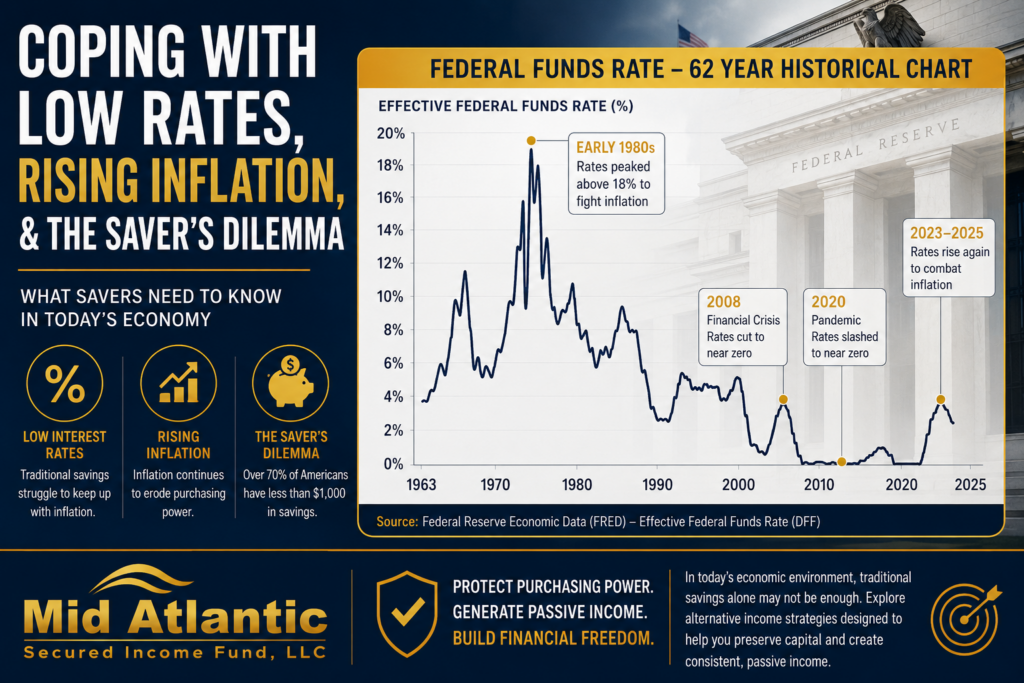
Interest rate conditions also affect outcomes, though not always in obvious ways. Higher rates can improve yields on newly originated loans, but they can also pressure borrower debt service and slow transaction volume. Short-duration private credit strategies may adapt more quickly to changing rates than long-duration fixed-income investments, but that benefit depends on active origination and disciplined reinvestment.
Manager selection is often the largest variable. Two private credit funds may operate in the same general market yet produce very different results because one stretches on leverage, chases yield, or loosens covenants, while the other maintains conservative structures and active oversight.
What to Look for in a Private Credit Manager
For accredited investors, due diligence should focus on process before performance. Track record matters, but how that track record was achieved matters more.
Start with underwriting standards. Ask whether loans are senior secured, what typical loan-to-value ratios look like, how borrower liquidity is assessed, and whether repayment depends on a realistic exit. Then review operational capacity. A private credit manager should be able to originate, document, service, monitor, and if necessary work out loans internally or through experienced specialists.
It is also worth examining portfolio construction. Concentration by geography, borrower, property type, or loan purpose can increase risk. So can overly long duration in a changing rate environment. Transparency around reserves, default history, recovery experience, and distribution policy is equally important.
In the real estate-backed segment, some investors prefer managers focused on short-term first-position loans because the structure is easier to analyze. The thesis is straightforward: lend against tangible collateral, maintain conservative leverage, and prioritize current income with risk controls at the center. That approach will not fit every investor, but it is often aligned with those seeking stability over speculation.
Is Private Credit Right for Every Portfolio?
Not necessarily. Private credit may be appropriate for accredited investors who can tolerate reduced liquidity, understand private placements, and want income-producing exposure outside the public markets. It may be less suitable for investors who need daily access to capital or who are uncomfortable evaluating manager-specific risk.
The category itself is also too broad for blanket conclusions. Direct lending to operating companies is different from distressed debt. Mezzanine lending is different from first-lien real estate credit. Even within real estate lending, a ground-up construction loan carries different risks than a stabilized bridge loan secured by income-producing property.
That is why the right question is not simply what is private credit investing. The better question is what kind of private credit, under what terms, managed by whom, and backed by what protections.
For investors who value high current income, tangible collateral, and underwriting discipline, private credit can serve a clear role within a broader alternative allocation. The most durable results tend to come from strategies that respect the unglamorous parts of lending – careful structure, conservative leverage, constant monitoring, and a willingness to pass on deals that do not meet the standard. That is usually where confidence is earned.