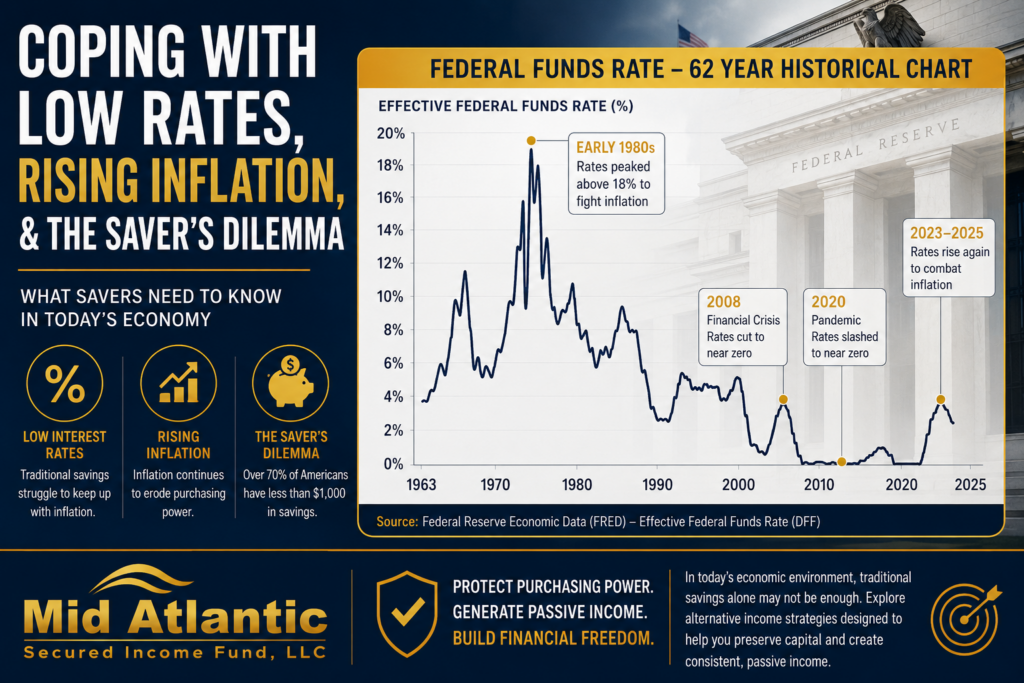

For high-net-worth individuals (HNWIs), preserving wealth can become just as important as growing it. After years of elevated inflation, market volatility, regional banking instability, and rapidly changing interest rates, many affluent investors are rethinking traditional portfolio allocations and looking for investment options that prioritize stability, diversification, downside protection, and predictable income.
Historically, wealthy investors leaned heavily on public equities, bonds, and traditional fixed-income strategies. However, recent market cycles exposed weaknesses in many “safe” investments. In 2022, long-duration U.S. Treasury bonds experienced one of the worst drawdowns in decades as rising interest rates significantly reduced bond values. Meanwhile, inflation continued eroding purchasing power despite higher yields.
Today, many accredited investors are shifting toward:
- private credit
- real estate-backed lending
- alternative income investments
- asset-backed strategies
- diversified passive income solutions
The goal is no longer simply “chasing returns.” The focus has become building resilient portfolios capable of generating income while managing risk across multiple market environments.
Why High-Net-Worth Investors Are Reassessing Traditional Fixed Income
For decades, bonds and traditional fixed-income products were considered the foundation of conservative wealth management. But the modern environment has changed dramatically.
Between inflation pressures and interest-rate volatility, many traditional bond portfolios suffered meaningful losses during recent market cycles. Investors learned an important lesson:
an investment can generate income while still losing significant principal value.
This is especially true for publicly traded fixed-income products that fluctuate daily with market sentiment and interest rate changes.
As a result, HNWIs are increasingly seeking:
- lower correlation to stock market volatility
- private market opportunities
- tangible asset backing
- income-generating investments
- alternative diversification strategies
According to recent alternative investment industry research, allocations to private credit and alternative investments among affluent investors continue to rise as investors seek yield, stability, and reduced volatility.
Stable Investment Options for High-Net-Worth Individuals
Private Credit Investments
Private credit investing has become one of the fastest-growing alternative asset classes among institutional and accredited investors.
Unlike traditional public bonds, private credit strategies often involve directly originated loans backed by:
- real estate
- business assets
- collateralized lending structures
- senior secured positions
Many investors are attracted to private credit because it can provide:
- monthly income potential
- reduced stock market correlation
- shorter-duration lending
- collateral-backed investment structures
- enhanced diversification
At The Mid Atlantic Fund, the focus centers on senior secured, real estate-backed lending strategies designed to prioritize capital preservation and income generation.
For investors researching how these structures work, our article:
What Is Private Credit Investing?
provides a deeper breakdown of the private credit market and how senior secured lending differs from traditional investments.
Real Estate-Backed Investments
Many HNWIs allocate capital toward investments backed by tangible assets.
Real estate-backed investments may provide:
- collateral protection
- income potential
- inflation sensitivity
- lower volatility versus equities
- diversification away from traditional markets
The Southeast — particularly Atlanta, Georgia — has become a major focus for institutional capital due to:
- population migration
- business growth
- infrastructure expansion
- housing demand
- corporate relocations
Atlanta’s continued economic growth has strengthened demand for real estate development and private lending opportunities throughout the region.
Diversification Strategies for High-Net-Worth Portfolios
Why Diversification Still Matters in 2026
Diversification remains one of the most important principles in wealth management. But diversification today goes beyond simply owning:
- stocks
- bonds
- mutual funds
Modern diversification increasingly includes:
- private credit
- alternative income investments
- real estate-backed strategies
- private lending
- non-correlated assets
The objective is creating a portfolio capable of weathering:
- inflation cycles
- interest-rate changes
- economic slowdowns
- stock market volatility
- regional banking stress
Many affluent investors now seek portfolios combining:
- liquidity
- income
- stability
- long-term appreciation
- downside management
Asset-Backed Investing vs. Public Market Volatility
One challenge with publicly traded investments is that pricing can fluctuate dramatically based on:
- headlines
- macroeconomic fears
- Federal Reserve policy
- market sentiment
Asset-backed investments can potentially provide more stability because underlying collateral may help support the investment structure.
This is one reason private market allocations have expanded significantly among institutional investors, pension funds, and family offices over the last decade.
Low-Risk Investment Considerations for Accredited Investors
No investment is entirely risk free. However, HNWIs often focus on strategies designed to reduce unnecessary volatility and improve risk-adjusted returns.
Important considerations may include:
- collateral quality
- loan-to-value ratios
- senior lien position
- duration exposure
- geographic diversification
- borrower underwriting standards
- liquidity needs
- market correlation
Investments backed by real assets and conservative underwriting may offer a more defensive approach compared to purely speculative investments.
The Importance of Income Generation in Wealth Preservation
For many affluent investors, generating reliable passive income has become increasingly important.
Retirees and pre-retirees in particular are seeking investments capable of producing:
- monthly cash flow
- retirement income supplementation
- inflation-conscious income
- portfolio stability
This trend has accelerated as investors search for alternatives to:
- low-yield savings accounts
- volatile equity income strategies
- long-duration bond exposure
Our article:
Handling the Retirement Income Cliff With Ease
explores how investors are approaching retirement income planning in today’s evolving economic environment.
Final Thoughts on Investment Options for High-Net-Worth Individuals
High-net-worth investing in 2026 looks very different than it did a decade ago.
Investors are increasingly prioritizing:
- capital preservation
- diversification
- passive income
- inflation awareness
- alternative investments
- private credit exposure
- asset-backed strategies
While traditional portfolios still play an important role, many affluent investors are supplementing those allocations with private market investments designed to reduce volatility and improve income stability.
As market conditions continue evolving, investors who combine diversification, disciplined risk management, and tangible asset exposure may be better positioned to navigate uncertainty while preserving long-term wealth.