
Why Retirement Investment Planning Has Changed
Retirement investing is no longer a simple matter of saving steadily, buying a balanced portfolio, and slowly shifting from stocks to bonds.
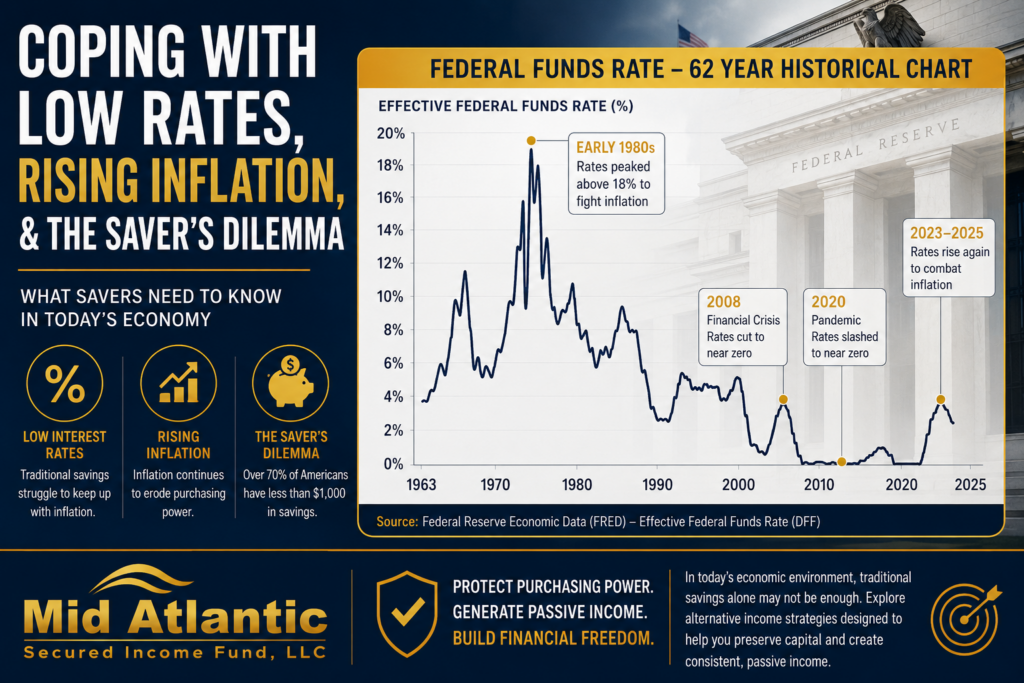
For today’s investors, retirement planning must account for longer lifespans, inflation, public market volatility, changing interest rates, tax efficiency, and the need for reliable income. J.P. Morgan Asset Management’s 2026 Guide to Retirement emphasizes that retirement planning increasingly depends on income replacement needs, life expectancy, savings checkpoints, and the ability to adapt across market environments.
At the same time, institutional investors have broadened their portfolios beyond traditional stocks and bonds. Private markets are increasingly used for diversification, income generation, and long-term portfolio construction; BlackRock’s 2026 private markets outlook notes that private markets are reshaping how businesses finance growth and how investors pursue diversification.
For accredited investors and high-net-worth retirees, this has created a more sophisticated conversation around retirement investment plans. The question is no longer simply, “How much do I need to retire?” It is now:
- How can my portfolio generate income without relying entirely on selling assets?
- How do I protect against inflation and market drawdowns?
- What role should private credit, real estate debt, and alternative investments play?
- How can retirement assets be structured for long-term durability?
What Is a Retirement Investment Plan?
A retirement investment plan is a coordinated investment strategy designed to help an investor accumulate, preserve, and distribute wealth throughout retirement. It typically includes asset allocation, income planning, risk management, tax strategy, liquidity planning, and estate considerations.
A strong retirement investment plan should answer four core questions:
- How will the portfolio grow before retirement?
- How will it generate income during retirement?
- How will it manage volatility, inflation, and taxes?
- How will it preserve capital for long-term needs or legacy goals?
Core Components of a Modern Retirement Investment Plan
1. Growth Assets
Growth assets are designed to increase portfolio value over time. These often include public equities, private equity, growth-oriented funds, and certain real estate investments.
Growth remains important because retirement can last decades. A portfolio that becomes too conservative too early may struggle to keep pace with inflation.
2. Income-Producing Assets
Income-producing investments are assets designed to generate recurring cash flow through interest, dividends, rental income, or distributions.
Common examples include:
|
Investment Type |
Potential Role |
|---|---|
|
Bonds |
Traditional income and stability |
|
Dividend stocks |
Growth plus income |
|
Private credit |
Contractual income potential |
|
Real estate debt |
Asset-backed income |
|
REITs |
Public real estate income |
|
CDs and Treasuries |
Liquidity and principal stability |
|
Infrastructure |
Long-term cash flow |
Income-producing investments are especially important for retirees who want to reduce dependence on selling portfolio assets during market downturns.
3. Fixed Income and Fixed Income Alternatives
Traditional fixed income includes Treasuries, municipal bonds, corporate bonds, and CDs. These can still play an important role in retirement portfolios.
However, the definition of fixed income has expanded. Many institutional investors now consider private credit, real estate debt, asset-backed lending, and floating-rate strategies as part of a broader income allocation.
Private credit has grown significantly, with Preqin estimating private credit AUM at $2.28 trillion in 2025 and projecting growth to $4.5 trillion by 2030.
4. Alternative Investments
Alternative investments include assets outside traditional public stocks, bonds, and cash. Examples include private credit, real estate debt, private equity, infrastructure, and certain real asset strategies.
BlackRock has argued that private markets may improve retirement outcomes by expanding diversification and return potential within retirement portfolios, while also noting the importance of liquidity and risk considerations.
Why Private Credit Is Becoming More Important in Retirement Planning
Private credit refers to lending outside traditional public bond markets. Instead of buying publicly traded bonds, investors may participate in privately originated loans or debt funds.
Common private credit strategies include:
- senior secured lending,
- real estate-backed lending,
- bridge loans,
- construction lending,
- asset-backed finance,
- middle-market direct lending.
Many investors consider private credit because it may offer income potential, floating-rate exposure, and diversification from public market volatility. However, private credit also carries risks, including borrower default, illiquidity, valuation complexity, and manager execution risk.
How Real Estate Debt Fits Into Retirement Investment Plans
Real estate debt funds focus on lending against real estate collateral rather than owning property equity. This distinction matters.
Equity real estate investors participate in upside appreciation but absorb more downside risk. Debt investors generally focus on contractual income, collateral coverage, and repayment priority.
For retirement investors, real estate-backed debt may be attractive because it can combine:
- income generation,
- asset-backed collateral,
- shorter-duration lending,
- senior secured positioning,
- lower reliance on public stock market performance.
The Mid Atlantic Secured Income Fund’s strategy is built around professionally managed, real estate-backed secured lending with an emphasis on disciplined underwriting, income generation, and capital preservation principles.
Are Debt Funds Safer Than Stocks?
Debt funds are not automatically “safe,” but they are structurally different from stocks.
Stocks represent ownership and typically rely on appreciation, earnings growth, and market sentiment. Debt funds generally focus on repayment obligations, interest income, collateral, and capital stack seniority.
A senior secured real estate debt strategy may have downside protections that common equity does not, but it still carries risk. Investors should evaluate:
- collateral quality,
- loan-to-value ratios,
- borrower strength,
- liquidity terms,
- portfolio diversification,
- manager experience,
- underwriting discipline.
The Role of SDIRAs in Retirement Investment Plans
A Self-Directed IRA allows qualified investors to hold a broader range of assets than many traditional brokerage IRAs. Depending on custodian rules, this may include private credit, real estate debt, private placements, and other alternative investments.
For accredited investors, SDIRAs can be useful when they want retirement capital exposed to private market income strategies rather than only public securities.
Mid Atlantic’s IRA investing page can serve as the natural internal link for investors exploring SDIRA-compatible private credit strategies.
Risk Management: The Center of Retirement Planning
A retirement investment plan should not be built around return targets alone. It should be built around risk-adjusted outcomes.
Key risks include:
|
Risk |
Why It Matters |
|---|---|
|
Market risk |
Public markets can decline sharply |
|
Inflation risk |
Purchasing power can erode over time |
|
Longevity risk |
Retirement may last 25–35 years |
|
Liquidity risk |
Some private investments are not easily sold |
|
Credit risk |
Borrowers may default |
|
Interest rate risk |
Rates affect bonds, lending, and valuations |
|
Sequence risk |
Early retirement losses can reduce portfolio longevity |
Sequence-of-returns risk is especially important. A major drawdown early in retirement can permanently damage a portfolio if the investor is also making withdrawals.
A Practical Retirement Portfolio Framework
A modern retirement investment plan often uses a “bucket” structure.
Liquidity Bucket
Designed for near-term needs.
Potential holdings:
- cash,
- money market funds,
- short-term Treasuries,
- CDs.
Income Bucket
Designed to generate recurring cash flow.
Potential holdings:
- bonds,
- dividend strategies,
- private credit,
- real estate debt,
- income funds.
Growth Bucket
Designed to preserve purchasing power over decades.
Potential holdings:
- equities,
- real estate equity,
- private equity,
- growth funds.
Alternative Diversification Bucket
Designed to reduce dependence on public markets.
Potential holdings:
- private credit,
- real assets,
- infrastructure,
- real estate-backed lending.
Where The Mid Atlantic Fund Fits
The Mid Atlantic Secured Income Fund may fit into a retirement investment plan as an alternative income-oriented allocation for accredited investors seeking exposure to private real estate-backed lending.
The fund’s positioning aligns with investors who are evaluating:
- private credit products,
- real estate-backed income,
- fixed income alternatives,
- SDIRA-compatible investments,
- passive income planning,
- portfolio diversification beyond public markets
FAQ Section
What are retirement investment plans?
Retirement investment plans are structured strategies designed to help investors grow, preserve, and distribute wealth before and during retirement. They typically include asset allocation, income planning, tax strategy, diversification, and risk management.
What are the best investments for retirement income?
Common retirement income investments include bonds, dividend stocks, Treasuries, CDs, private credit, real estate debt funds, REITs, and other income-producing assets.
Can private credit be used in retirement planning?
Yes. Some accredited investors use private credit as part of a diversified retirement portfolio to pursue income generation and reduced public market correlation. Private credit involves risks and should be evaluated carefully.
Are real estate debt funds good for retirement?
Real estate debt funds may appeal to retirement investors seeking asset-backed income, but they are not risk-free. Investors should evaluate collateral, liquidity, underwriting, and manager experience.
What is a Self-Directed IRA?
A Self-Directed IRA is a retirement account that may allow investors to hold alternative assets such as private credit, real estate, and certain private investment funds, subject to IRS and custodian rules.