
How Sophisticated Investors Protect Capital in an Era of Economic Uncertainty
For many investors, the last several years fundamentally changed how they think about risk.
The era of easy money, near-zero interest rates, aggressive equity appreciation, and speculative growth investing has transitioned into something far more complex.
Persistent inflation, elevated interest rates, geopolitical instability, banking-sector stress, rising sovereign debt levels, commercial real estate uncertainty, and increased public market volatility have collectively reshaped the investment landscape.
In response, investors across nearly every segment of the market — from retirees and high-net-worth families to institutional allocators and family offices — have increasingly shifted focus toward a different priority:
Investment security.
This does not mean avoiding risk entirely. No legitimate investment is risk-free.
Instead, investment security refers to constructing portfolios designed to prioritize:
- Capital preservation
- Downside protection
- Income durability
- Portfolio resilience
- Risk-adjusted returns
- Diversification
- Asset quality
- Long-term financial stability
Sophisticated investors increasingly understand that preserving wealth during uncertain environments can be just as important as generating returns during favorable market cycles.
As a result, institutional capital has increasingly flowed toward defensive and income-oriented investment strategies including:
- Private credit
- Fixed income
- Real estate-backed lending
- Infrastructure
- Asset-backed finance
- Alternative investments
- Income-producing portfolios
In 2026, investment security has become one of the defining themes of modern portfolio construction.
What Is Investment Security?
Direct Answer
Investment security refers to strategies, portfolio structures, and investment approaches designed to reduce downside risk, preserve capital, and improve financial resilience during periods of economic uncertainty and market volatility.
Investment security often emphasizes:
- Diversification
- Asset-backed investments
- Income generation
- Defensive positioning
- Risk management
- Stable cash flow
- Conservative underwriting
- Long-term portfolio durability
The goal is not simply maximizing returns.
The goal is building portfolios capable of surviving multiple economic environments.
Why Investment Security Matters More in 2026
The global investment environment has become increasingly fragile.
Several major structural trends are driving investor demand for more defensive strategies.
1. Elevated Interest Rate Volatility
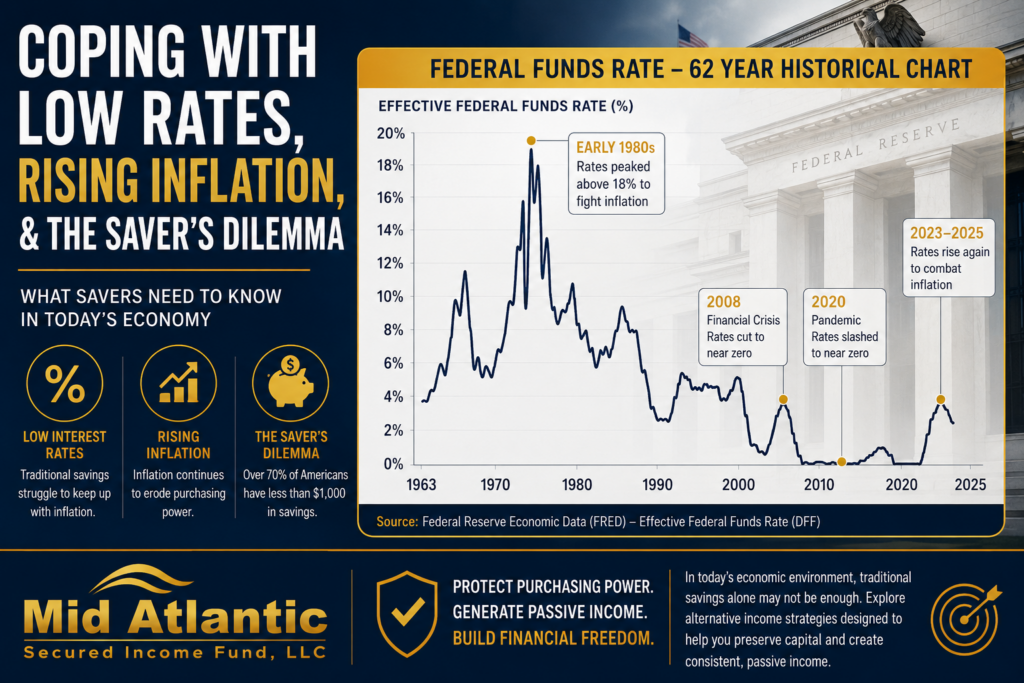
After years of historically low rates, central banks aggressively tightened monetary policy to combat inflation.
Higher rates created pressure across:
- Equities
- Bonds
- Commercial real estate
- Venture capital
- Growth assets
This revealed weaknesses in portfolios heavily concentrated in speculative or long-duration assets.
2. Persistent Inflation
Although inflation moderated from pandemic-era highs, many economists believe structurally elevated inflation may remain a long-term challenge.
According to the U.S. Bureau of Labor Statistics, cumulative inflation over recent years significantly eroded consumer purchasing power.
This has increased investor demand for:
- Income-producing investments
- Inflation-aware strategies
- Real assets
- Floating-rate investments
3. Banking System Stress
Regional banking disruptions reminded investors that financial system risk remains real.
Institutional investors increasingly prioritize:
- Liquidity
- Credit quality
- Counterparty stability
- Asset-backed lending
- Conservative underwriting
4. Public Market Volatility
Modern equity markets remain heavily concentrated in a relatively small number of mega-cap companies.
This concentration risk has amplified volatility and increased investor sensitivity to macroeconomic shifts.
Investment Security Is Not About Avoiding Risk
One of the biggest misconceptions in investing is the idea that “safe investing” means eliminating risk altogether.
In reality:
Every investment carries some level of risk.
The objective of investment security is not risk elimination.
It is intelligent risk management.
Sophisticated investors understand that successful long-term investing requires balancing:
- Return potential
- Liquidity
- volatility
- downside exposure
- income durability
- portfolio resilience
This is why institutional portfolio construction increasingly emphasizes risk-adjusted returns rather than simply chasing maximum performance.
The Evolution of Modern Defensive Investing
Traditional defensive investing once relied heavily on government bonds and blue-chip dividend stocks.
However, modern markets have evolved.
Today’s institutional investors increasingly seek broader diversification across multiple defensive asset classes.
Common Modern Defensive Allocations
|
Asset Class |
Purpose |
|---|---|
|
Fixed Income |
Stability & income |
|
Private Credit |
Yield & reduced public market correlation |
|
Real Estate Debt |
Asset-backed protection |
|
Infrastructure |
Durable long-term cash flow |
|
Treasury Securities |
Liquidity & capital preservation |
|
Alternative Investments |
Diversification |
|
Floating Rate Credit |
Inflation sensitivity mitigation |
|
Cash Equivalents |
Tactical flexibility |
Why Private Credit Has Gained Institutional Attention
Private credit has emerged as one of the fastest-growing areas of institutional investing.
According to Preqin, global private debt assets under management are projected to continue expanding significantly as investors seek alternatives to traditional public fixed income markets.
Private credit strategies often include:
- Senior secured lending
- Real estate-backed financing
- Bridge loans
- Asset-based lending
- Specialty finance
- Receivables financing
Many institutional investors favor private credit because of several structural characteristics:
- Contractual income streams
- Potential floating-rate benefits
- Collateral-backed lending
- Reduced public market volatility
- Defined repayment structures
Importantly, risk levels vary significantly between private credit strategies.
Underwriting quality remains critical.
Real Estate-Backed Lending & Capital Preservation
Real estate-backed lending plays a unique role within defensive portfolio construction.
Unlike speculative equity investments, secured lending strategies may provide:
- Collateralized positions
- First-lien structures
- Defined maturity terms
- Asset-backed underwriting
- Contractual repayment obligations
For many investors, this structure can provide psychological and financial advantages during uncertain markets.
Sophisticated investors increasingly prioritize understanding:
- Loan-to-value ratios
- Borrower quality
- collateral coverage
- market fundamentals
- geographic exposure
- underwriting discipline
Why Diversification Remains Essential
Investment security does not come from a single investment.
It comes from thoughtful portfolio construction.
Diversification helps reduce concentration risk by allocating capital across multiple asset classes, sectors, and investment structures.
Modern diversified portfolios may include:
- Equities
- Fixed income
- Private credit
- Real estate
- Alternative investments
- Treasury securities
- Cash equivalents
- Infrastructure
- Commodity exposure
The objective is creating balance across varying economic environments.
The Psychology of Investment Security
Investment security is not purely financial.
It is also behavioral.
Periods of volatility often trigger emotional decision-making.
Common investor mistakes include:
- Panic selling
- Performance chasing
- Emotional market timing
- Overconcentration
- Excessive speculation
Behavioral finance research from Morningstar and DALBAR consistently shows that investor behavior often negatively impacts long-term returns.
Diversified, income-oriented portfolios may help investors maintain discipline during periods of uncertainty.
What Sophisticated Investors Prioritize
Institutional investors often focus less on maximizing short-term gains and more on:
- Portfolio durability
- Risk-adjusted returns
- Income consistency
- Downside protection
- Capital efficiency
- Multi-cycle performance
This institutional mindset increasingly influences high-net-worth individuals and accredited investors.
The Role of Income in Investment Security
Income generation has become increasingly important in modern portfolio design.
Why?
Because income can reduce reliance on speculative appreciation.
Instead of depending entirely on market price increases, income-producing investments may generate recurring cash flow through:
- Interest payments
- Dividends
- lending structures
- contractual distributions
This has increased institutional interest in:
- Fixed income
- Private credit
- Real estate debt
- Infrastructure
- Alternative income strategies
Inflation & Investment Security
Inflation remains one of the greatest threats to long-term wealth preservation.
Even moderate inflation can materially reduce purchasing power over time.
For example:
|
Annual Inflation |
Purchasing Power Reduction Over 20 Years |
|---|---|
|
2% |
~33% |
|
4% |
~54% |
|
6% |
~69% |
Sophisticated investors increasingly seek investments capable of generating income above inflation levels while maintaining disciplined risk management.
Are Debt Funds Safer Than Stocks?
Direct Answer
Debt funds and private credit strategies are not inherently “safe,” but they may exhibit different risk characteristics compared to equities.
Many secured lending investments prioritize:
- Collateral protection
- Defined repayment terms
- contractual income
- capital structure seniority
Equities typically offer higher long-term appreciation potential but often involve significantly greater volatility.
Sophisticated investors frequently combine both asset classes within diversified portfolios.
How Family Offices Approach Investment Security
Family offices often manage wealth across multiple generations.
As a result, their priorities frequently differ from speculative traders.
Key family office objectives may include:
- Capital preservation
- Multi-generational wealth transfer
- Tax efficiency
- Income durability
- Inflation resilience
- Risk management
This frequently leads to broader allocations toward:
- Alternative investments
- Private credit
- Real assets
- Infrastructure
- Real estate-backed strategies
The Rise of Defensive Portfolio Construction
Defensive investing no longer means sitting entirely in cash or Treasury bonds.
Modern defensive portfolios are often sophisticated, diversified, and income-oriented.
They may incorporate:
- Non-correlated assets
- Floating-rate exposure
- secured lending
- diversified income streams
- real asset exposure
- institutional underwriting frameworks
This reflects a major evolution in wealth management philosophy.
What Risks Still Exist?
No investment strategy eliminates risk.
Potential risks may include:
- Credit risk
- Liquidity risk
- Market volatility
- Interest rate sensitivity
- Economic recession
- Real estate market weakness
- Borrower default
- Regulatory risk
Understanding risk is essential.
Sophisticated investing requires evaluating both opportunity and downside exposure.
Why Accredited Investors Are Exploring Alternatives
Accredited investors increasingly seek access to private markets because these investments may provide:
- Diversification beyond public equities
- Higher income potential
- Reduced correlation
- institutional-style opportunities
- defensive portfolio characteristics
According to BlackRock and JP Morgan research, alternative investments are expected to become an increasingly important component of modern wealth management portfolios over the next decade.
Investment Security & Retirement Planning
Retirement investing has become significantly more challenging.
Modern retirees face:
- Longer life expectancy
- Inflation pressure
- Market volatility
- Healthcare cost growth
- Sequence-of-returns risk
This has increased demand for:
- Income-producing investments
- diversified portfolios
- defensive allocation strategies
- lower-volatility investments
Investment security increasingly plays a central role in retirement planning.
The Institutional Mindset: Discipline Over Speculation
Sophisticated investors often approach markets differently than retail speculators.
Institutional investing typically emphasizes:
- Underwriting discipline
- long-term planning
- portfolio construction
- downside analysis
- stress testing
- liquidity management
Rather than attempting to predict every market move, institutions focus on creating resilient portfolios designed to survive multiple economic scenarios.
Building a More Secure Investment Portfolio
Key Considerations
1. Reduce Concentration Risk
Avoid excessive exposure to a single asset, sector, or investment theme.
2. Focus on Asset Quality
Not all yield opportunities are equal.
Credit discipline matters.
3. Prioritize Diversification
Diversification remains one of the most effective risk management tools available.
4. Maintain Liquidity
Liquidity provides flexibility during uncertain environments.
5. Think Long-Term
Short-term volatility is inevitable.
Long-term discipline remains critical.
Final Thoughts
Investment security has become one of the defining investment themes of the modern era.
In a world shaped by:
- Inflation uncertainty
- market volatility
- elevated interest rates
- geopolitical instability
- banking system stress
- economic complexity
Sophisticated investors increasingly prioritize resilience alongside returns.
This has accelerated institutional demand for:
- Private credit
- Fixed income
- real estate-backed lending
- diversified income strategies
- alternative investments
- defensive portfolio construction
For many accredited investors, investment security is no longer simply about avoiding risk.
It is about building portfolios designed to endure uncertainty while continuing to pursue long-term financial goals with discipline and confidence.
FAQ Section
What is investment security?
Investment security refers to strategies and portfolio structures designed to reduce downside risk, preserve capital, and improve long-term financial resilience.
Why is investment security important?
Investment security helps investors manage volatility, inflation, market downturns, and economic uncertainty while pursuing long-term financial goals.
What investments are considered defensive?
Common defensive investments include fixed income, Treasury securities, private credit, real estate-backed lending, infrastructure, and diversified income-producing assets.
Is private credit safer than stocks?
Private credit is not risk-free, but some strategies prioritize collateral-backed lending, contractual cash flow, and defined repayment structures that may reduce volatility compared to equities.
Why are institutional investors using alternative investments?
Institutional investors increasingly use alternative investments for diversification, income generation, inflation resilience, and reduced public market correlation.
How does diversification improve investment security?
Diversification spreads risk across multiple asset classes and investment strategies, helping reduce concentration risk and improve portfolio resilience.