
Wealth Management Has Changed
For decades, many affluent investors relied heavily on public equities, municipal bonds, and traditional retirement portfolios to build and preserve wealth. That framework worked well during an era defined by declining interest rates, expanding equity multiples, and relatively stable inflation.
Today’s environment is fundamentally different.
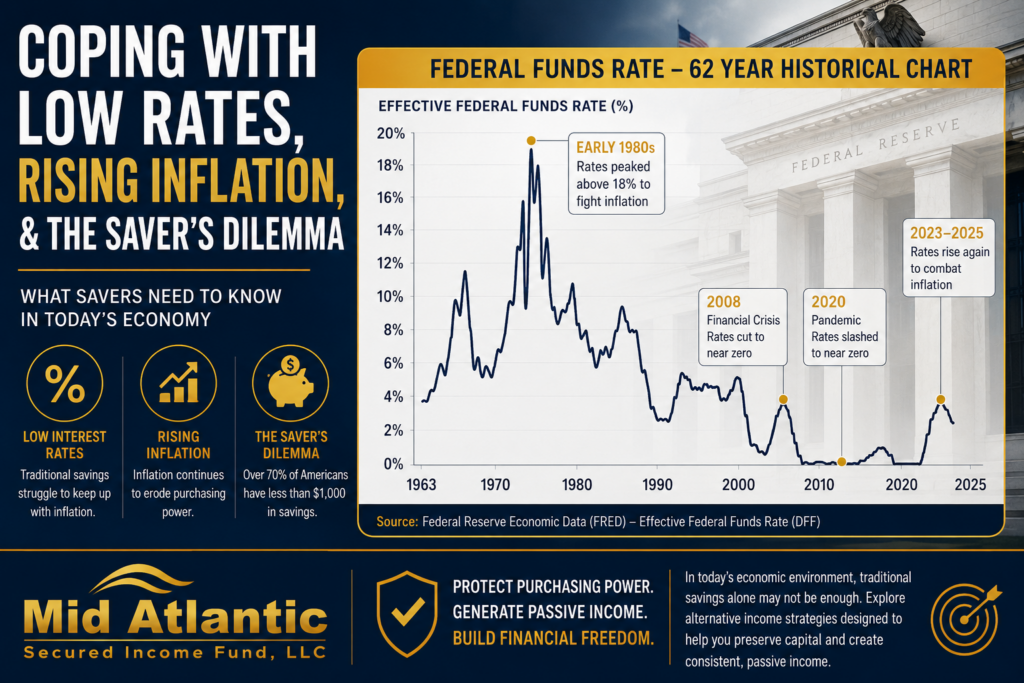
Persistent inflationary pressures, elevated market volatility, rising geopolitical uncertainty, banking system stress, and tighter monetary policy have caused many high net worth investors to rethink traditional portfolio construction.
Increasingly, affluent investors, family offices, RIAs, and institutional allocators are moving beyond the classic 60/40 portfolio model in search of:
- More durable income generation
- Lower correlation to public equities
- Inflation resilience
- Capital preservation
- Asset-backed investment structures
- Enhanced diversification
- Greater downside protection
This shift has accelerated interest in private credit, alternative investments, real estate-backed debt, infrastructure, and institutional-style income strategies historically reserved for pension funds and large institutions.
According to BlackRock’s 2025 Global Family Office Survey, private markets now represent one of the fastest-growing allocations among sophisticated investors seeking long-term diversification and income stability.
The modern high net worth portfolio increasingly resembles an institutional balance sheet rather than a traditional retail investment account.
What Are High Net Worth Investment Strategies?
Direct Answer
High net worth investment strategies are advanced portfolio management approaches designed to help affluent investors preserve capital, generate income, optimize taxes, diversify risk, and pursue long-term wealth accumulation using a combination of traditional and alternative investments.
These strategies often include:
- Public equities
- Fixed income
- Private credit
- Real estate investments
- Alternative assets
- Tax-efficient structures
- Estate planning
- Income-focused portfolio construction
- Risk-managed diversification
Unlike conventional investing, high net worth investing typically prioritizes total portfolio resilience rather than simply maximizing returns.
Why High Net Worth Investors Allocate Differently
Affluent investors face unique financial realities.
As wealth grows, the primary objective often shifts from aggressive accumulation toward:
- Maintaining purchasing power
- Producing reliable income
- Protecting principal
- Managing taxes
- Preserving generational wealth
- Reducing volatility exposure
- Structuring liquidity efficiently
Large investors also gain access to investments unavailable to the average retail investor, including:
- Private credit funds
- Direct lending
- Institutional real estate debt
- Private equity
- Structured income products
- Alternative income vehicles
- Private placements
- Self-directed IRA investments
This broader opportunity set enables more customized portfolio construction.
The Evolution of Portfolio Construction
The Decline of the Traditional 60/40 Model
The traditional 60/40 portfolio—60% stocks and 40% bonds—was built during a multi-decade decline in interest rates.
From the early 1980s through 2021, falling rates supported:
- Rising bond prices
- Higher equity valuations
- Lower borrowing costs
- Strong asset appreciation
However, inflation and rising rates have challenged that framework.
In 2022, both stocks and bonds experienced simultaneous declines, exposing a structural weakness in portfolios overly dependent on public markets.
According to Morgan Stanley Wealth Management research, investors are increasingly incorporating private market strategies to improve diversification and income consistency.
This has fueled demand for:
- Private credit
- Real estate-backed lending
- Infrastructure investments
- Floating-rate debt
- Asset-backed income strategies
Institutional Investors Have Already Shifted
Many pension funds, endowments, and sovereign wealth funds have been allocating heavily to private markets for years.
According to Preqin:
- Private credit assets under management surpassed $1.7 trillion globally in recent years
- Institutional allocations to alternatives continue rising
- Family offices increasingly prioritize income-oriented alternatives
The reason is simple:
Institutional allocators seek investments with:
- Lower public market correlation
- Contractual income
- Floating-rate structures
- Hard asset backing
- Inflation resilience
- Risk-adjusted returns
High net worth investors are now increasingly adopting these same principles.
Core Components of High Net Worth Investment Strategies
1. Diversification Across Asset Classes
Diversification remains foundational.
But sophisticated diversification goes beyond owning multiple stocks.
Institutional portfolio diversification often spans:
|
Asset Class |
Purpose |
|---|---|
|
Public Equities |
Long-term growth |
|
Fixed Income |
Stability and income |
|
Private Credit |
Contractual yield |
|
Real Estate Debt |
Asset-backed income |
|
Alternatives |
Non-correlated returns |
|
Cash Equivalents |
Liquidity management |
|
Infrastructure |
Inflation protection |
|
Precious Metals |
Macro hedge |
The objective is reducing concentration risk while improving portfolio durability.
2. Income-Producing Investments
Income has become increasingly important for affluent investors.
Many high net worth portfolios now emphasize:
- Monthly cash flow
- Yield stability
- Contractual income
- Predictable distributions
Examples include:
- Private credit funds
- Real estate-backed debt investments
- Senior secured lending
- Commercial mortgage debt
- Dividend-producing assets
- Infrastructure income
- Private real estate income strategies
This shift reflects growing investor preference for cash-flow-producing assets rather than relying entirely on capital appreciation.
3. Private Credit and Direct Lending
Private credit has emerged as one of the fastest-growing alternative asset classes globally.
What Is Private Credit?
Private credit involves non-bank lending arrangements where capital is deployed directly to borrowers through privately negotiated loans.
These loans may include:
- Real estate bridge loans
- Construction financing
- commercial lending
- asset-backed lending
- senior secured debt
- specialty finance
Unlike traditional fixed income, private credit often offers:
- Floating-rate structures
- Enhanced yields
- Collateral protection
- Lower public market correlation
- Direct underwriting oversight
Why High Net Worth Investors Use Private Credit
Sophisticated investors often allocate to private credit because it may provide:
- Higher income potential than traditional bonds
- Asset-backed downside protection
- Diversification away from public markets
- Reduced duration sensitivity
- Stronger structural protections
Many institutional private credit strategies emphasize first-position liens and senior-secured collateral structures to prioritize capital preservation.
4. Real Estate-Backed Investments
Real estate remains central to many affluent portfolios.
However, sophisticated investors increasingly distinguish between:
- Equity real estate ownership
- Real estate debt investing
Equity vs Debt Exposure
|
Structure |
Primary Return Driver |
|---|---|
|
Real Estate Equity |
Appreciation |
|
Real Estate Debt |
Contractual income |
Debt-focused strategies often appeal to income-oriented investors because they may sit higher in the capital stack.
This means lenders may have greater downside protection than equity owners in distressed environments.
Why Senior Secured Lending Matters
Many institutional debt funds focus on:
- First-lien positions
- Conservative loan-to-value ratios
- Asset-backed collateral
- contractual interest payments
- shorter-duration lending
These characteristics may appeal to investors focused on:
- Income consistency
- principal protection
- lower volatility exposure
5. Tax Optimization Strategies
Taxes play a critical role in high net worth portfolio construction.
Common strategies include:
- Tax-advantaged retirement accounts
- Self-directed IRAs
- Roth conversion planning
- Tax-loss harvesting
- Estate planning structures
- Charitable trusts
- Asset location optimization
Affluent investors often seek investments that align with broader tax planning objectives.
How Self-Directed IRAs Fit Into Alternative Investing
Self-directed IRAs allow eligible investors to access alternative assets inside retirement accounts.
These may include:
- Private credit
- Real estate debt
- private placements
- alternative income strategies
Many accredited investors use SDIRAs to diversify beyond traditional mutual funds and public securities.
Related Internal Resource:
https://themidatlanticfund.com/ira-investing-with-mid-atlantic-fund/
6. Risk Management and Capital Preservation
Sophisticated investing is not solely about maximizing return.
Institutional investors prioritize risk-adjusted outcomes.
Key principles include:
- Avoiding concentration risk
- Managing liquidity exposure
- Diversifying across strategies
- Stress testing allocations
- Maintaining cash reserves
- Structuring downside protection
According to Goldman Sachs research, preserving capital during downturns often matters more to long-term wealth outcomes than capturing every upside cycle.
Are Debt Funds Safer Than Stocks?
Direct Answer
Debt funds are not inherently “safe,” but many debt-focused investments may experience lower volatility than equities because returns are often tied to contractual income rather than market pricing.
However, risks still exist, including:
- Credit risk
- Default risk
- Liquidity risk
- interest rate risk
- operational risk
The structure of the investment matters significantly.
Senior secured, asset-backed lending strategies may offer stronger downside protection than unsecured or subordinated structures.
Understanding the Capital Stack
In private markets, position within the capital stack matters greatly.
|
Capital Stack Position |
Risk Profile |
|---|---|
|
Senior Secured Debt |
Lower relative risk |
|
Mezzanine Debt |
Moderate risk |
|
Preferred Equity |
Higher risk |
|
Common Equity |
Highest risk |
Many income-oriented investors prefer senior-secured strategies because they may receive repayment priority before equity holders.
Behavioral Finance and Wealth Preservation
Affluent investors often underestimate behavioral risk.
Emotional decision-making during volatility can significantly damage long-term performance.
Institutional investors combat this by emphasizing:
- disciplined allocation frameworks
- long-term planning
- diversified exposures
- downside-aware investing
- structured portfolio management
The goal is consistency rather than speculation.
The Role of Alternative Investments in Modern Portfolios
Alternative investments now play a central role in many high net worth portfolios.
Examples include:
- Private credit
- Infrastructure
- Real estate debt
- hedge strategies
- private equity
- energy investments
- specialty finance
These investments may offer:
- income diversification
- inflation resilience
- reduced public market correlation
- enhanced yield potential
According to BlackRock, alternative investments continue gaining traction among investors seeking differentiated return streams in a higher-rate environment.
Portfolio Construction by Investor Objective
Income-Focused Investors
Primary priorities:
- Monthly cash flow
- downside protection
- income consistency
- reduced volatility
Typical allocations may emphasize:
- private credit
- senior secured lending
- dividend strategies
- real estate debt
Growth-Oriented Investors
Primary priorities:
- Long-term capital appreciation
- innovation exposure
- equity upside
Typical allocations may emphasize:
- public equities
- private equity
- venture investments
Preservation-Oriented Investors
Primary priorities:
- Capital protection
- inflation management
- reduced drawdowns
Typical allocations may emphasize:
- diversified income strategies
- hard assets
- real estate-backed lending
- cash-flow-producing alternatives
Why Accredited Investors Are Exploring Private Markets
Accredited investors increasingly seek opportunities beyond traditional brokerage products.
This reflects several broader trends:
- Higher public market volatility
- Demand for diversification
- Search for income
- Institutionalization of private markets
- Growing access to alternative investments
Private markets were once dominated by institutions. Today, accredited investors increasingly participate through private funds and alternative investment platforms.
How The Mid Atlantic Fund Fits Within a Diversified Strategy
Many sophisticated investors seek investments aligned with:
- income generation
- conservative underwriting
- asset-backed structures
- downside-focused portfolio construction
The Mid Atlantic Secured Income Fund focuses on senior secured real estate-backed lending strategies designed around:
- contractual income
- collateral-backed lending
- disciplined underwriting
- institutional servicing infrastructure
The strategy emphasizes capital deployment into income-producing debt obligations rather than speculative equity appreciation.
Related Resources:
- https://themidatlanticfund.com/private-credit-products/
- https://themidatlanticfund.com/why-invest-in-mid-atlantic-fund/
- https://themidatlanticfund.com/passive-income-investment-calculator/
Common Risks High Net Worth Investors Should Evaluate
Every investment strategy carries risk.
Important considerations include:
Credit Risk
Borrowers may fail to repay obligations.
Liquidity Risk
Private investments may have limited redemption flexibility.
Interest Rate Risk
Rising rates can impact valuations and borrowing conditions.
Market Risk
Economic downturns may pressure asset performance.
Operational Risk
Manager quality and servicing infrastructure matter significantly.
Concentration Risk
Overexposure to one asset class or strategy increases vulnerability.
Sophisticated investors evaluate both return potential and downside exposure.
The Future of High Net Worth Investing
Several structural trends are reshaping wealth management:
- Growth of private credit
- Expansion of alternative assets
- Institutionalization of retail investing
- Greater demand for income
- Technology-driven portfolio analytics
- Increased focus on downside resilience
Many affluent investors are moving toward institutional-style portfolio construction emphasizing:
- diversification
- income durability
- real asset exposure
- disciplined risk management
This represents a long-term structural shift rather than a temporary trend.
Final Perspective
High net worth investment strategies are evolving rapidly.
The modern affluent investor increasingly prioritizes:
- capital preservation
- income generation
- diversification
- private market exposure
- downside-aware investing
- long-term resilience
Institutional portfolio construction principles once reserved for pension funds and endowments are now becoming mainstream among accredited investors and family offices.
As markets grow more complex, sophisticated investors are increasingly seeking investments built around:
- contractual income
- collateral-backed structures
- disciplined underwriting
- diversified portfolio design
- long-term wealth durability
The focus is no longer simply chasing returns.
It is building portfolios designed to endure across multiple market cycles.
FAQ Section
What are high net worth investment strategies?
High net worth investment strategies are advanced portfolio approaches designed for affluent investors seeking diversification, income generation, capital preservation, tax efficiency, and long-term wealth management.
Why do wealthy investors use alternative investments?
Alternative investments may provide diversification, lower correlation to public markets, contractual income, and inflation resilience compared to traditional stock-and-bond portfolios.
What is private credit investing?
Private credit investing involves lending capital through privately negotiated debt arrangements outside traditional banks and public bond markets.
Are private credit investments risky?
Yes. Risks include borrower default, liquidity constraints, economic downturns, and operational risk. However, senior secured and asset-backed structures may provide stronger downside protections than unsecured lending.
What role does diversification play in wealth preservation?
Diversification helps reduce concentration risk and may improve portfolio resilience during periods of market volatility.
Can retirement accounts invest in alternative assets?
Certain self-directed retirement accounts may invest in alternative assets including private credit, real estate debt, and private placements, subject to IRS rules and custodian requirements.