
Why Fixed Income Is Reentering the Spotlight
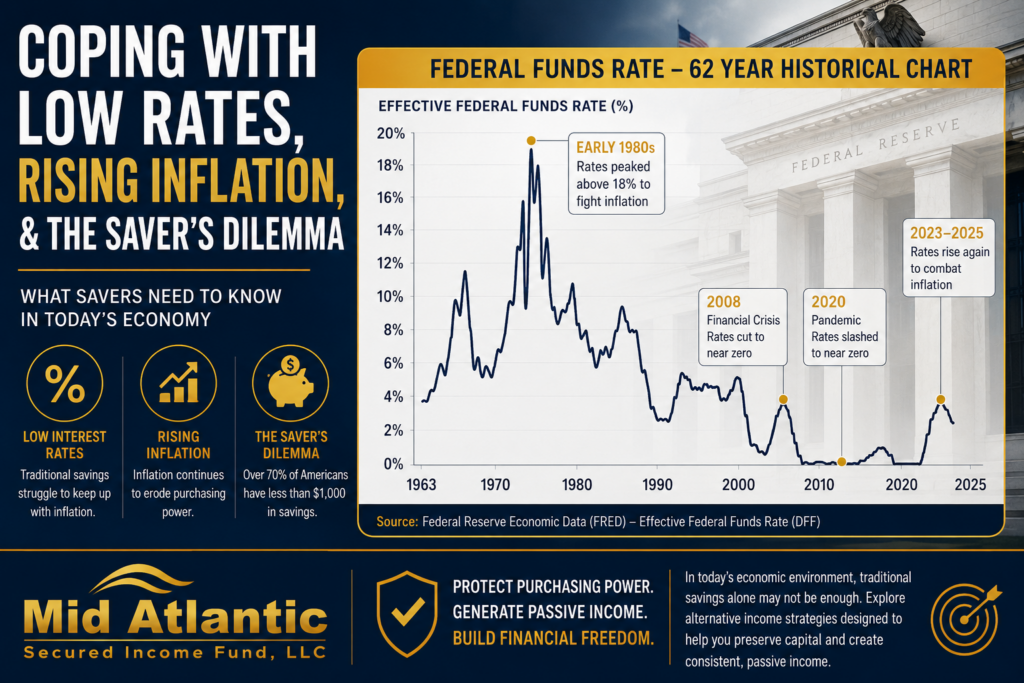
For more than a decade following the Global Financial Crisis, traditional fixed income investing faced a difficult environment. Near-zero interest rates pushed investors toward equities, growth assets, and increasingly speculative investments in search of yield.
That environment has fundamentally changed.
Persistent inflation, elevated market volatility, tighter monetary policy, and growing geopolitical uncertainty have reignited institutional demand for income-oriented investments. Investors are once again prioritizing stability, recurring cash flow, downside protection, and diversification.
In this environment, fixed income funds are evolving far beyond traditional bond portfolios.
Modern fixed income strategies now include:
- Private credit
- Asset-backed lending
- Real estate debt
- Senior secured lending
- Structured credit
- Floating-rate investments
- Alternative income-producing assets
Institutional investors, family offices, pension funds, and accredited investors are increasingly exploring these strategies as part of a broader portfolio construction framework focused on resilience and income generation.
The rise of alternative fixed income reflects a larger shift in investor psychology:
In uncertain markets, investors increasingly value durability over speculation.
What Are Fixed Income Funds?
Direct Answer
Fixed income funds are investment vehicles designed to generate recurring income through interest-producing assets such as bonds, loans, private credit, and other debt instruments.
Unlike equity investments, which primarily rely on appreciation in stock value, fixed income investments focus on:
- Interest income
- Capital preservation
- Predictable cash flow
- Lower volatility relative to equities
- Portfolio diversification
Fixed income funds can include both public and private investments.
Types of Fixed Income Funds
Traditional Fixed Income Funds
These typically invest in publicly traded debt securities such as:
- U.S. Treasuries
- Municipal bonds
- Corporate bonds
- Agency securities
- Mortgage-backed securities
Traditional bond funds remain core holdings for many institutional portfolios.
However, yields in traditional fixed income have historically fluctuated significantly depending on Federal Reserve policy and interest rate environments.
Alternative Fixed Income Funds
Alternative fixed income strategies have grown rapidly over the past decade.
These may include:
Private Credit
Direct lending to businesses or borrowers outside traditional banking systems.
Real Estate Debt
Loans secured by residential or commercial real estate collateral.
Asset-Backed Lending
Loans backed by hard assets or receivables.
Senior Secured Lending
Debt positioned at the top of a borrower’s capital structure.
Floating-Rate Credit
Investments whose interest rates adjust alongside benchmark rates.
Institutional investors increasingly favor these strategies because they may offer:
- Higher income potential
- Reduced duration risk
- Enhanced collateral protection
- Lower public market correlation
- Improved diversification characteristics
According to Preqin, global private debt assets under management surpassed approximately $1.6 trillion in recent years and continue expanding as institutional allocations rise.
Why Investors Are Returning to Fixed Income
The Macro Shift
Several macroeconomic forces are reshaping investor behavior.
1. Higher Interest Rates
The Federal Reserve’s aggressive tightening cycle significantly increased yields across debt markets.
For years, investors struggled to generate meaningful income from conservative investments.
Today, the income landscape looks materially different.
2. Equity Market Volatility
Public equities have experienced heightened volatility due to:
- Inflation concerns
- Slowing economic growth
- Geopolitical tensions
- Elevated valuations
- Banking sector instability
- Commercial real estate uncertainty
Fixed income investments may help reduce portfolio volatility.
3. Retirement Income Needs
America’s aging population continues increasing demand for reliable income-producing investments.
According to the U.S. Census Bureau, the number of Americans age 65 and older continues growing rapidly, creating long-term demand for retirement-focused investment strategies.
4. Institutional Demand for Private Credit
Banks have tightened lending standards in many sectors.
This has created opportunities for private lenders and alternative credit funds to fill financing gaps.
Large institutional firms including Apollo, Blackstone, Ares, and KKR have dramatically expanded private credit operations.
How Fixed Income Funds Generate Returns
Interest Income
The primary source of return is recurring interest payments.
These payments may occur:
- Monthly
- Quarterly
- Semi-annually
- Annually
Capital Appreciation
Certain debt investments may increase in value if:
- Interest rates decline
- Credit quality improves
- Market spreads tighten
Floating Rate Structures
Some private credit investments utilize floating-rate structures tied to benchmark rates.
This can help investors maintain income levels during rising rate environments.
Public Bonds vs. Private Credit
|
Feature |
Public Bonds |
Private Credit |
|---|---|---|
|
Liquidity |
Higher |
Lower |
|
Yield Potential |
Lower |
Higher |
|
Transparency |
Public markets |
Private agreements |
|
Collateral Protection |
Varies |
Often asset-backed |
|
Volatility |
Market-driven |
Less mark-to-market |
|
Access |
Widely available |
Often accredited only |
Institutional investors increasingly allocate capital across both categories rather than relying exclusively on traditional bonds.
Why Sophisticated Investors Use Fixed Income
Portfolio Diversification
Fixed income can reduce concentration risk within equity-heavy portfolios.
Historically, diversified portfolios containing fixed income allocations have experienced lower volatility than equity-only portfolios.
Capital Preservation
Many investors prioritize preservation alongside growth.
Fixed income investments may provide:
- Senior lien positions
- Collateral backing
- Structured repayment obligations
- Covenant protections
These features can enhance downside protection relative to speculative investments.
Income Consistency
Income-focused investors often value predictability.
This is especially relevant for:
- Retirees
- Family offices
- Endowments
- Income-oriented accredited investors
The Growing Role of Private Credit
Why Private Credit Is Expanding
Private credit has become one of the fastest-growing segments in institutional investing.
Several factors are driving this trend:
Bank Retrenchment
Following regulatory changes after the financial crisis, many banks reduced exposure to certain lending segments.
Private lenders increasingly fill these gaps.
Demand for Yield
Institutional investors continue seeking alternatives to low-yielding traditional bonds.
Private credit may offer higher income potential due to:
- Illiquidity premiums
- Complexity premiums
- Customized loan structures
Floating Rate Advantages
Many private loans utilize floating rates.
This may help protect investors during inflationary periods.
Real Estate-Backed Lending as Fixed Income
The Appeal of Asset-Backed Lending
Real estate-backed lending remains a major category within alternative fixed income.
These strategies may include:
- Bridge loans
- Construction lending
- Stabilized real estate loans
- Acquisition financing
- Multifamily lending
Institutional investors often favor collateralized structures because the underlying asset may help reduce downside exposure.
Understanding Risk in Fixed Income Investing
Are Fixed Income Investments Risk-Free?
No investment is entirely risk-free.
Fixed income investments carry several important risks.
Interest Rate Risk
Rising rates can negatively impact bond prices.
Long-duration bonds are especially sensitive.
Credit Risk
Borrowers may fail to meet repayment obligations.
Underwriting quality is critical.
Liquidity Risk
Private investments may have limited liquidity.
Investors should evaluate time horizons carefully.
Inflation Risk
Inflation can reduce purchasing power.
Floating-rate structures may help mitigate some inflation-related risks.
Why Underwriting Matters
Institutional investors increasingly focus on underwriting discipline rather than yield alone.
Key underwriting considerations may include:
- Loan-to-value ratios
- Borrower quality
- Asset quality
- Debt service coverage
- Market fundamentals
- Exit strategies
- Senior lien positioning
Strong underwriting often matters more than headline yield.
Fixed Income in Retirement Portfolios
Why Retirees Use Fixed Income
Fixed income investments often play a foundational role in retirement portfolios.
Potential benefits include:
- Income generation
- Reduced volatility
- Capital preservation
- Portfolio diversification
The Retirement Income Challenge
Many retirees face a difficult reality:
Traditional savings vehicles often struggle to keep pace with inflation.
This has increased demand for diversified income-producing investments.
How Accredited Investors Use Alternative Fixed Income
Direct Answer
Accredited investors often use alternative fixed income strategies to pursue higher income, portfolio diversification, and reduced public market correlation.
Common allocations may include:
- Private credit
- Real estate debt
- Structured income investments
- Asset-backed lending
- Alternative income funds
Why Institutional Investors Favor Asset-Backed Structures
Collateral-backed investments may offer several potential advantages.
These can include:
- Senior secured positioning
- Defined repayment structures
- Hard asset collateral
- Reduced volatility relative to equities
Institutional investors increasingly emphasize downside protection in uncertain environments.
The Evolution of Fixed Income in 2026 and Beyond
The New Fixed Income Landscape
Fixed income is no longer limited to traditional bonds.
The modern landscape increasingly includes:
- Private markets
- Alternative credit
- Structured lending
- Real asset-backed strategies
- Floating-rate investments
This evolution reflects broader institutional portfolio trends.
Why Investors Are Prioritizing Resilience
Recent years have reminded investors that markets do not move in straight lines.
Inflation spikes, rate shocks, geopolitical tensions, and banking disruptions have reinforced the importance of disciplined portfolio construction.
Sophisticated investors increasingly seek investments designed around:
- Risk management
- Diversification
- Income durability
- Capital preservation
- Reduced speculative exposure
Fixed Income and Behavioral Finance
The Psychology of Volatility
Investors often underestimate the emotional impact of market downturns.
High volatility may lead to:
- Panic selling
- Poor timing decisions
- Emotional investing
- Excessive risk-taking
Income-oriented investments may help reduce emotional portfolio stress.
How Investors Evaluate Fixed Income Opportunities
Key Questions Investors Often Ask
- What collateral supports the investment?
- Where does the investment sit in the capital stack?
- Is the income fixed or floating?
- What are the liquidity terms?
- How experienced is the underwriting team?
- What macroeconomic conditions could impact performance?
Institutional due diligence increasingly emphasizes structure and discipline rather than simply pursuing the highest yield available.
Why Diversification Still Matters
No single investment strategy is appropriate for every investor.
Diversification remains central to institutional portfolio construction.
Many sophisticated investors combine:
- Equities
- Traditional bonds
- Private credit
- Real estate
- Alternative investments
- Cash equivalents
The goal is often portfolio resilience rather than maximum short-term return.
The Future of Income Investing
The future of fixed income appears increasingly tied to alternative credit and private markets.
Institutional trends suggest continued growth in:
- Asset-backed lending
- Real estate credit
- Private debt
- Floating-rate strategies
- Diversified income portfolios
Investors increasingly prioritize:
- Consistent income
- Lower volatility
- Downside mitigation
- Inflation resilience
- Capital discipline
Institutional Perspective: Stability Over Speculation
Many investors spent years chasing growth at any cost.
Modern markets are shifting investor priorities toward:
- Stability
- Predictability
- Risk management
- Income durability
- Capital efficiency
Fixed income investments continue evolving as a critical component of sophisticated portfolio construction.
A Disciplined Approach to Income Investing
The Mid Atlantic Secured Income Fund focuses on asset-backed lending and private credit opportunities designed around disciplined underwriting, collateral-backed structures, and income-oriented investing principles.
In a market environment increasingly defined by uncertainty, many investors are reevaluating the role fixed income and private credit may play within long-term portfolio construction.
The broader institutional trend is clear:
Income, diversification, and capital discipline are once again central themes in modern investing.
FAQ Section
What are fixed income funds?
Fixed income funds are investment vehicles that primarily generate returns through interest-producing investments such as bonds, loans, private credit, and other debt instruments.
Are fixed income funds safer than stocks?
Fixed income investments are generally considered less volatile than equities, but they still carry risks including credit risk, interest rate risk, and liquidity risk.
What is alternative fixed income?
Alternative fixed income includes investments such as private credit, real estate debt, structured lending, and asset-backed investments outside traditional bond markets.
Why are institutional investors increasing allocations to private credit?
Institutional investors are increasingly attracted to private credit due to higher yield potential, floating-rate structures, lower public market correlation, and asset-backed lending opportunities.
How do private credit investments work?
Private credit involves direct lending to businesses or borrowers through privately negotiated agreements rather than public bond markets.
What role does fixed income play in retirement planning?
Fixed income investments often help retirees pursue income generation, diversification, and lower volatility within retirement portfolios.
What are the risks of fixed income investing?
Risks may include:
- Interest rate risk
- Credit risk
- Liquidity risk
- Inflation risk
- Market risk
Why do sophisticated investors use diversified income strategies?
Diversified income strategies may help reduce concentration risk, improve cash flow consistency, and enhance portfolio resilience during volatile markets.