
Financial freedom has become one of the defining aspirations of modern investors. In an economy shaped by inflation, rising living costs, market volatility, and growing retirement uncertainty, more individuals are searching for strategies that can create stability, recurring income, and long-term wealth preservation.
For decades, traditional financial advice centered around a simple formula: work, save aggressively, invest in public markets, and eventually retire comfortably. Yet for many Americans, that model has become increasingly difficult to achieve.
According to the Federal Reserve’s Survey of Consumer Finances, the median retirement savings balance for many households remains far below what financial planners estimate is needed for long-term retirement security. Meanwhile, inflation and elevated interest rates continue to pressure household budgets, while market volatility has reminded investors that traditional stock-heavy portfolios can experience substantial swings during economic uncertainty.
As a result, sophisticated investors are increasingly exploring alternative investments, private credit, passive income strategies, and asset-backed investments as part of a broader financial freedom strategy.
At its core, financial freedom is not simply about wealth accumulation. It is about creating optionality, stability, predictable income, and the ability to make life decisions without constant financial pressure.
For many accredited investors, that means prioritizing investments designed to generate recurring cash flow rather than relying solely on appreciation or speculation.
What Is Financial Freedom?
Direct Answer
Financial freedom refers to achieving a level of income, savings, and investments sufficient to support one’s lifestyle without dependence on active employment.
In practical terms, financial freedom often means:
- generating passive income,
- reducing reliance on earned wages,
- building diversified investment income streams,
- preserving purchasing power against inflation,
- and creating long-term financial stability.
Financial freedom is highly personal. For some, it means retiring early. For others, it means reducing stress, supporting family members, traveling more, or simply having greater control over their time.
Why Financial Freedom Matters More Than Ever
Several macroeconomic trends are reshaping how investors think about wealth creation and retirement planning.
Inflation Has Changed the Financial Landscape
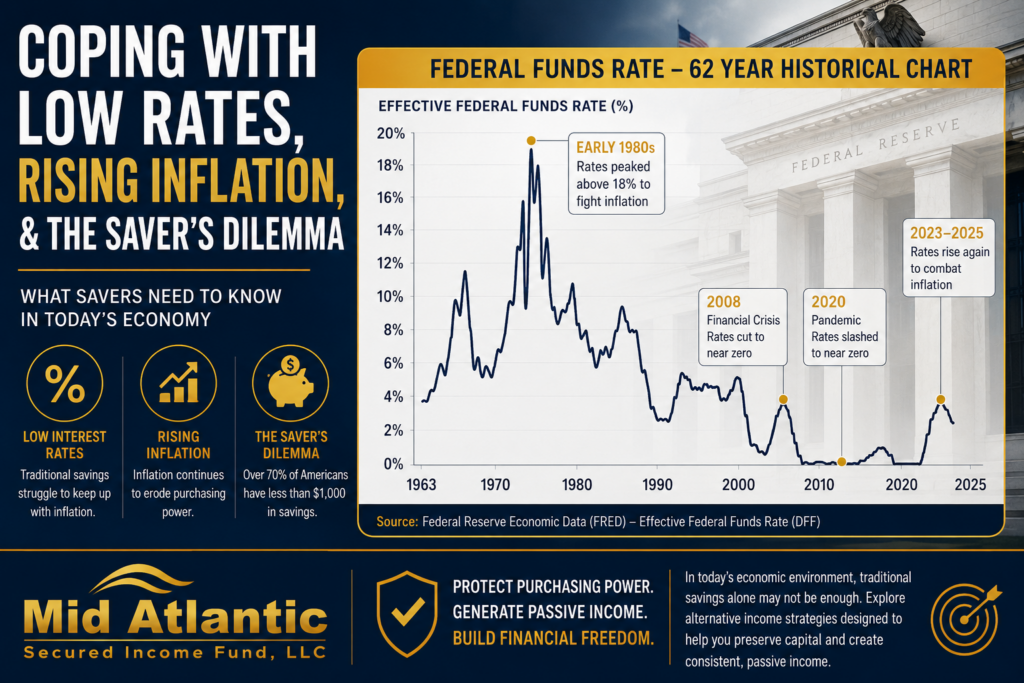
Inflation remains one of the largest threats to long-term purchasing power.
According to the U.S. Bureau of Labor Statistics, cumulative inflation over the past several years significantly increased the cost of housing, healthcare, insurance, utilities, food, and transportation.
Even moderate inflation can dramatically erode wealth over time.
For example:
- At 3% annual inflation, purchasing power is effectively cut in half in approximately 24 years.
- Retirees living on fixed savings face increasing pressure when income growth does not keep pace with living expenses.
This reality has led many investors to prioritize investments capable of producing durable income and potential inflation resilience.
The Retirement Gap Is Growing
Many Americans remain underprepared for retirement.
Research from multiple financial institutions including PwC and BlackRock has consistently shown that a substantial percentage of Americans lack confidence in their retirement readiness.
Several factors contribute to this challenge:
- increased longevity,
- rising healthcare costs,
- uncertainty around Social Security,
- market volatility,
- and inadequate retirement savings rates.
As a result, investors are increasingly focused on income-oriented portfolios designed to generate recurring distributions rather than depending entirely on asset appreciation.
Why Passive Income Has Become Central to Wealth Planning
Passive income has evolved from a niche concept into a cornerstone of modern financial planning.
What Is Passive Income?
Passive income refers to income generated from investments or assets that do not require ongoing active labor.
Examples include:
- dividends,
- bond interest,
- rental income,
- private credit income,
- real estate debt fund distributions,
- royalties,
- and alternative income-focused investments.
For sophisticated investors, passive income strategies can help:
- reduce dependence on salary income,
- smooth cash flow,
- support retirement spending,
- diversify portfolios,
- and improve long-term financial flexibility.
How Private Credit Fits Into Financial Freedom Strategies
Private credit has emerged as one of the fastest-growing areas of alternative investing.
According to Preqin and other institutional research firms, private credit assets under management have grown substantially over the past decade as investors seek:
- higher income potential,
- diversification from public markets,
- floating-rate exposure,
- and asset-backed investment opportunities.
What Is Private Credit?
Private credit refers to non-bank lending strategies where capital is provided directly to businesses, real estate projects, or borrowers outside traditional public bond markets.
These investments may include:
- senior secured lending,
- bridge loans,
- real estate debt funds,
- receivables financing,
- and asset-backed private loans.
Unlike public equities, private credit investments are often structured around contractual income payments and collateral-backed lending arrangements.
Why Investors Are Increasingly Interested in Asset-Backed Investing
Many sophisticated investors prioritize downside protection alongside income generation.
Asset-backed investing seeks to provide additional structural protections through collateralized lending.
Examples of collateral may include:
- real estate,
- receivables,
- business assets,
- inventory,
- or other pledged collateral.
This differs from purely speculative investments that may rely entirely on future appreciation.
Real Estate Debt Funds and Income-Focused Investing
Real estate debt funds have become increasingly attractive among investors seeking income-oriented alternatives to traditional fixed income markets.
How Real Estate Debt Funds Work
Real estate debt funds generally invest in loans secured by income-producing or development-related real estate assets.
These may include:
- multifamily properties,
- residential development projects,
- bridge loans,
- stabilized commercial assets,
- or construction financing.
Income is typically generated through interest payments on the underlying loans.
Because many structures involve senior secured lending positions, investors are often attracted to the collateral-backed nature of these strategies.
Financial Freedom Requires Multiple Income Streams
One of the defining characteristics of financially resilient households is diversified income generation.
Sophisticated investors frequently combine:
- traditional equities,
- bonds,
- private credit,
- real estate,
- alternative investments,
- retirement accounts,
- and passive income strategies.
This diversification can potentially reduce concentration risk while improving portfolio resilience.
The Psychological Benefits of Financial Freedom
Financial freedom is not solely mathematical.
Research consistently shows that financial stress impacts:
- mental health,
- relationships,
- physical well-being,
- and long-term decision making.
When individuals build recurring income streams and reduce financial uncertainty, they often gain:
- increased flexibility,
- improved confidence,
- greater long-term planning ability,
- and enhanced lifestyle stability.
Why Sophisticated Investors Focus on Risk Management
Institutional investors rarely focus exclusively on maximizing returns.
Instead, many prioritize:
- downside protection,
- cash flow consistency,
- risk-adjusted returns,
- and capital preservation.
This philosophy increasingly influences affluent individual investors as well.
In uncertain markets, protecting capital can become just as important as pursuing growth.
The Role of Financial Education
Financial literacy remains one of the largest determinants of long-term financial outcomes.
According to studies from FINRA and the National Financial Educators Council, many Americans struggle with:
- inflation understanding,
- investing concepts,
- retirement planning,
- interest rates,
- and long-term compounding.
Investors who understand:
- diversification,
- income investing,
- asset allocation,
- and risk management
are often better positioned to make informed financial decisions over time.
How Accredited Investors Use Alternative Investments
Accredited investors often seek access to investment opportunities beyond traditional public markets.
These may include:
- private equity,
- private credit,
- hedge funds,
- venture capital,
- and real estate debt funds.
Alternative investments can potentially offer:
- portfolio diversification,
- lower public market correlation,
- income generation,
- and exposure to specialized investment strategies.
However, they also involve unique risks including illiquidity, market risk, and manager selection risk.
Inflation, Interest Rates, and the Search for Income
Rising interest rates and persistent inflation have reshaped portfolio construction discussions.
Many investors are increasingly focused on:
- income-producing assets,
- real assets,
- private lending,
- and diversified income streams.
This environment has accelerated institutional and individual interest in private credit markets.
How Financial Freedom Is Built Over Time
Financial freedom rarely happens quickly.
Most long-term wealth strategies rely on:
- consistency,
- disciplined investing,
- reinvestment,
- diversification,
- and long-term planning.
Common characteristics among financially successful investors often include:
- living below their means,
- prioritizing recurring income,
- avoiding excessive leverage,
- maintaining long-term perspectives,
- and focusing on compounding.
The Importance of Long-Term Thinking
Financial freedom is often undermined by short-term decision making.
Emotional investing during market volatility can negatively impact long-term outcomes.
Sophisticated investors frequently focus on:
- strategic asset allocation,
- long-term macroeconomic trends,
- risk management,
- and durable income generation.
Private Credit and Retirement Income Strategies
Income-focused alternative investments are increasingly discussed within retirement planning frameworks.
Some investors use private credit allocations to complement:
- dividend portfolios,
- bond allocations,
- real estate holdings,
- and retirement accounts.
The objective is often to create diversified income streams that may support long-term retirement goals.
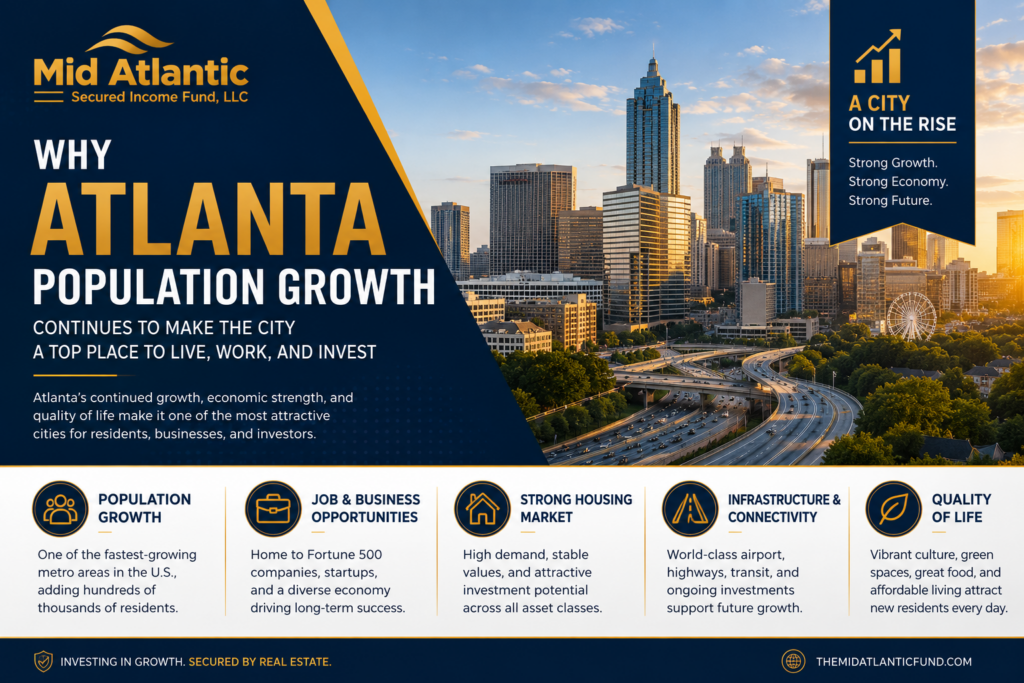
Why Geographic Economic Trends Matter
Regional economic growth can influence real estate and lending opportunities.
The Southeast United States, including Atlanta, has experienced:
- population growth,
- corporate relocation activity,
- infrastructure expansion,
- and housing demand increases.
These trends continue to shape regional investment opportunities across real estate and private lending markets.
Financial Freedom Is Ultimately About Optionality
True financial freedom is not necessarily defined by luxury.
It is defined by flexibility.
The ability to:
- choose how time is spent,
- reduce financial stress,
- support family goals,
- pursue opportunities,
- and navigate uncertainty more confidently
is often at the heart of long-term financial independence.
For many sophisticated investors, achieving that freedom involves combining:
- disciplined saving,
- diversified investing,
- passive income generation,
- financial education,
- and long-term strategic thinking.
FAQ Section
What is financial freedom?
Financial freedom means having sufficient income, savings, and investments to support your lifestyle without relying entirely on active employment income.
What are passive income investments?
Passive income investments generate recurring income with limited ongoing labor. Examples include dividends, private credit income, rental income, and real estate debt fund distributions.
What is private credit investing?
Private credit investing involves non-bank lending strategies where investors provide capital directly to borrowers through private lending structures.
Are alternative investments risky?
Alternative investments can involve risks including illiquidity, market risk, and economic uncertainty. However, many investors use them to diversify portfolios and pursue income-oriented strategies.
How do real estate debt funds work?
Real estate debt funds generally invest in loans secured by real estate assets and generate income primarily through interest payments.
Why are investors interested in asset-backed investments?
Asset-backed investments may provide additional structural protections through collateralized lending arrangements tied to underlying assets.