Atlanta has become one of the most influential growth markets in the United States. Over the past two decades, the metro area has experienced sustained population growth, corporate expansion, infrastructure investment, and economic diversification that continue reshaping the Southeast.
Today, Atlanta is not only attracting new residents — it is increasingly attracting:
- businesses,
- institutional capital,
- real estate development,
- technology companies,
- and investors seeking long-term economic stability.
As population trends continue shifting toward lower-cost, business-friendly markets, many analysts believe Atlanta remains positioned for continued expansion in the years ahead.
Atlanta Population Growth Continues to Outpace Much of the Country
One of the biggest drivers behind Atlanta’s economic momentum is sustained population growth.
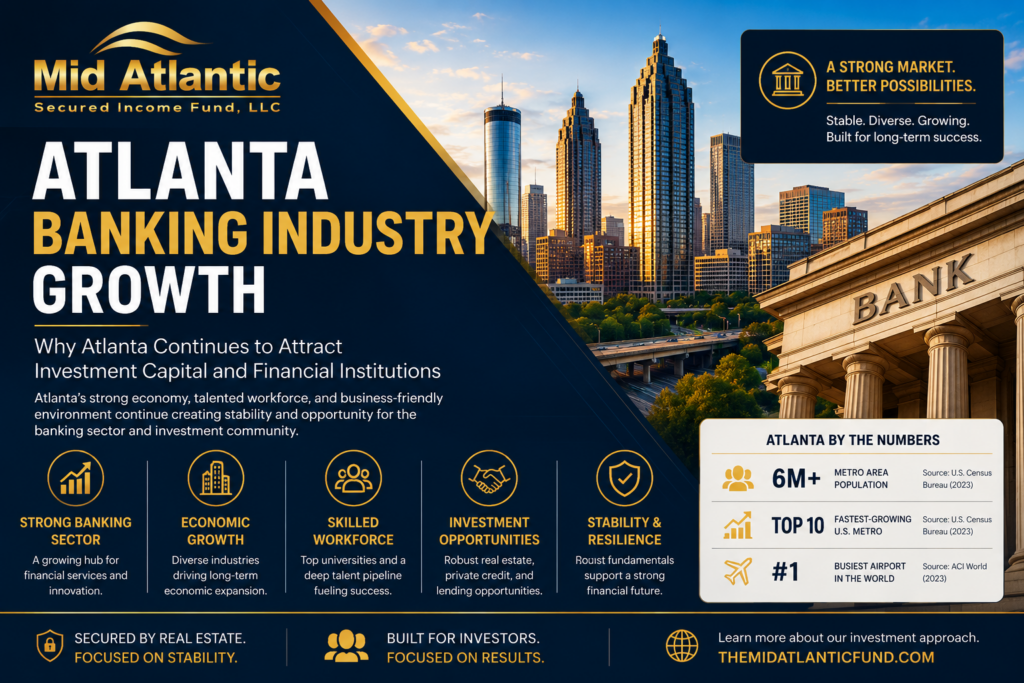
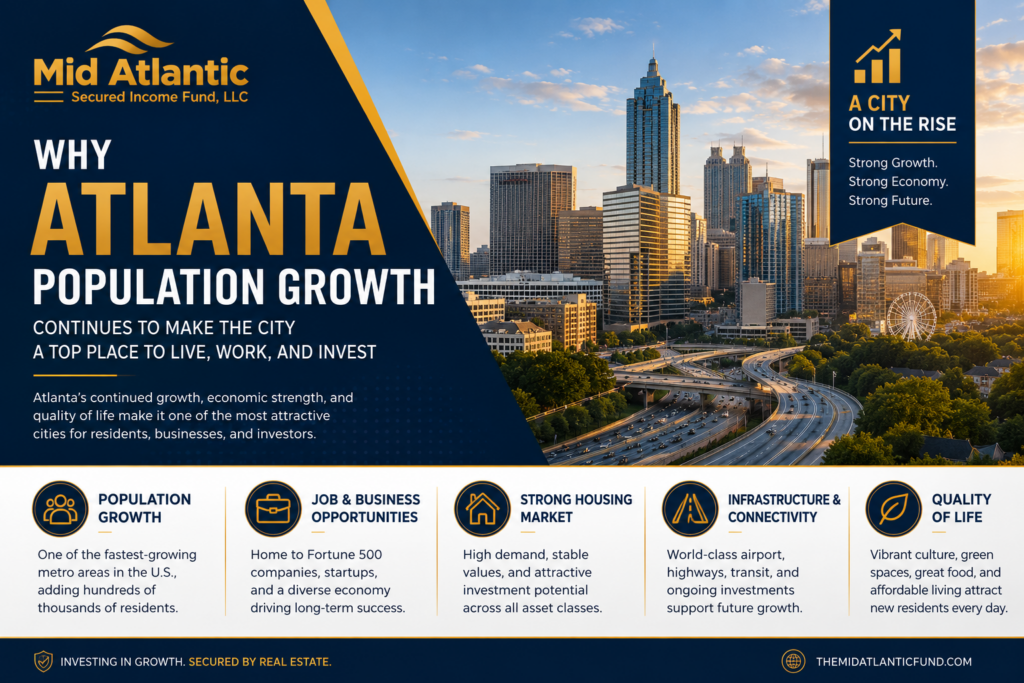
According to the U.S. Census Bureau, the Atlanta metropolitan area continues ranking among the fastest-growing large metro areas in the United States, adding hundreds of thousands of residents over the last decade.
The Atlanta-Sandy Springs-Alpharetta metro area is now home to more than 6.3 million residents, making it one of the nation’s largest and most economically important metropolitan regions.
This continued growth has created long-term demand across:
- housing,
- infrastructure,
- logistics,
- healthcare,
- office development,
- and commercial real estate.
For investors and businesses, population growth often serves as a foundational indicator of long-term economic durability.
Atlanta Job Growth and Corporate Expansion
Another major reason Atlanta population growth remains strong is the city’s diverse and expanding job market.
Atlanta has evolved into a major hub for:
- financial services,
- logistics,
- healthcare,
- fintech,
- cybersecurity,
- media,
- and technology.
The metro area is home to numerous Fortune 500 companies, including:
- The Coca-Cola Company
- Delta Air Lines
- Home Depot
- UPS
- Southern Company
Atlanta has also become a growing destination for startups and venture-backed companies due to:
- lower operating costs,
- access to talent,
- favorable tax environments,
- and strong transportation infrastructure.
According to the Bureau of Labor Statistics, Atlanta’s labor market has continued demonstrating resilience compared to many major metropolitan areas nationwide.
Why Atlanta Quality of Life Continues Attracting New Residents
Beyond economics, Atlanta continues attracting residents because of its lifestyle advantages.
Many people relocating from higher-cost cities cite:
- affordability relative to coastal markets,
- warmer climate,
- business opportunities,
- cultural diversity,
- and lifestyle flexibility.
Atlanta offers:
- professional sports,
- nationally recognized dining,
- entertainment districts,
- green spaces,
- strong suburban communities,
- and access to outdoor recreation throughout Georgia and the Southeast.
The city also continues investing heavily in parks, trails, and public development projects, including BeltLine expansion initiatives that continue transforming urban neighborhoods.
Atlanta Real Estate Market Stability
Population growth and job creation have helped support long-term real estate demand across the metro area.
While housing markets nationwide have experienced volatility in recent years, Atlanta has continued benefiting from:
- inbound migration,
- employment growth,
- and relatively strong affordability compared to many major U.S. cities.
Atlanta’s housing market includes:
- urban multifamily development,
- suburban single-family growth,
- industrial expansion,
- mixed-use development,
- and build-to-rent communities.
The city’s continued expansion has made Atlanta a major focus for:
- institutional investors,
- private equity firms,
- real estate developers,
- and private credit lenders.
Many investors continue viewing Atlanta as a long-term growth market because of its combination of:
- economic diversity,
- demographic expansion,
- and business-friendly policies.
Infrastructure and Transportation Continue Supporting Atlanta Growth
Atlanta’s infrastructure remains another major factor supporting long-term population growth.
The city benefits from:
- a major interstate highway network,
- extensive freight and logistics connectivity,
- expanding public transportation,
- and one of the world’s busiest airports.
Hartsfield–Jackson Atlanta International Airport continues serving as a critical economic engine for the region, supporting:
- tourism,
- commerce,
- corporate relocation,
- and global connectivity.
Atlanta’s infrastructure investments continue supporting future growth through:
- roadway expansion,
- logistics development,
- mixed-use urban projects,
- and transit-oriented development initiatives.
Atlanta Continues Benefiting From Sun Belt Migration Trends
One of the most important macroeconomic trends benefiting Atlanta is continued migration toward Sun Belt markets.
Over the last several years, many Americans and businesses have relocated from higher-cost regions into:
- Georgia,
- Texas,
- Florida,
- Tennessee,
- and the broader Southeast.
Key drivers include:
- lower taxes,
- lower operating costs,
- housing affordability,
- favorable business climates,
- and demographic shifts.
Atlanta has emerged as one of the primary beneficiaries of this migration trend.
Why Population Growth Matters for Real Estate and Private Credit
Population growth is more than a demographic trend — it can directly influence:
- housing demand,
- commercial development,
- infrastructure spending,
- and lending opportunities.
Growing markets often create increased demand for:
- residential construction,
- multifamily development,
- bridge lending,
- land development,
- and real estate-backed financing.
This is one reason many investors continue monitoring high-growth metropolitan markets like Atlanta when evaluating long-term investment opportunities.
At The Mid Atlantic Fund the focus remains on senior secured, real estate-backed lending strategies tied to markets with strong underlying economic fundamentals.
Investors can also explore additional insights through the Mid Atlantic Knowledge Hub covering:
- private credit,
- real estate-backed investing,
- passive income strategies,
- and market trends shaping the investment landscape.
Atlanta’s Long-Term Outlook Remains Strong
While no market is immune to economic cycles, Atlanta continues demonstrating many characteristics associated with long-term regional strength:
- population growth,
- corporate investment,
- infrastructure expansion,
- diversified employment,
- and sustained housing demand.
These factors continue positioning Atlanta as:
- a major business hub,
- a desirable relocation market,
- and an important region for long-term real estate and economic growth.
For investors, businesses, and residents alike, Atlanta’s continued expansion reflects broader trends reshaping the American economy.
Frequently Asked Questions
Why is Atlanta growing so quickly?
Atlanta continues benefiting from population migration, corporate relocations, job growth, housing demand, and lower costs relative to many large coastal cities.
Is Atlanta a good place to invest in real estate?
Many investors view Atlanta as a long-term growth market because of strong population growth, economic diversification, and housing demand.
What industries are growing in Atlanta?
Major growth sectors include:
- logistics,
- healthcare,
- fintech,
- cybersecurity,
- media,
- technology,
- and real estate development.
Why are people moving to Atlanta?
Common reasons include:
- lower cost of living,
- business opportunities,
- warmer climate,
- quality of life,
- and strong economic growth.
How does population growth impact real estate markets?
Population growth often increases demand for housing, infrastructure, commercial development, and financing opportunities.