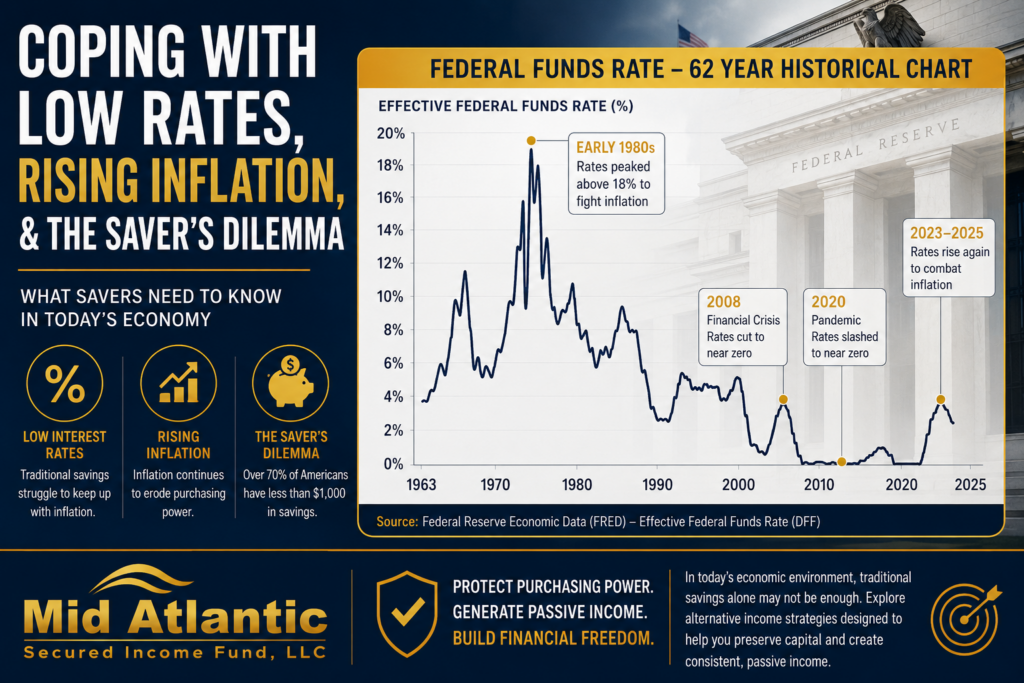

Periods of market volatility have historically reshaped investor behavior.
From inflation shocks and interest-rate cycles to geopolitical uncertainty and recession concerns, investors are increasingly confronting an investment environment defined by elevated volatility, changing correlations, and greater macroeconomic complexity.
For decades, traditional portfolio construction centered around public equities and bonds. However, recent market cycles exposed vulnerabilities in conventional diversification strategies, particularly during periods when both stocks and traditional fixed income experienced simultaneous declines.
As a result, sophisticated investors are increasingly seeking alternative investments capable of prioritizing:
- capital preservation
- downside protection
- income consistency
- reduced public market correlation
- asset-backed stability
One area attracting significant institutional attention is private credit investing.
Private credit, particularly senior secured and asset-backed lending strategies, has rapidly evolved into one of the largest and fastest-growing segments within alternative investments.
According to Preqin and institutional research firms, global private credit assets under management have expanded dramatically over the past decade as pension funds, family offices, endowments, and accredited investors seek more resilient portfolio construction approaches.
At The Mid Atlantic Secured Income Fund, the investment philosophy centers on disciplined, income-oriented, asset-backed lending strategies designed to help investors navigate uncertain market conditions with a focus on stability and long-term risk management.
What Is Market Volatility?
Direct Answer
Market volatility refers to the degree of price fluctuation experienced by financial markets over time.
Volatility may increase due to:
- inflation concerns
- interest-rate changes
- economic slowdowns
- banking instability
- geopolitical events
- recession fears
- liquidity disruptions
- investor sentiment shifts
Periods of elevated volatility can create uncertainty across traditional stock and bond markets, prompting investors to seek more defensive and income-focused investment strategies.
Why Volatility Has Become a Defining Investment Theme
The Traditional 60/40 Portfolio Has Been Challenged
For decades, investors relied heavily on the traditional 60% stock / 40% bond portfolio model.
Historically:
- equities provided growth
- bonds provided income and stability
However, recent market cycles demonstrated that rising interest rates and inflationary pressures can negatively impact both asset classes simultaneously.
According to Federal Reserve and Morningstar data, many bond portfolios experienced historically large drawdowns during the recent rate-tightening environment.
This challenged long-standing assumptions about traditional diversification.
Inflation Remains a Structural Concern
Inflation continues influencing investor behavior globally.
Even as headline inflation moderates from recent peaks, elevated living costs, wage pressures, and structural supply-chain dynamics remain ongoing macroeconomic considerations.
For retirees and income-focused investors, inflation risk matters because it directly impacts purchasing power.
Investors increasingly seek investments capable of generating:
- durable cash flow
- income consistency
- inflation-aware returns
- portfolio resilience
What Is Private Credit Investing?
Direct Answer
Private credit investing involves privately negotiated lending strategies outside traditional public bond markets.
Private credit investments may include:
- real estate debt
- bridge lending
- senior secured lending
- asset-backed loans
- receivables financing
- private corporate lending
- construction financing
Unlike publicly traded bonds, private credit investments are often:
- collateral-backed
- contractually structured
- income-oriented
- less correlated to daily market sentiment
Private credit has become a major allocation category for institutional investors globally.
Why Institutional Investors Are Increasingly Allocating to Private Credit
Large institutional firms such as Apollo, Blackstone, KKR, Ares, and Goldman Sachs have significantly expanded their private credit platforms in recent years.
Why?
Because many investors increasingly value:
- predictable income streams
- contractual cash-flow structures
- downside protection
- asset-backed collateral
- diversification away from public markets
According to Preqin, private credit has become one of the fastest-growing alternative asset classes globally.
Institutional demand continues increasing as investors seek greater portfolio durability in uncertain economic environments.
How Asset-Backed Investing Can Help Provide Stability
Real Assets Matter During Volatile Periods
One reason investors increasingly explore private credit strategies is the emphasis on tangible collateral.
Asset-backed investments may include loans secured by:
- residential real estate
- multifamily properties
- commercial real estate
- receivables
- equipment
- inventory
- contractual cash flows
In many cases, collateral-backed lending structures may provide additional downside protection relative to unsecured investments.
What Is Senior Secured Lending?
Direct Answer
Senior secured lending refers to loans that hold priority repayment status and are backed by collateral.
In many lending structures, senior secured lenders:
- occupy first-lien positions
- maintain legal claims against collateral
- receive repayment priority before subordinate debt holders
This structure is one reason many sophisticated investors increasingly allocate capital toward senior secured lending strategies.
Why Real Estate Debt Funds Are Attracting Attention
Real estate debt funds continue gaining popularity among income-focused investors.
Unlike equity real estate investments, debt-focused strategies prioritize:
- interest income
- contractual loan payments
- collateral-backed structures
- capital preservation discipline
Real estate debt strategies may finance:
- residential development
- multifamily housing
- bridge lending
- acquisition financing
- stabilized income properties
Housing supply shortages across many U.S. regions continue supporting long-term financing demand.
According to Freddie Mac research, the United States continues facing structural housing shortages in many markets.
This creates ongoing lending opportunities tied to real estate-backed investments.
Private Credit vs Traditional Fixed Income
|
Investment Type |
Traditional Bonds |
Private Credit |
|---|---|---|
|
Publicly Traded |
Yes |
No |
|
Daily Price Volatility |
High |
Lower Relative Volatility |
|
Collateral Backing |
Limited |
Frequently Asset-Backed |
|
Income Potential |
Moderate |
Often Higher |
|
Market Correlation |
Higher |
Lower Relative Correlation |
|
Institutional Adoption |
Mature |
Rapidly Expanding |
Why Diversification Matters More Than Ever
Periods of volatility reinforce the importance of diversification.
Sophisticated investors increasingly diversify across:
- public equities
- private credit
- real estate
- cash-flow strategies
- alternative investments
- fixed income alternatives
The goal is not eliminating risk entirely.
The goal is creating more resilient portfolio construction.
The Rise of Alternative Investments
Alternative investments were once dominated primarily by:
- pension funds
- endowments
- sovereign wealth funds
- ultra-high-net-worth families
Today, accredited investors increasingly access private market strategies through:
- private credit funds
- real estate debt funds
- private lending vehicles
- income-focused investment funds
This shift represents one of the largest structural changes in modern investing.
Why Income Consistency Matters in Volatile Markets
Many investors focus heavily on portfolio growth during bull markets.
However, during uncertain periods, recurring income often becomes increasingly important.
Income-oriented investors frequently prioritize:
- cash-flow predictability
- lower volatility
- downside protection
- portfolio durability
- capital preservation
Private lending strategies structured around contractual interest payments may provide certain advantages compared to purely appreciation-driven investment strategies.
Atlanta and the Southeast: A Long-Term Economic Growth Story
Regional economic trends continue influencing investment opportunities.
Atlanta and the broader Southeast continue benefiting from:
- population migration
- corporate relocations
- logistics infrastructure
- housing demand
- economic expansion
- banking and financial sector growth
According to U.S. Census migration trends, the Southeast remains one of the fastest-growing regions in the country.
This regional growth continues supporting financing demand tied to:
- residential housing
- multifamily development
- infrastructure
- commercial real estate
The Mid Atlantic Secured Income Fund focuses heavily on asset-backed opportunities tied to long-term regional growth dynamics.
Inflation, Interest Rates, and Investor Psychology
Volatility is not driven solely by economic fundamentals.
Investor psychology also plays a major role.
Periods of uncertainty often increase emotional decision-making, particularly within public markets.
Private credit investments may help reduce exposure to:
- daily market swings
- algorithmic trading volatility
- sentiment-driven price movements
This can provide a different investment experience compared to publicly traded securities.
Risks Investors Should Understand
Direct Answer
All investments involve risk, including private credit investments.
Potential risks include:
- borrower default
- real estate downturns
- liquidity constraints
- economic recessions
- underwriting risk
- interest-rate changes
Investors should evaluate:
- collateral quality
- underwriting discipline
- manager experience
- diversification practices
- loan structures
- legal protections
Sophisticated investing always requires balancing opportunity with risk management.
Why Accredited Investors Are Increasingly Exploring Asset-Backed Strategies
Accredited investors increasingly prioritize investments that emphasize:
- stability
- income generation
- downside protection
- lower public market correlation
- long-term portfolio resilience
This shift has accelerated following recent volatility across both equities and traditional fixed income markets.
Alternative investments increasingly represent a strategic allocation category rather than a niche investment segment.
The Importance of Underwriting Discipline
Private credit investing is highly dependent on underwriting quality.
Institutional-grade underwriting typically involves evaluating:
- borrower strength
- collateral value
- loan-to-value ratios
- market conditions
- repayment structures
- legal protections
Conservative underwriting remains one of the most important risk-management principles in private lending.
Why Investors Continue Seeking Asset-Backed Income Strategies
Modern investors increasingly recognize that income generation and capital preservation may require looking beyond traditional public markets.
Asset-backed lending strategies may provide:
- recurring income potential
- portfolio diversification
- reduced public market correlation
- collateral-backed structures
- long-term investment discipline
These characteristics continue attracting institutional and accredited investor interest globally.
Learn More About Private Credit and Income Investing
Additional educational resources available through The Mid Atlantic Fund Knowledge Hub include:
- https://themidatlanticfund.com/passive-income-strategies-for-retirement/
- https://themidatlanticfund.com/low-interest-rates-inflation-savers-dilemma/
- https://themidatlanticfund.com/why-invest-in-mid-atlantic-fund/
- https://themidatlanticfund.com/knowledge-hub/
- https://themidatlanticfund.com/passive-income-investment-calculator/
- https://themidatlanticfund.com/ira-investing-with-mid-atlantic-fund/
Conclusion
The investment landscape continues evolving rapidly.
Rising volatility, inflation uncertainty, and changing interest-rate environments are reshaping how sophisticated investors think about risk, diversification, and income generation.
As traditional portfolios face increasing complexity, private credit and asset-backed lending strategies continue emerging as important tools for investors focused on:
- stability
- income consistency
- downside protection
- capital preservation
- long-term portfolio resilience
Institutional adoption trends suggest private credit will likely remain a defining investment theme for years to come.
For investors seeking disciplined, asset-backed, income-focused investment strategies, private lending continues offering an increasingly relevant alternative within modern portfolio construction.
FAQ Section
What is market volatility?
Market volatility refers to the frequency and magnitude of price fluctuations across financial markets.
What is private credit investing?
Private credit investing involves privately negotiated loans made outside traditional public bond markets.
Why do investors turn to private credit during volatile markets?
Many investors seek private credit because it may provide recurring income, asset-backed protections, and lower public market correlation.
What are asset-backed investments?
Asset-backed investments are investments secured by tangible collateral such as real estate, receivables, equipment, or contractual cash flows.
Are private credit investments safer than stocks?
Private credit investments may offer lower relative volatility and collateral protections, but all investments involve risk.