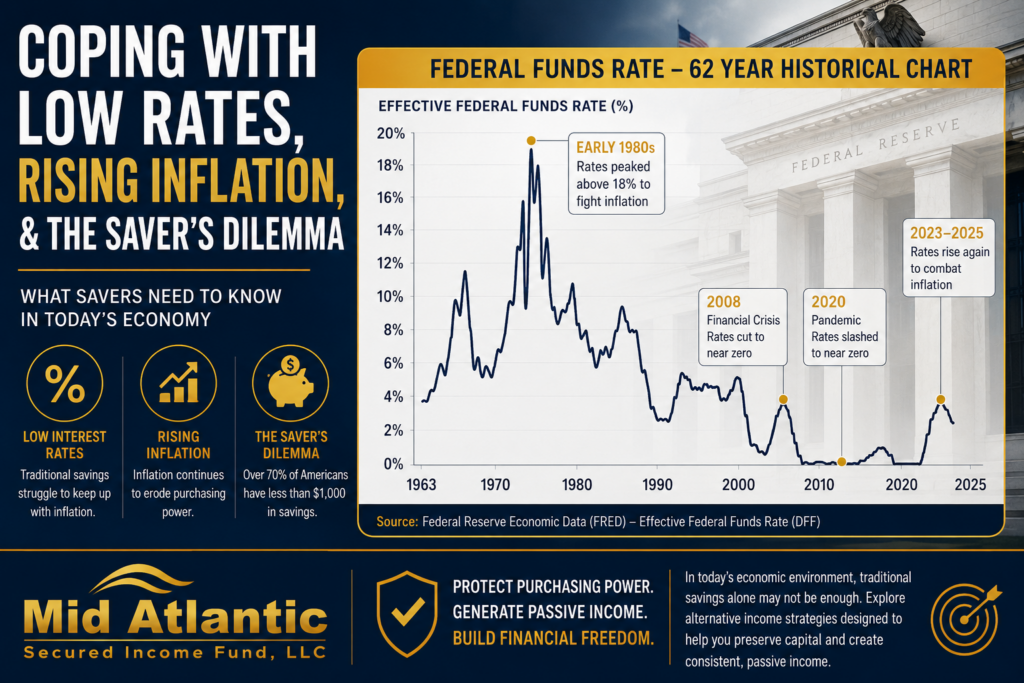

Long-term investment funds can hold stocks, bonds, private credit, real estate, or a mix of assets. Compare their goals, fees, risks, and withdrawal terms before choosing a fund. A long holding period does not guarantee growth or protect against loss.
How should investors compare long-term investment funds?
- Match the goal: Decide whether the allocation is intended for growth, current income, or both.
- Check access to cash: Keep near-term spending needs separate from funds with lockups or limited redemptions.
- Read the terms: Review fees, leverage, valuation methods, portfolio concentration, and the manager’s reporting.
Why Long-Term Investing Is Changing
For decades, long-term investing was often simplified into a relatively straightforward formula:
- buy public equities,
- remain invested,
- reinvest dividends,
- and allow markets to compound over time.
While long-term compounding remains one of the most powerful forces in investing, today’s economic environment has become materially more complex.
Modern investors face a combination of structural pressures including:
- elevated market concentration,
- persistent inflation concerns,
- rising global debt levels,
- geopolitical instability,
- higher interest rates,
- and increased public market volatility.
As a result, sophisticated investors increasingly ask more nuanced questions:
- What types of investment funds are best positioned for long-term growth?
- How should investors balance appreciation and income?
- What role should alternative investments play in modern portfolios?
- How do institutions manage downside risk while pursuing growth?
- Are traditional stock-and-bond allocations still sufficient?
Increasingly, institutional portfolio construction emphasizes not only growth potential — but also:
- resilience,
- diversification,
- income durability,
- and risk-adjusted portfolio sustainability.
This shift has accelerated investor interest in:
- private credit,
- alternative investment funds,
- secured lending,
- real assets,
- and diversified income-producing strategies.
What Is a Long-Term Growth Investment Fund?
Direct Answer
A long-term growth investment fund is an investment vehicle designed to grow investor capital over extended time horizons through appreciation, income generation, diversification, or a combination of these strategies.
Long-term growth funds may include exposure to:
- equities,
- private credit,
- alternative investments,
- real estate-backed lending,
- infrastructure assets,
- fixed income,
- and diversified private market strategies.
Sophisticated investors often evaluate long-term growth funds based on:
- portfolio durability,
- diversification,
- risk management,
- cash flow generation,
- and long-term compounding potential.
Why Institutional Investors Think Differently About Growth
Growth Is No Longer About Maximum Risk
One of the largest misconceptions in investing is the assumption that maximizing growth requires maximizing risk exposure.
Institutional investors often approach long-term growth differently.
Rather than pursuing speculative upside alone, sophisticated portfolio construction increasingly emphasizes:
- risk-adjusted returns,
- diversification,
- downside management,
- and sustainable compounding.
This distinction matters significantly over long investment horizons.
Large drawdowns may materially impair long-term compounding efficiency.
As a result, institutions increasingly prioritize resilience alongside growth potential.
The Rise of Alternative Investments
Alternatives Are No Longer “Alternative”
Alternative investments have increasingly become mainstream components of institutional portfolios.
According to BlackRock, Apollo Global Management, and Preqin, institutional allocations to private markets have grown substantially over the last decade.
This growth has been driven by several structural trends:
|
Structural Trend |
Investor Impact |
|---|---|
|
Public market volatility |
Increased diversification demand |
|
Inflation concerns |
Focus on real assets |
|
Higher interest rates |
Renewed interest in private credit |
|
Market concentration |
Search for uncorrelated assets |
|
Retirement sustainability concerns |
Emphasis on income-producing investments |
Alternative investments increasingly play a role in long-term portfolio diversification and income generation.
Understanding Private Credit
What Is Private Credit?
Private credit refers to non-bank lending where investors provide capital directly to borrowers through privately negotiated debt investments rather than traditional public bond markets or bank financing.
Private credit strategies may include:
- bridge lending,
- commercial real estate lending,
- construction financing,
- asset-backed lending,
- and specialty finance.
Private credit has become one of the fastest-growing institutional asset classes globally.
Why Private Credit Has Gained Institutional Attention
Several characteristics explain why institutional investors increasingly allocate to private credit:
1. Income Generation
Private credit often produces recurring interest-based cash flow.
2. Diversification
Private markets may reduce reliance on public equities.
3. Collateral Awareness
Many private credit strategies involve asset-backed structures.
4. Higher Rate Environment
Rising rates increased attractiveness of lending-oriented investments.
5. Institutional Portfolio Construction
Private credit increasingly complements broader diversified portfolios.
The Importance of Diversification
Diversification Remains Foundational
One of the most consistent principles across institutional investing is diversification.
Sophisticated investors rarely rely on a single asset class for long-term wealth creation.
Instead, institutional portfolios increasingly incorporate exposure across:
- public equities,
- fixed income,
- private credit,
- real assets,
- alternative investments,
- and income-producing strategies.
Diversification may help reduce concentration risk while improving portfolio resilience across economic cycles.
Why Income Matters in Long-Term Growth
Cash Flow Improves Portfolio Durability
Historically, many growth-oriented portfolios focused almost entirely on appreciation.
Today, investors increasingly recognize the value of recurring cash flow within long-term wealth-building strategies.
Income-producing investments may help:
- reduce reliance on market timing,
- improve liquidity flexibility,
- support reinvestment compounding,
- and reduce forced asset sales during downturns.
This explains why many institutional portfolios increasingly balance:
- appreciation,
- passive income,
- and downside awareness.
Understanding Secured Investments
What Are Secured Investments?
Secured investments are investments backed by collateral or underlying assets that may provide additional structural protections compared to unsecured investments.
Examples may include:
- senior secured loans,
- real estate-backed lending,
- asset-backed credit,
- and collateralized income-producing investments.
Collateral structures do not eliminate risk.
However, they may improve portfolio positioning during economic stress.
Are Debt Funds Safer Than Stocks?
Direct Answer
Debt-oriented investments are not inherently safer than stocks, but certain debt funds may offer:
- contractual income,
- lower volatility characteristics,
- collateral backing,
- or senior repayment positioning
depending on the structure and underwriting quality.
All investments carry risk.
Sophisticated investors evaluate investments based on:
- diversification,
- underwriting discipline,
- liquidity,
- economic conditions,
- and portfolio objectives.
Real Estate-Backed Investments and Long-Term Growth
Why Real Assets Continue Attracting Capital
Real estate-backed investments increasingly play a role within diversified institutional portfolios.
Debt-focused real estate strategies often emphasize:
- contractual repayment,
- underwriting discipline,
- collateral backing,
- and recurring cash flow.
Institutional investors frequently evaluate:
- loan-to-value ratios,
- borrower quality,
- geographic diversification,
- and market fundamentals
when assessing real estate-backed lending strategies.
Real assets may also help diversify traditional public market exposure.
Inflation and Long-Term Investing
Inflation Is a Major Threat to Wealth Compounding
Inflation gradually erodes purchasing power over time.
According to the U.S. Bureau of Labor Statistics, inflation surged to multi-decade highs following pandemic-era monetary expansion and supply chain disruptions.
Long-term investors increasingly prioritize investments capable of supporting:
- purchasing power preservation,
- income generation,
- and portfolio resilience.
This has increased investor focus on:
- private credit,
- real assets,
- alternative investments,
- and diversified income-producing strategies.
Behavioral Finance and Long-Term Wealth Creation
Emotional Investing Can Destroy Compounding
Behavioral finance research consistently demonstrates that emotional decision-making may negatively impact long-term investment outcomes.
Market volatility often triggers:
- panic selling,
- speculative repositioning,
- and short-term reactionary behavior.
Sophisticated investors increasingly emphasize disciplined portfolio construction designed to reduce emotional decision-making.
Income-producing investments and diversified allocations may help improve investor discipline across market cycles.
How Institutional Investors Evaluate Long-Term Funds
Institutions Focus on Sustainability
Institutional investors rarely evaluate investment funds based solely on short-term performance.
Instead, sophisticated due diligence focuses on:
- underwriting quality,
- diversification,
- manager experience,
- downside management,
- and long-term consistency.
Several institutional principles increasingly shape sophisticated long-term investing:
|
Institutional Principle |
Objective |
|---|---|
|
Diversification |
Reduce concentration risk |
|
Risk Management |
Improve long-term durability |
|
Income Stability |
Support sustainable compounding |
|
Collateral Awareness |
Strengthen downside structure |
|
Long-Term Allocation |
Reduce emotional investing |
Retirement Planning and Long-Term Growth
Retirement Investing Is Evolving
Modern retirement planning increasingly balances:
- growth,
- passive income,
- inflation resilience,
- and downside management.
Longer life expectancy and rising living costs have increased investor focus on:
- diversified income streams,
- alternative investments,
- and portfolio durability.
This has contributed to growing institutional interest in diversified private market strategies.
Self-Directed IRAs and Alternative Investments
Diversification Beyond Traditional Markets
Self-directed IRAs allow eligible investors to hold certain alternative investments beyond traditional stocks and bonds.
Depending on custodial structures and regulations, these may include:
- private credit,
- real estate-backed investments,
- and alternative income-producing assets.
Investors exploring retirement diversification strategies may also review:
How The Mid Atlantic Fund Reflects Broader Institutional Trends
The Mid Atlantic Secured Income Fund operates within the broader institutional movement toward:
- diversified income-producing investments,
- private credit,
- secured lending,
- and asset-backed portfolio construction.
The broader educational framework surrounding the fund emphasizes:
- underwriting discipline,
- long-term investing,
- passive income education,
- and diversified portfolio construction principles.
Additional educational resources:
- Knowledge Hub
- Private Credit Products
- Passive Income Investment Calculator
- Why Invest in Mid Atlantic Fund
The Future of Long-Term Investing
Several structural trends are likely to continue influencing long-term investment fund strategies:
1. Greater Focus on Diversification
Investors increasingly seek broader portfolio exposure.
2. Institutional Expansion Into Private Markets
Private credit and alternatives continue growing rapidly.
3. Increased Demand for Passive Income
Cash flow increasingly matters within growth portfolios.
4. Inflation-Aware Portfolio Construction
Purchasing power preservation remains central.
5. Institutional Principles Moving Downstream
Individual investors increasingly adopt institutional allocation frameworks.
Final Thoughts
The best investment funds for long-term growth increasingly balance:
- appreciation potential,
- recurring income,
- diversification,
- and downside awareness.
Modern portfolio construction has evolved beyond simplistic stock-versus-bond allocation frameworks.
As inflation uncertainty, public market concentration, and economic volatility continue reshaping investor priorities, sophisticated portfolios increasingly incorporate:
- private credit,
- alternative investments,
- asset-backed lending,
- and diversified income-producing strategies.
Long-term wealth creation is rarely driven by speculation alone.
It is more often built through:
- disciplined investing,
- sustainable compounding,
- portfolio resilience,
- and diversified long-term allocation strategies.
Frequently Asked Questions (FAQ)
What is a long-term growth investment fund?
A long-term growth investment fund is an investment vehicle designed to grow capital over extended periods through appreciation, income generation, diversification, or a combination of strategies.
What are alternative investment funds?
Alternative investment funds are investments outside traditional public stocks and bonds that may include private credit, real estate, infrastructure, and other private market strategies.
What is private credit investing?
Private credit investing involves directly lending capital through privately negotiated debt investments outside traditional public bond and banking markets.
Why do institutional investors diversify portfolios?
Institutional investors diversify portfolios to reduce concentration risk and improve long-term portfolio resilience across changing economic environments.
Are secured investments safer than stocks?
Certain secured investments may provide collateral-backed structures and contractual income, but all investments carry risk.
Why does passive income matter for long-term growth?
Passive income may support reinvestment compounding, liquidity flexibility, and portfolio sustainability over long investment horizons.
How do accredited investors use private credit?
Accredited investors often use private credit to pursue passive income, diversification, and exposure to alternative investment strategies.
How should investors compare long-term investment funds?
Long-term investment funds should be compared by mandate, fees, underlying exposures, manager process, and liquidity provisions. A long investment horizon does not remove the need for emergency reserves or diversification. Understand the difference between an investor’s intended holding period and any contractual restriction on withdrawals.
For independent risk context, see the SEC’s private-placement investor bulletin.