
A fully leased building can still produce disappointing investor outcomes if costs rise, timelines slip, or the exit market weakens. That is why the benefits of real estate debt vs equity deserve a closer look, especially for accredited investors who prioritize income, downside protection, and capital preservation over appreciation-driven upside.
Real estate debt and real estate equity both sit under the broad umbrella of property investing, but they behave very differently. Equity investors typically own an interest in the property and participate in its profits after expenses and debt service are paid. Debt investors, by contrast, lend against the property and are contractually entitled to interest payments, with rights defined by loan documents and collateral.
For investors evaluating private market income strategies, that distinction matters more than many marketing materials suggest. The central question is not which structure is universally better. It is which structure better aligns with your objective, your risk tolerance, and your need for current income.
Real estate debt vs equity: the core difference
In an equity investment, returns are tied to property performance. If rents increase, operating margins improve, and the asset sells well, equity can perform strongly. But if leasing weakens, expenses climb, or refinancing becomes difficult, equity often absorbs that pressure first.
In a debt investment, the investor is not relying primarily on the property achieving a premium sale price. The return is generally based on a stated interest rate, payment schedule, and repayment at maturity. The lender is senior to the equity owner in the capital stack, which means debt is paid before equity in a repayment or liquidation scenario.
That senior position is one of the most important benefits of real estate debt vs equity. It does not eliminate risk, but it changes the nature of the risk. Instead of depending mainly on appreciation and residual profits, debt investors focus on underwriting, borrower strength, collateral value, loan structure, and loan-to-value discipline.
The benefits of real estate debt vs equity for income investors
For accredited investors seeking dependable cash flow, real estate debt often offers a cleaner income profile than direct or syndicated equity ownership. Contractual interest payments can support regular distributions, while short-duration lending may reduce exposure to long holding periods and uncertain exit conditions.
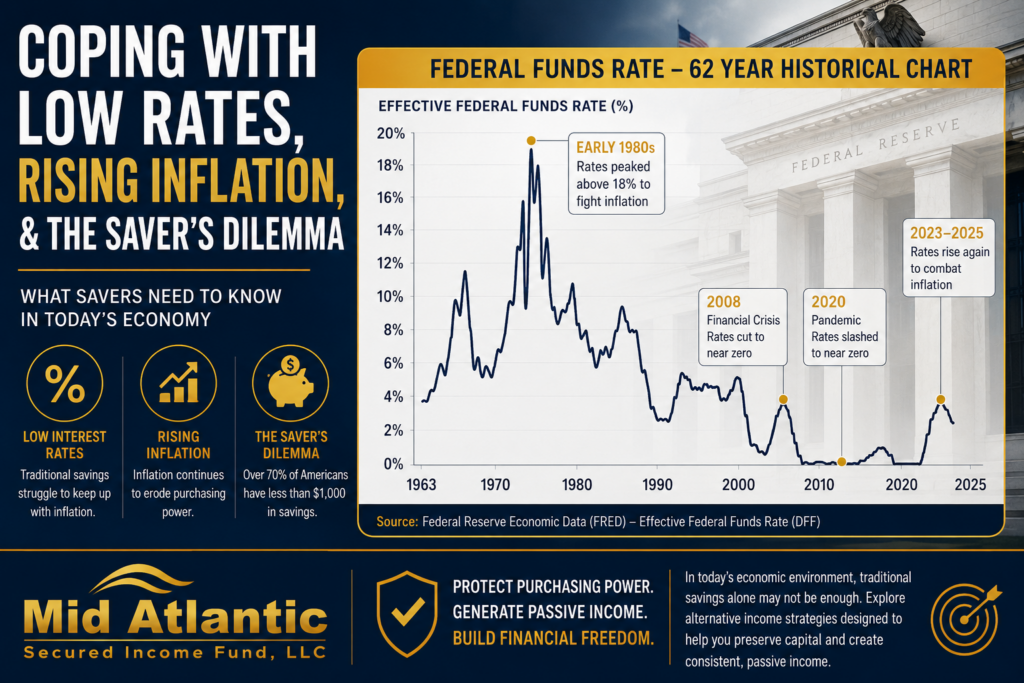
That predictability matters in a market where public fixed-income yields and equity market volatility can move sharply. Federal Reserve data has repeatedly shown how quickly broader financial conditions can tighten. In that environment, many investors are less interested in maximizing upside and more interested in preserving principal while generating current income.
Another practical advantage is lower operational exposure. Equity investors bear the indirect burden of leasing execution, renovation budgets, tax increases, insurance changes, and local market swings. Debt investors still care about those variables because they affect collateral quality, but they are not taking first-loss exposure to every operational misstep. Their return profile is generally defined in advance.
For retirees, self-directed IRA investors, and investors repositioning old 401(k) assets into alternative income strategies, that distinction can be meaningful. A debt-oriented approach can fit portfolios built around monthly or periodic income rather than event-driven gains years down the road.
Why seniority in the capital stack matters
In real estate, structure matters as much as asset type. A strong property can still become a weak investment if the capital stack is poorly aligned.
Debt sits above equity in repayment priority. If a project underperforms, the lender has a claim on the collateral before equity holders receive proceeds. This is one of the clearest benefits of real estate debt vs equity and one reason private credit has attracted greater institutional attention in recent years.
Of course, seniority only has value if underwriting is disciplined. A first-position mortgage at a conservative loan-to-value ratio is very different from an aggressively underwritten loan with limited borrower equity. The quality of the debt investment depends on the lender’s process, not just the debt label itself.
That is where due diligence becomes central. Conservative underwriting typically reviews property value, borrower experience, exit strategy, market conditions, title, insurance, and repayment capacity. For private lenders focused on capital preservation, the goal is not simply to close loans. It is to structure them so the collateral and terms provide a meaningful margin of safety.
Debt can offer lower volatility, but not zero risk
Many investors compare real estate debt to equity because they want less volatility. That is a reasonable objective, but it should be framed correctly. Debt is not risk-free. Borrowers can default. Properties can decline in value. Resolution timelines can stretch. Liquidity in private investments is generally lower than in public markets.
Even so, debt often presents lower volatility than equity because the return mechanism is different. Equity values can swing based on cap rates, market sentiment, and future sale assumptions. Debt returns are more closely tied to contractual income and principal repayment. When a loan is short-term, senior secured, and conservatively underwritten, there may be less dependence on long-term market appreciation.
This lower-volatility profile is particularly relevant when interest rates are elevated or transaction markets are uneven. Mortgage Bankers Association and Federal Reserve commentary in recent years has highlighted how financing conditions affect commercial and residential real estate activity. In those periods, equity owners may face pressure from refinancing risk and compressed valuations, while well-structured lenders may still benefit from current income and collateral protection.
Where equity may still make sense
A disciplined comparison should acknowledge that equity has advantages too. If an investor has a long time horizon, high risk tolerance, and strong conviction in a property or operator, equity may offer more upside than debt. Equity also benefits more directly from rent growth, redevelopment success, and appreciation.
That potential upside is precisely why equity carries more uncertainty. Equity returns are residual. Debt returns are generally contractual. If your priority is wealth maximization through appreciation, equity may be appropriate in some allocations. If your priority is current income with a stronger emphasis on downside control, debt may be the better fit.
This is not an either-or decision for every portfolio. Some sophisticated investors blend both. But for investors who have grown cautious about valuation risk, operational complexity, or the unpredictability of exits, secured real estate debt can offer a more measured path.
What to evaluate before choosing debt over equity
The best debt opportunities are not defined only by headline yield. Investors should examine whether the loan is in first position, how collateral is valued, what the loan-to-value ratio is, how interest is paid, and how the manager handles servicing and workouts.
Track record matters. So does consistency of process. A lender or fund that emphasizes capital preservation, conservative leverage, and active asset management is fundamentally different from a platform chasing volume. Investors should also consider duration. Shorter-duration loans may provide more flexibility in changing rate environments and reduce exposure to long-dated uncertainty.
For those using self-directed IRAs or rollover IRA capital, the structure can be especially appealing because it may provide passive exposure to real estate-backed income without direct property ownership responsibilities. The investment still requires diligence, but it can reduce the burden associated with managing tenants, maintenance, and project execution.
Mid Atlantic Secured Income Fund operates in this part of the market by focusing on short-term first-position mortgage loans with a capital-preservation-first discipline. That approach reflects a broader principle sophisticated investors often seek in private credit: income driven by collateral, underwriting, and repayment structure rather than by speculative property appreciation.
Benefits of real estate debt vs equity in a cautious market
When markets are optimistic, equity tends to get most of the attention. When markets become uncertain, investors often rediscover the value of structure, seniority, and collateral. That shift is not about fear. It is about recognizing that risk-adjusted returns matter more than headline return targets.
The benefits of real estate debt vs equity are strongest for investors who value predictable cash flow, lower volatility, and a priority claim on real assets. Debt will not capture every dollar of upside in a booming market. But many accredited investors are willing to give up some upside in exchange for clearer income, stronger downside positioning, and less dependence on perfect execution.
That trade-off is often sensible for retirement-focused capital, family office reserves, and alternative income allocations intended to complement stocks and traditional bonds. In those cases, the question is less about chasing the highest possible return and more about building a portfolio that can keep paying through different market conditions.
If your goal is steady income backed by real estate rather than speculation tied to resale value, debt deserves serious consideration. The strongest investment decisions usually come from choosing the structure that fits the job, not the one with the most exciting story.