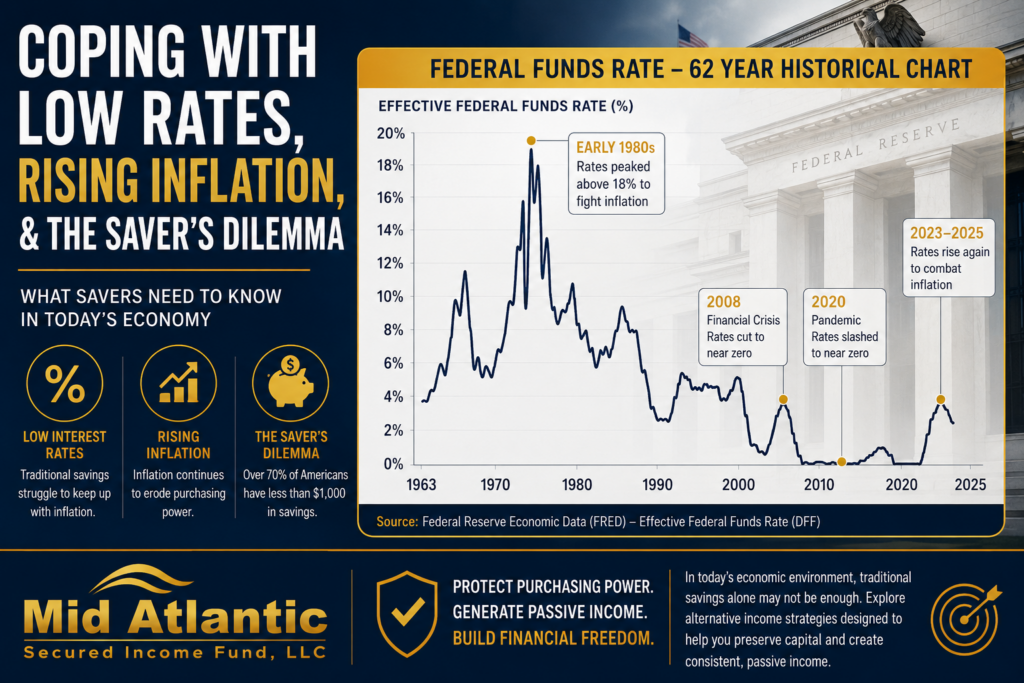

The Evolution of Wealth Management
Wealth management has evolved significantly over the last two decades. Traditional portfolio models once dominated by public equities and bonds are increasingly being reevaluated as investors face a new financial landscape characterized by:
- persistent inflation concerns,
- elevated market volatility,
- changing interest rate environments,
- longer retirement horizons,
- and growing demand for predictable income generation.
For accredited investors, family offices, retirees, entrepreneurs, and high-net-worth individuals, modern wealth management solutions increasingly extend beyond traditional stock-and-bond allocations.
According to research from BlackRock, Morgan Stanley, and Preqin, allocations to alternative investments continue to rise as investors seek diversification, downside protection, inflation resilience, and passive income opportunities unavailable in traditional markets alone.
This shift has accelerated interest in:
- private credit,
- real estate-backed lending,
- alternative income investments,
- self-directed retirement strategies,
- and institutional portfolio construction methods previously reserved for large institutions.
Modern wealth management is no longer solely about maximizing returns. Increasingly, it is about balancing:
- income generation,
- risk management,
- capital preservation,
- liquidity needs,
- tax efficiency,
- and long-term purchasing power.
What Are Wealth Management Solutions?
Direct Answer
Wealth management solutions are integrated financial strategies designed to help individuals preserve, grow, manage, and transfer wealth through investment management, risk management, tax planning, retirement planning, estate planning, and diversified portfolio construction.
Modern wealth management often includes both traditional investments and alternative investments such as private credit, real estate debt, and income-producing private market assets.
Core Components of Wealth Management
Comprehensive wealth management solutions typically include:
|
Wealth Management Component |
Purpose |
|---|---|
|
Portfolio Construction |
Diversification and risk management |
|
Retirement Planning |
Long-term income sustainability |
|
Alternative Investments |
Non-correlated return opportunities |
|
Tax Efficiency |
After-tax optimization |
|
Estate Planning |
Generational wealth transfer |
|
Income Strategies |
Consistent cash flow generation |
|
Risk Mitigation |
Downside protection |
|
Inflation Management |
Purchasing power preservation |
Institutional investors increasingly emphasize holistic portfolio construction rather than isolated investment selection.
Why Investors Are Rethinking Traditional Portfolios
The 60/40 Portfolio Challenge
For decades, the traditional “60/40 portfolio” — consisting of 60% equities and 40% bonds — served as the foundation of many wealth management strategies.
However, the market environment following the COVID-19 pandemic exposed vulnerabilities in this framework.
In 2022, both stocks and bonds declined simultaneously, an uncommon event that challenged assumptions about diversification. According to Morningstar and BlackRock, correlations between traditional asset classes increased during periods of inflation and aggressive monetary tightening.
This has led investors to reconsider portfolio construction frameworks.
Key concerns include:
- reduced bond yield effectiveness,
- inflation eroding fixed-income purchasing power,
- equity market volatility,
- geopolitical instability,
- concentration risk in mega-cap technology stocks,
- and uncertainty surrounding future interest rate policy.
As a result, alternative investments have become increasingly integrated into modern wealth management solutions.
The Rise of Alternative Investments in Wealth Management
Alternative Investments Are Becoming Mainstream
Alternative investments are no longer niche allocations reserved only for institutional investors.
According to Preqin, global alternative assets under management are projected to exceed $24 trillion by 2028.
Institutional portfolios increasingly allocate capital to:
- private credit,
- private equity,
- infrastructure,
- real estate,
- real estate debt,
- hedge strategies,
- and private lending opportunities.
Why?
Because alternatives may offer:
- reduced correlation to public markets,
- enhanced income generation,
- inflation protection,
- downside mitigation,
- and broader diversification opportunities.
What Is Private Credit?
Direct Answer
Private credit refers to non-bank lending where capital is provided directly to businesses, real estate projects, or borrowers through privately structured debt investments instead of publicly traded bonds or traditional bank financing.
Private credit strategies can include:
- real estate bridge lending,
- asset-backed lending,
- commercial lending,
- direct lending,
- receivables financing,
- construction lending,
- and specialty finance.
Why Private Credit Has Expanded Rapidly
Following the 2008 financial crisis, banking regulations tightened substantially.
As banks reduced lending activity in certain sectors, private lenders stepped in to fill capital gaps.
According to the International Monetary Fund and Apollo Global Management, private credit has become one of the fastest-growing segments of alternative investments globally.
Higher interest rates have further accelerated investor interest because private credit strategies often generate:
- contractual income,
- floating-rate exposure,
- and enhanced yield potential relative to traditional fixed income.
How Accredited Investors Use Wealth Management Solutions
Accredited investors often use advanced wealth management strategies to balance multiple objectives simultaneously:
Common Investor Objectives
Income Generation
Many investors seek consistent passive income streams to supplement:
- retirement income,
- business income,
- or lifestyle cash flow needs.
Capital Preservation
High-net-worth investors frequently prioritize downside protection and capital stability over speculative growth.
Diversification
Sophisticated investors often seek diversification away from public market concentration risk.
Inflation Protection
Asset-backed investments may help preserve purchasing power during inflationary periods.
Tax Efficiency
Alternative investments may offer tax planning opportunities depending on structure and jurisdiction.
Real Estate-Backed Investments in Wealth Management
Why Real Estate Debt Has Gained Attention
Real estate-backed lending strategies occupy a unique position within wealth management portfolios.
Unlike equity real estate investing, debt-focused strategies generally emphasize:
- contractual payments,
- collateral backing,
- defined loan terms,
- and seniority in the capital stack.
This distinction matters during uncertain economic periods.
Senior secured lending structures are often designed to prioritize investor protection through:
- collateralization,
- loan-to-value limits,
- underwriting discipline,
- and borrower oversight.
Are Debt Funds Safer Than Stocks?
Direct Answer
Debt funds and private credit investments are not risk-free, but they may exhibit lower volatility than public equities because they are often structured around contractual income, collateral backing, and senior repayment priority.
However, risks still include:
- borrower default,
- illiquidity,
- economic downturns,
- interest rate risk,
- and underwriting execution risk.
The risk profile varies significantly depending on:
- underwriting standards,
- asset quality,
- leverage levels,
- diversification,
- and manager experience.
Understanding Risk in Wealth Management Solutions
Every Investment Strategy Carries Risk
Sophisticated wealth management is not about eliminating risk entirely.
It is about:
- identifying risk,
- quantifying risk,
- diversifying risk,
- and aligning risk with investor objectives.
Key risks investors evaluate include:
|
Risk Type |
Description |
|---|---|
|
Market Risk |
Broad market declines |
|
Interest Rate Risk |
Changes in borrowing costs and valuations |
|
Liquidity Risk |
Limited ability to exit investments quickly |
|
Credit Risk |
Borrower default risk |
|
Inflation Risk |
Purchasing power erosion |
|
Concentration Risk |
Overexposure to one asset class |
|
Manager Risk |
Execution and operational risk |
Institutional-quality underwriting and disciplined portfolio construction remain critical.
Inflation and Wealth Preservation
Why Inflation Matters
Inflation remains one of the greatest long-term threats to wealth preservation.
According to the U.S. Bureau of Labor Statistics, inflation surged to multi-decade highs following the pandemic-era monetary expansion and supply chain disruptions.
Even moderate inflation compounds meaningfully over time.
For example:
- 3% annual inflation reduces purchasing power by nearly 26% over 10 years.
- 5% inflation cuts purchasing power almost in half over approximately 14 years.
This is one reason many investors seek income-producing and real-asset-oriented investments.
Retirement-Focused Wealth Management Solutions
Retirement Has Become More Complex
Modern retirement planning increasingly requires balancing:
- longevity risk,
- inflation risk,
- sequence-of-returns risk,
- healthcare costs,
- and income sustainability.
According to the Federal Reserve, many Americans remain concerned about retirement readiness despite strong equity markets in recent years.
Traditional retirement income strategies often relied heavily on:
- bonds,
- dividend-paying stocks,
- pensions,
- and Social Security.
However, declining pension participation and evolving fixed-income dynamics have increased interest in alternative income strategies.
Self-Directed IRAs and Alternative Investments
What Is a Self-Directed IRA?
A self-directed IRA (SDIRA) is a retirement account structure that allows investors to hold alternative assets beyond traditional publicly traded securities.
Depending on custodial rules and regulations, SDIRAs may permit investments in:
- private credit,
- real estate debt,
- private funds,
- real estate,
- and other alternative investments.
This flexibility has contributed to growing interest among accredited investors seeking broader retirement diversification.
Investors researching alternative retirement strategies may also explore:
Portfolio Diversification Beyond Stocks and Bonds
Why Diversification Still Matters
Diversification remains one of the foundational principles of wealth management.
However, diversification today increasingly means more than simply owning multiple public stocks.
Sophisticated portfolio construction may involve exposure across:
- public equities,
- fixed income,
- private credit,
- real estate,
- cash equivalents,
- and alternative income assets.
The objective is not necessarily maximizing returns at all costs.
Rather, it is constructing portfolios that can navigate multiple economic environments.
Institutional Portfolio Construction Principles
How Institutions Think Differently
Large institutional investors often emphasize:
- risk-adjusted returns,
- cash flow stability,
- downside management,
- liquidity planning,
- and long-duration portfolio resilience.
This institutional mindset increasingly influences high-net-worth wealth management strategies.
Key institutional portfolio themes include:
Income Stability
Predictable income streams can help reduce reliance on asset liquidation during volatile periods.
Capital Preservation
Protecting principal often becomes increasingly important later in the wealth accumulation cycle.
Diversification Across Economic Regimes
Different assets perform differently under varying:
- inflation environments,
- interest rate cycles,
- growth cycles,
- and monetary conditions.
Wealth Management Solutions in a Higher Interest Rate Environment
Interest Rates Changed the Investment Landscape
The rapid rise in interest rates between 2022 and 2024 significantly altered investment dynamics.
Higher rates impacted:
- bond pricing,
- commercial real estate valuations,
- mortgage markets,
- equity valuations,
- and borrowing costs.
However, certain private credit strategies benefited from higher yields and floating-rate structures.
This environment increased investor interest in:
- income-focused investments,
- asset-backed lending,
- and senior secured debt strategies.
Behavioral Finance and Wealth Management
Investor Psychology Matters
One of the most overlooked components of wealth management is behavioral discipline.
Market volatility frequently triggers emotional decision-making.
Research from Morningstar and behavioral finance studies show investors often underperform their own investments due to poor timing decisions.
Disciplined wealth management strategies seek to reduce emotionally driven investing through:
- long-term planning,
- diversification,
- structured allocations,
- and risk alignment.
Wealth Transfer and Legacy Planning
Wealth Management Is Multi-Generational
Modern wealth management increasingly incorporates:
- estate planning,
- charitable strategies,
- family governance,
- and generational wealth transfer.
According to the U.S. Census Bureau and major institutional research firms, trillions of dollars are expected to transfer between generations over the coming decades.
This has elevated the importance of:
- tax efficiency,
- trust structures,
- and long-term family financial planning.
Evaluating Wealth Management Solutions
Questions Sophisticated Investors Often Ask
What are the underlying assets?
Understanding collateral quality and asset exposure is critical.
How is risk managed?
Risk management frameworks matter as much as returns.
What is the income structure?
Investors should evaluate:
- distribution frequency,
- yield sources,
- and sustainability.
How experienced is management?
Execution, underwriting discipline, and operational oversight remain central considerations.
What happens during economic stress?
Historical resilience and downside mitigation are important evaluation criteria.
Wealth Management Trends Shaping the Future
Several structural trends continue reshaping wealth management:
1. Increased Alternative Allocation
Alternatives are becoming more mainstream in portfolio construction.
2. Demand for Passive Income
Retirees and high-net-worth investors increasingly prioritize cash flow stability.
3. AI and Digital Wealth Platforms
Technology is transforming investor education, reporting, and portfolio visibility.
4. Personalized Portfolio Construction
Customization is replacing one-size-fits-all portfolio models.
5. Institutional Strategies for Individual Investors
Private market access is expanding beyond institutions.
How The Mid Atlantic Fund Approaches Wealth Management-Oriented Investing
The Mid Atlantic Secured Income Fund focuses on real estate-backed private credit and income-oriented investment strategies designed around institutional underwriting principles, capital preservation awareness, and disciplined lending structures.
The fund’s broader educational resources also explore:
- alternative investment education,
- passive income investing,
- private credit fundamentals,
- and retirement-oriented portfolio diversification.
Additional educational resources:
- Knowledge Hub
- Private Credit Products
- Passive Income Investment Calculator
- Why Invest in Mid Atlantic Fund
Final Thoughts
Wealth management is undergoing structural transformation.
The traditional boundaries between institutional investing and individual investing continue to blur as accredited investors seek:
- diversification,
- income consistency,
- downside awareness,
- inflation resilience,
- and alternative portfolio construction strategies.
Modern wealth management solutions increasingly integrate:
- private credit,
- alternative investments,
- real estate-backed lending,
- retirement planning,
- and institutional risk management frameworks.
For investors navigating uncertain economic conditions, the emphasis is shifting from simply chasing returns toward building resilient, income-oriented portfolios designed for long-term capital stewardship.
Frequently Asked Questions (FAQ)
What are wealth management solutions?
Wealth management solutions are comprehensive financial strategies designed to help individuals manage investments, preserve wealth, generate income, plan for retirement, and diversify portfolios.
What is the difference between wealth management and investment management?
Investment management focuses primarily on managing investment portfolios, while wealth management includes broader financial planning such as estate planning, retirement planning, tax strategies, and risk management.
Why are alternative investments becoming more popular?
Alternative investments may provide diversification, income generation, reduced correlation to public markets, and inflation resilience compared to traditional stock-and-bond portfolios.
What is private credit investing?
Private credit investing involves lending capital directly to businesses or real estate projects outside traditional public bond markets and banking systems.
Are private credit investments risky?
Yes. Private credit investments carry risks including borrower default, illiquidity, market risk, and underwriting risk. Risk levels vary significantly depending on strategy and manager discipline.
What is a self-directed IRA?
A self-directed IRA is a retirement account that allows investors to hold alternative assets such as real estate, private credit, and private funds in addition to traditional securities.
Why do accredited investors use private market investments?
Accredited investors often seek private market investments for diversification, passive income, inflation protection, and access to institutional-style opportunities.
Can private credit generate passive income?
Many private credit strategies are designed to generate recurring contractual income through interest payments, though outcomes vary based on investment structure and risk.
How do investors evaluate wealth management solutions?
Sophisticated investors often evaluate:
- risk management,
- underwriting standards,
- asset quality,
- income sustainability,
- manager experience,
- diversification,
- and long-term portfolio alignment.