
For decades, traditional fixed income investing centered around a familiar set of tools: Treasury bonds, municipal bonds, investment-grade corporate debt, and bond mutual funds. These instruments played a foundational role in retirement portfolios, pension systems, insurance allocations, and wealth management strategies across the globe.
However, the investment landscape has changed dramatically.
Following years of historically low interest rates, elevated inflation, bond market volatility, regional banking instability, and shifting Federal Reserve policy, many accredited investors and institutional allocators have increasingly expanded their focus toward alternative income-producing assets — particularly private lending and private credit strategies.
Today, investors are asking important questions:
- Is private lending safer than bonds?
- How does private credit compare to traditional fixed income?
- Why are institutional investors allocating more capital to private credit?
- What are the risks of private lending?
- Can real estate-backed lending improve portfolio diversification?
This guide explores how private lending compares to traditional fixed income investments, why private credit has become one of the fastest-growing institutional asset classes globally, and how sophisticated investors are increasingly using asset-backed lending strategies to pursue income generation, diversification, and downside-conscious investing.
What Is Traditional Fixed Income?
Definition of Traditional Fixed Income
Traditional fixed income investments are debt-based securities that generally provide scheduled interest payments and return principal at maturity.
Examples include:
- U.S. Treasury bonds
- municipal bonds
- corporate bonds
- agency-backed securities
- bond mutual funds
- bond ETFs
- certificates of deposit (CDs)
These investments are commonly used for:
- income generation,
- capital preservation,
- portfolio diversification,
- and risk management.
Direct Answer
Traditional fixed income investments are debt securities that pay periodic interest and return principal at maturity, including bonds, Treasuries, municipal debt, and corporate fixed income instruments.
What Is Private Lending?
Definition of Private Lending
Private lending refers to non-bank lending strategies where capital is provided directly to borrowers outside traditional public debt markets.
Private lending may include:
- real estate-backed loans,
- bridge lending,
- direct lending,
- mortgage funds,
- asset-backed private credit,
- construction financing,
- and secured commercial lending.
Unlike publicly traded bonds, private lending investments are generally privately negotiated and may emphasize:
- collateral protection,
- contractual income,
- customized underwriting,
- and real asset security.
Direct Answer
Private lending involves directly financing borrowers through privately structured loans, often secured by real assets such as real estate, rather than purchasing publicly traded bonds.
Why Private Credit Has Expanded Rapidly
Private credit has become one of the fastest-growing alternative investment categories globally.
According to Preqin, private credit assets under management have surpassed approximately $1.7 trillion globally and continue growing as institutional investors seek alternative sources of yield and diversification.
Several structural factors have accelerated this trend:
- tighter bank lending standards,
- increased regulatory pressure on traditional banks,
- demand for alternative financing,
- demographic retirement shifts,
- and institutional appetite for income-oriented strategies.
Major institutional firms including:
- BlackRock,
- Apollo,
- KKR,
- Ares,
- and Goldman Sachs
have all significantly expanded private credit platforms in recent years.
Why Traditional Bonds Faced Pressure in Recent Years
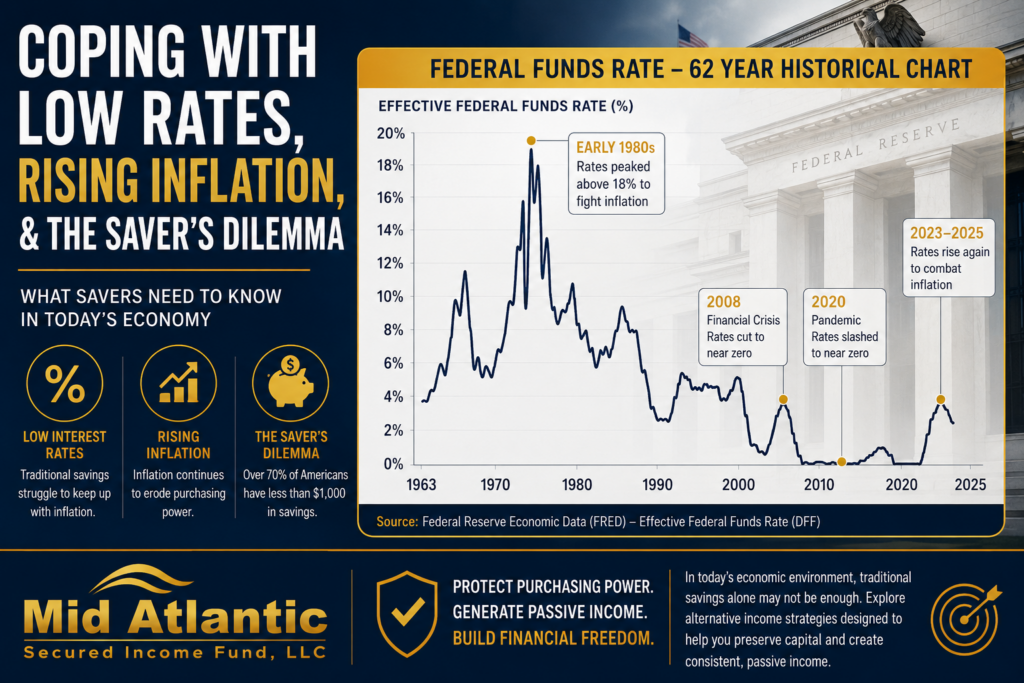
For much of the 2010s, investors operated in a near-zero interest rate environment.
When inflation surged and the Federal Reserve aggressively increased rates beginning in 2022, bond markets experienced historic repricing.
According to Morningstar and Bloomberg fixed income data:
- long-duration Treasury bonds experienced significant drawdowns,
- bond funds saw elevated volatility,
- and many traditionally “safe” fixed income allocations declined materially in value.
This challenged the long-standing perception that all fixed income investments inherently provide stability.
Private Lending vs Traditional Fixed Income: Key Differences
|
Feature |
Traditional Fixed Income |
Private Lending |
|---|---|---|
|
Publicly Traded |
Yes |
Typically No |
|
Daily Market Pricing |
Yes |
Limited |
|
Volatility |
Moderate to High |
Lower Relative Volatility |
|
Collateral Backing |
Sometimes |
Often Asset-Backed |
|
Yield Potential |
Lower to Moderate |
Moderate to Higher |
|
Liquidity |
Higher |
Lower |
|
Underwriting |
Standardized |
Customized |
|
Interest Payments |
Fixed |
Often Contractual |
|
Correlation to Stocks |
Moderate |
Lower Relative Correlation |
Why Investors Are Exploring Private Lending
1. Income Potential
One of the primary reasons investors allocate to private lending is income generation.
Private lending strategies often emphasize:
- contractual interest payments,
- cash-flow-oriented investing,
- and predictable income streams.
Many real estate-backed lending structures generate returns through:
- borrower interest payments,
- origination fees,
- and secured lending arrangements.
2. Asset-Backed Security
Unlike many unsecured debt instruments, private lending strategies are frequently collateralized by:
- residential real estate,
- multifamily properties,
- commercial assets,
- or other hard assets.
This collateral structure may help support downside-conscious investment approaches.
3. Reduced Public Market Correlation
Private lending investments are generally not marked-to-market daily like publicly traded bond funds or stocks.
As a result, some investors view private credit as:
- less emotionally reactive,
- less exposed to headline volatility,
- and potentially more insulated from short-term market swings.
Are Bonds Still Important?
Absolutely.
Traditional fixed income continues serving important portfolio functions, including:
- liquidity,
- capital preservation,
- diversification,
- and monetary policy sensitivity.
Treasuries remain one of the most important risk-management tools globally.
However, many institutional allocators increasingly supplement traditional bonds with:
- private credit,
- real estate debt,
- and alternative lending strategies.
How Institutional Investors Are Using Private Credit
Institutional adoption of private credit has accelerated significantly.
Large allocators now include:
- pension funds,
- insurance companies,
- sovereign wealth funds,
- endowments,
- and family offices.
According to BlackRock and Deloitte private markets research, institutional investors increasingly seek:
- stable cash flow,
- yield enhancement,
- diversification,
- and lower public market dependence.
Private lending has become a strategic allocation rather than a niche investment category.
Understanding Risk in Private Lending
No investment is risk-free.
Private lending involves important considerations.
Common Risks Include
Credit Risk
Borrowers may default.
Real Estate Market Risk
Property values may decline.
Liquidity Risk
Private investments may not offer immediate liquidity.
Interest Rate Risk
Higher rates may affect borrower demand and refinancing conditions.
Operational Risk
Manager experience and underwriting quality matter significantly.
Why Underwriting Matters
Institutional-quality underwriting is one of the defining characteristics of sophisticated private lending platforms.
Key underwriting considerations include:
- loan-to-value ratios,
- collateral quality,
- borrower experience,
- market conditions,
- exit strategies,
- and asset-level analysis.
Conservative underwriting is often central to downside protection strategies.
How Real Estate-Backed Lending Works
In many private lending structures, loans are secured by real estate collateral.
Examples may include:
- residential bridge loans,
- construction financing,
- commercial real estate lending,
- and transitional asset financing.
In these cases:
- investors earn returns primarily through interest income,
- while the underlying property serves as collateral support.
Private Lending vs Bond Funds
Many investors confuse direct private lending with traditional bond funds.
However, the structures differ materially.
Bond Funds
Bond funds:
- fluctuate daily,
- are highly interest-rate sensitive,
- and are exposed to public market pricing.
Private Lending Funds
Private lending funds:
- generally focus on contractual loan structures,
- emphasize collateral-backed lending,
- and may experience lower short-term valuation swings.
Why Accredited Investors Are Increasingly Exploring Alternative Fixed Income
Accredited investors often seek:
- portfolio diversification,
- tax-efficient income,
- downside-conscious strategies,
- and alternative income sources.
Many are exploring:
- real estate debt funds,
- mortgage funds,
- private lending,
- and private credit allocations
as complements to traditional stock-and-bond portfolios.
The Rise of Real Estate Debt Funds
Real estate debt funds have become one of the fastest-growing private credit categories.
These strategies typically focus on:
- income generation,
- secured lending,
- and real estate-backed financing.
Unlike equity real estate investing, debt-focused investing generally prioritizes:
- income consistency,
- senior lien positioning,
- and capital preservation principles.
How The Mid Atlantic Fund Approaches Income-Oriented Lending
The Mid Atlantic Secured Income Fund focuses on:
- asset-backed lending,
- real estate-secured loans,
- conservative underwriting,
- and income-oriented investing strategies.
The strategy emphasizes:
- disciplined lending,
- downside-conscious structures,
- and collateral-backed financing.
Investors can explore additional educational resources at:
Why Portfolio Diversification Still Matters
No single investment strategy is appropriate for every investor.
Sophisticated portfolios often combine:
- public equities,
- traditional fixed income,
- private credit,
- real estate,
- and alternative assets.
The objective is not maximizing short-term returns alone — but balancing:
- income,
- risk,
- liquidity,
- diversification,
- and long-term financial objectives.
The Future of Fixed Income Investing
The definition of fixed income is evolving.
Today’s income-oriented portfolios increasingly include:
- private lending,
- asset-backed credit,
- real estate debt,
- and institutional private market allocations.
As banks continue tightening lending standards and institutional investors search for alternative sources of yield, private lending is likely to remain a major component of modern alternative investment strategies.
Final Thoughts
Private lending and traditional fixed income each play important roles within diversified portfolios.
Traditional bonds continue offering:
- liquidity,
- monetary policy sensitivity,
- and capital preservation characteristics.
Private lending strategies may offer:
- income-oriented structures,
- real asset collateral,
- diversification benefits,
- and reduced public market correlation.
As alternative investments continue becoming more mainstream, many accredited investors are increasingly evaluating how private credit and asset-backed lending may complement traditional fixed income allocations in pursuit of long-term income and wealth preservation objectives.
FAQ Section
What is private lending?
Private lending involves directly financing borrowers through privately structured loans, often backed by real estate or other collateralized assets.
Is private lending safer than bonds?
Private lending and bonds have different risk characteristics. Many private lending strategies are asset-backed, but all investments carry risk and should be evaluated carefully.
Why are institutional investors investing in private credit?
Institutional investors increasingly allocate to private credit for:
- income generation,
- diversification,
- and reduced correlation to public markets.
What are traditional fixed income investments?
Traditional fixed income investments include:
- Treasury bonds,
- municipal bonds,
- corporate bonds,
- and bond funds.
What is a real estate debt fund?
A real estate debt fund pools investor capital to finance loans secured by real estate assets, with returns generally generated through interest income.