
The Search for Income Has Changed
For much of the last two decades, investors relied heavily on traditional portfolio construction models built around public equities and investment-grade bonds. That framework worked well during periods of declining interest rates, strong equity market expansion, and abundant liquidity.
Today’s environment looks very different.
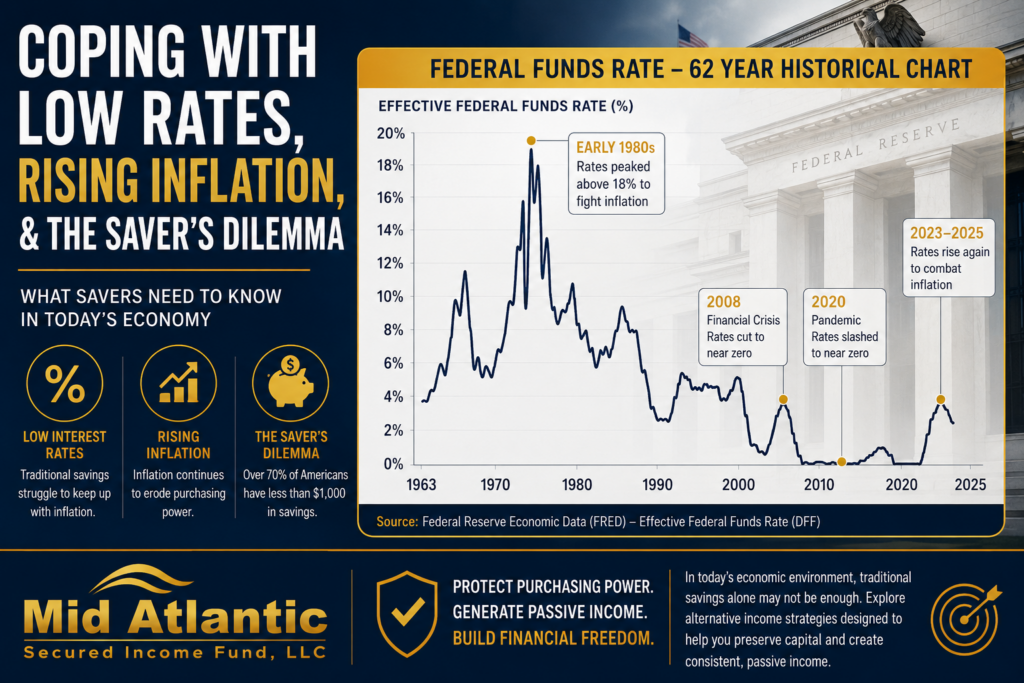
Persistent inflation pressures, elevated borrowing costs, increased market volatility, and structural shifts within the banking system have caused many investors to reevaluate how they generate income, manage risk, and preserve capital.
As a result, private credit has emerged as one of the fastest-growing segments of the alternative investment universe.
According to multiple institutional forecasts, the global private credit market has expanded from roughly $1 trillion in 2020 to approximately $3 trillion in 2025, with projections reaching $4–5 trillion by the end of the decade.
This growth is not simply driven by investor demand.
It is also being fueled by a fundamental transformation in how capital flows through the economy.
Banks have become more selective lenders, regulatory requirements have increased, and borrowers increasingly seek flexible financing solutions that traditional institutions may not provide.
These trends have created a significant opportunity for private lenders and income-focused investment strategies.
For accredited investors, understanding Mid Atlantic secured income opportunities begins with understanding the broader evolution of private credit.
What Are Mid Atlantic Secured Income Opportunities?
Mid Atlantic secured income opportunities generally refer to investment strategies focused on generating income through loans secured by tangible collateral, particularly real estate assets.
Unlike traditional equity investments that depend heavily on appreciation, secured income strategies are often structured around:
- Interest payments
- Contractual cash flow
- Asset-backed collateral
- Senior lien positions
- Risk-adjusted income generation
In many private credit structures, investors are not purchasing ownership stakes in businesses.
Instead, they are participating in debt investments that generate returns through borrower repayment obligations.
This distinction can be important during periods of market volatility.
What Is Private Credit?
Private credit refers to loans made outside of traditional public banking and bond markets.
Rather than borrowing through a publicly traded bond issuance, borrowers receive financing directly from private lenders, debt funds, institutional investors, or alternative credit platforms.
Private credit strategies may include:
- Real estate-backed loans
- Senior secured lending
- Asset-backed finance
- Bridge loans
- Construction lending
- Commercial lending
- Specialty finance
- Direct corporate lending
The private credit market has grown rapidly since the Global Financial Crisis as banks reduced exposure to certain lending categories. Federal Reserve research shows increasing capital flows toward non-bank lending institutions over the last decade.
Why Investors Are Paying More Attention to Private Credit
Several structural forces are contributing to the rise of private credit.
1. Higher Interest Rate Environment
For much of the 2010s, investors struggled to generate meaningful yield from traditional fixed-income investments.
The return of higher interest rates has increased demand for income-producing assets.
Private credit often offers yield premiums relative to traditional public fixed income because investors are providing capital in less liquid markets and taking on underwriting-specific risks.
2. Banking Industry Changes
Post-2008 banking regulations significantly altered lending behavior.
Many institutions reduced exposure to:
- Middle-market lending
- Construction lending
- Transitional real estate projects
- Specialized credit segments
Preqin research continues to identify regulatory banking constraints as a key driver behind private credit expansion.
3. Demand for Portfolio Diversification
Many investors are increasingly looking beyond the traditional 60/40 portfolio model.
Alternative investments may provide exposure to:
- Different return drivers
- Private market opportunities
- Reduced correlation to public equities
- Income-focused strategies
Diversification remains one of the primary reasons wealth managers and institutional investors allocate capital to alternative assets.
Why Real Estate-Backed Lending Continues to Attract Capital
Real estate remains one of the largest and most established collateral classes in private credit.
Unlike unsecured lending, real estate-backed structures generally involve identifiable underlying assets.
These assets can include:
- Residential properties
- Commercial properties
- Multifamily projects
- Development opportunities
- Transitional assets
The collateral component often plays a central role in risk management.
When structured conservatively, loan-to-value ratios, borrower equity contributions, and underwriting standards may provide additional downside protection compared to unsecured lending structures.
The Housing Supply Imbalance Supporting Real Estate Credit
One of the most important long-term themes supporting real estate lending is the persistent housing shortage across the United States.
Freddie Mac estimates the U.S. remains undersupplied by approximately 3.7 million housing units.
More recent housing research suggests the supply gap may now exceed 4 million homes.
This imbalance has been driven by:
- Under building following 2008
- Population growth
- Household formation trends
- Labor shortages
- Construction cost increases
- Restrictive zoning policies
While housing markets remain cyclical, the long-term supply-demand imbalance continues to influence real estate financing demand nationwide.
How Secured Lending Differs From Equity Investing
|
Factor |
Secured Lending |
Equity Investing |
|---|---|---|
|
Position in Capital Stack |
Typically Senior |
Junior |
|
Primary Return Source |
Interest Income |
Appreciation |
|
Cash Flow Focus |
Contractual |
Variable |
|
Downside Protection |
Asset Collateral |
Limited |
|
Volatility |
Often Lower |
Higher |
|
Ownership Rights |
Debt Holder |
Equity Owner |
Investors often view secured lending as a different risk-return profile rather than a replacement for equities.
Each serves a different role within portfolio construction.
Are Debt Funds Safer Than Stocks?
Direct Answer
Debt funds are not inherently safer than stocks.
However, certain secured debt strategies may offer characteristics that some investors find attractive during periods of uncertainty.
Potential advantages can include:
- Contractual income streams
- Asset-backed collateral
- Senior claim priority
- Reduced equity market correlation
Risks still exist.
These may include:
- Borrower default
- Real estate market declines
- Illiquidity
- Interest rate changes
- Economic downturns
The quality of underwriting, collateral coverage, and portfolio management remains critical.
How Accredited Investors Use Private Credit
Many accredited investors incorporate private credit into portfolios for one or more of the following objectives:
Income Generation
Private credit strategies are frequently utilized to pursue recurring income rather than relying solely on capital appreciation.
Portfolio Diversification
Private market exposure may complement traditional stock and bond allocations.
Capital Preservation Focus
Many investors seek strategies emphasizing downside protection and collateralization.
Retirement Planning
Income-producing investments are commonly incorporated into retirement-oriented portfolios.
This is particularly relevant for investors seeking alternatives to traditional bond allocations.
Private Credit Versus Public Bonds
|
Characteristic |
Private Credit |
Public Bonds |
|---|---|---|
|
Liquidity |
Lower |
Higher |
|
Yield Potential |
Often Higher |
Generally Lower |
|
Transparency |
Limited |
High |
|
Volatility |
Lower Mark-to-Market |
Market Driven |
|
Access |
Accredited Investors |
Broad Public Access |
|
Underwriting |
Manager Driven |
Rating Driven |
Private credit typically involves a tradeoff between liquidity and potential yield enhancement.
The Importance of Senior Secured Positions
One concept sophisticated investors often evaluate is capital stack positioning.
A senior secured lender generally occupies a higher repayment priority than subordinate creditors and equity holders.
In a distressed scenario, repayment proceeds typically flow according to capital stack hierarchy.
This does not eliminate risk.
However, many institutional investors prefer senior positions because they may offer stronger recovery prospects relative to junior claims.
Risk Factors Investors Should Understand
Every investment strategy carries risk.
Private credit is no exception.
Credit Risk
Borrowers may fail to repay obligations.
Real Estate Market Risk
Property values can decline.
Liquidity Risk
Private investments are often less liquid than publicly traded securities.
Interest Rate Risk
Changes in borrowing costs can impact lending activity and asset values.
Manager Risk
Execution quality varies significantly between managers.
Underwriting discipline often matters more than market narratives.
Evaluating a Secured Income Opportunity
Sophisticated investors often ask the following questions:
What collateral secures the investment?
What is the loan-to-value ratio?
What is the borrower’s equity contribution?
What is the repayment history?
How are loans sourced?
What underwriting standards are applied?
How is risk monitored?
What happens during borrower distress?
The answers to these questions frequently provide more insight than projected return figures alone.
Why Institutional Investors Continue Allocating to Private Credit
Large institutions have steadily increased allocations to private credit over the last decade.
The primary reasons include:
- Income generation
- Portfolio diversification
- Floating-rate exposure
- Reduced public market correlation
- Expanding opportunity set
Industry forecasts continue projecting strong growth through the remainder of the decade.
Private credit is increasingly viewed as a core alternative allocation rather than a niche strategy.
The Role of Mid Atlantic Secured Income Opportunities
For investors exploring alternative income strategies, Mid Atlantic secured income opportunities represent a broader category of investments focused on:
- Real estate-backed lending
- Asset-backed structures
- Income-oriented investing
- Risk-managed underwriting
- Capital preservation principles
Rather than relying exclusively on market appreciation, these strategies seek to generate value through disciplined lending and contractual repayment structures.
This approach aligns with a growing trend among investors seeking more predictable sources of portfolio income.
Final Perspective
Private credit has evolved from a niche institutional allocation into one of the fastest-growing segments of modern finance.
At the same time, housing shortages, constrained bank lending, elevated interest rates, and demand for alternative income have created structural tailwinds for real estate-backed credit strategies.
For accredited investors, understanding Mid Atlantic secured income opportunities requires more than evaluating yield.
It requires understanding:
- Collateral quality
- Capital stack positioning
- Underwriting discipline
- Risk management
- Portfolio construction
As private markets continue expanding, investors who develop a deeper understanding of secured lending and private credit may be better positioned to evaluate opportunities within an increasingly complex investment landscape.
Frequently Asked Questions
What are Mid Atlantic secured income opportunities?
Mid Atlantic secured income opportunities generally refer to income-producing investments backed by tangible collateral, often real estate assets, where investors participate in debt-based structures rather than equity ownership.
What is private credit?
Private credit refers to loans originated outside traditional public banking and bond markets through private lenders, debt funds, and alternative investment managers.
How does private credit generate returns?
Returns are generally generated through interest payments, fees, and contractual loan repayment obligations rather than stock price appreciation.
Why has private credit grown so quickly?
Growth has been driven by reduced bank lending, regulatory changes, investor demand for income, portfolio diversification needs, and expanding alternative investment markets.
Are private debt funds safer than stocks?
Private debt funds are not inherently safer. However, certain secured lending strategies may provide different risk characteristics due to collateral backing and senior repayment priority.
What are the risks of private credit?
Key risks include borrower default, illiquidity, real estate market declines, economic downturns, interest rate changes, and manager execution risk.
How do accredited investors use private credit?
Many accredited investors use private credit for income generation, diversification, retirement planning, inflation management, and alternative exposure outside traditional stock and bond markets.
Why is collateral important?
Collateral may provide additional downside protection because it creates a tangible asset supporting the loan obligation.