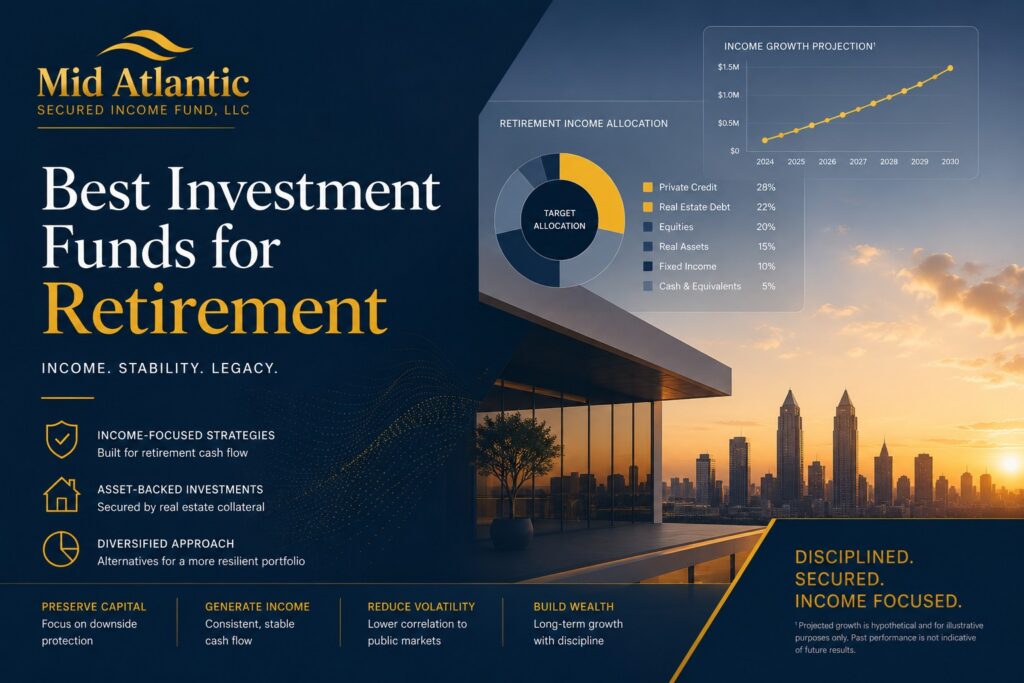
The Mid Atlantic Fund

Retirement Income Strategies

Retirement planning with secured investments

Retirement Planning with Secured Investments

Retirement planning is a crucial aspect of financial management, ensuring individuals can maintain their desired lifestyle and enjoy financial security during their golden years. One key component of effective Retirement planning with secured investments that offer stability and reliable returns. In this article, we’ll explore the importance of retirement planning with secured investments and provide insights into how individuals can build a stable financial future. Importance of Secured Investments in Retirement Planning Secured investments play a vital role in retirement planning due to their ability to provide consistent returns and protect capital. Unlike speculative investments,  investments prioritize safety and stability, making them ideal for individuals nearing retirement or those seeking to preserve wealth.Retirement planning  is a fundamental aspect of ensuring financial stability and peace of mind during one’s golden years. Secured investments are characterized by their reliability and ability to preserve capital, making them an essential component of any retirement strategy Types of Secured Investments for Retirement Planning Certificates of Deposit (CDs): CDs are low-risk investments offered by banks and credit unions. They typically offer fixed interest rates and FDIC insurance protection, making them a secure option for retirement savings. CDs come with various maturity periods, allowing investors to choose the term that aligns with their retirement timeline. Government Bonds: Government bonds, such as U.S. Treasury bonds, are considered one of the safest investments available. Backed by the full faith and credit of the government, these bonds provide guaranteed returns and are often used to preserve capital in retirement portfolios. Fixed Annuities: Fixed annuities offer a guaranteed stream of income for a specified period, making them a popular choice for retirement planning. With fixed annuities, investors receive regular payments that are not affected by market fluctuations, providing financial stability during retirement. High-Yield Savings Accounts: High-yield savings accounts offer competitive interest rates while providing FDIC insurance protection. These accounts are ideal for short-term savings goals or emergency funds and can serve as a secure component of a retirement portfolio. Frequently Asked Questions (FAQs) on Retirement Planning with Secured Investments 1. Why are secured investments important for retirement planning? Secured investments provide stability and protection of capital, making them essential for individuals looking to preserve wealth and generate reliable income during retirement. 2. How do certificates of deposit (CDs) contribute to retirement planning? CDs offer fixed interest rates and FDIC insurance protection, making them a secure option for retirement savings. They allow investors to earn predictable returns while safeguarding their principal investment. 3. What are the benefits of government bonds for retirement planning? Government bonds provide guaranteed returns and are backed by the government, making them one of the safest investments available. They offer stability and income for retirees seeking to minimize risk in their portfolios. 4. How do fixed annuities help individuals with retirement planning? Fixed annuities offer a guaranteed stream of income for a specified period, providing retirees with financial security and peace of mind. They protect against market volatility and ensure a steady income throughout retirement. 5. What role do high-yield savings accounts play in retirement planning? High-yield savings accounts offer competitive interest rates and FDIC insurance protection, making them a secure option for short-term savings and emergency funds. They provide liquidity and stability in retirement portfolios, allowing individuals to access funds when needed without sacrificing security. Conclusion Investment planning with secured investments is essential for building a stable financial future. By prioritizing safety and reliability, individuals can protect their wealth and ensure a comfortable retirement lifestyle. Whether through CDs, government bonds, fixed annuities, or high-yield savings accounts, secured investments offer peace of mind and financial security for retirees. By understanding the importance of secured investments and incorporating them into their retirement strategy, individuals can achieve their long-term financial goals with confidence. visit our website for more informationhttps://themidatlanticfund.com/passive-income-opportunities/

Retirement Planning with Secured Investments Read More »

Retirement Funds

Retirement Funds

Retirement is a milestone that marks the culmination of a life of hard work, dedication, and accomplishment. As individuals approach this important stage in life, careful planning and preparation are paramount to ensuring a comfortable and financially secure retirement. Retirement funds, also known as pension plans or retirement accounts, play a central role in this process as a way for individuals to save and invest for their golden years. In this article, we examine the importance of retirement funds, how they work, and why they are an essential part of your overall financial plan. Understanding Retirement Funds Retirement Funds are investment vehicles specifically designed to help individuals save and invest for their retirement. These funds can take many forms, including employer-sponsored plans such as 401(k)s, individual retirement accounts (IRAs), pensions, and pension plans. The primary purpose of retirement funds is to provide individuals with a source of income during retirement and supplement other sources such as Social Security benefits and personal savings. The Importance of Early Planning One of the key principles of retirement planning is the importance of starting early. The power of compounding allows investments to grow exponentially over time, meaning that the earlier individuals begin saving for retirement, the greater the potential for long-term growth. By contributing consistently to retirement funds throughout their working years, individuals can build a substantial nest egg that will support them throughout their retirement. Tax Advantages and Incentives Retirement funds offer several tax advantages and incentives that make them attractive vehicles for saving for retirement. Contributions to certain retirement accounts, such as traditional IRAs and 401(k)s, are often tax-deductible, meaning that individuals can reduce their taxable income by contributing to these accounts. Additionally, earnings within retirement accounts grow tax-deferred, allowing investments to compound without being subject to annual taxes on capital gains, dividends, or interest. In some cases, individuals may also qualify for tax credits or incentives for contributing to retirement accounts, further enhancing the tax benefits of these funds. Employer-Sponsored Retirement Plans Many employers offer retirement benefits in the form of employer-sponsored retirement plans, such as 401(k)s or 403(b)s. These plans allow employees to contribute a portion of their pre-tax income to a retirement account, often with the option for employer matching contributions. Employer matching contributions are essentially free money provided by the employer, which can significantly boost the growth of retirement savings over time. Additionally, contributions to employer-sponsored retirement plans are automatically deducted from employees’ paychecks, making it easy and convenient to save for retirement.https://themidatlanticfund.com/high-return-investments/ Individual Retirement Accounts (IRAs) Individual Retirement Accounts (IRAs) are another popular option for saving for retirement. These accounts are available to individuals who do not have access to employer-sponsored retirement plans or who wish to supplement their existing retirement savings. IRAs come in two primary forms: traditional IRAs and Roth IRAs. Traditional IRAs allow individuals to make tax-deductible contributions, while withdrawals in retirement are taxed as ordinary income. Roth IRAs, on the other hand, offer tax-free withdrawals in retirement, but contributions are made with after-tax dolla   Planning for a Secure Retirement   When it comes to retirement planning, diversification is key. Retirement funds allow individuals to invest in a wide range of assets, including stocks, bonds, mutual funds, and exchange-traded funds (ETFs). By diversifying their investments across different asset classes, individuals can reduce the risk of their retirement savings being adversely affected by market fluctuations or economic downturns. Additionally, regular reviews and adjustments to retirement plans are essential to ensure that individuals remain on track to meet their retirement goals and objectives. Conclusion: Investing in Your Future with Retirement Funds In conclusion, retirement funds are essential components of any comprehensive financial plan. By starting early, taking advantage of tax incentives, and diversifying investments, individuals can build a substantial nest egg that will support them throughout their retirement years. Whether through employer-sponsored retirement plans or individual retirement accounts, investing in retirement funds is an investment in one’s future, providing financial security, peace of mind, and the opportunity to enjoy a comfortable and fulfilling retirement.

Retirement Funds Read More »

Retirement Planning

Retirement Planning

Retirement planning is not merely about setting aside a portion of your income for the golden years; it’s a strategic journey towards financial independence and security. As life expectancy increases and traditional pension plans become less common, the onus is increasingly on individuals to ensure they have sufficient resources to sustain their desired lifestyle throughout retirement. In this comprehensive guide, we’ll explore the key components, good  strategies, and benefits of retirement planning to help you navigate this important phase of your financial journey. Understanding Retirement Planning: Retirement planning is the process of setting financial goals, saving and investing funds, and making informed decisions to ensure a comfortable and secure retirement. It involves assessing your current financial situation, determining your retirement needs and goals, and developing a plan to achieve them. Key Components of Retirement Planning:  Good Setting Retirement Goals: The first step in retirement planning is defining your retirement goals. This includes determining the age at which you wish to retire, estimating your desired retirement income, and identifying any specific lifestyle or financial aspirations you have for your retirement years. Assessing Retirement Needs: Once you’ve set your retirement goals, it’s essential to assess your financial needs during retirement. Consider factors such as living expenses, healthcare costs, travel plans, and any other potential expenditures to determine how much income you’ll need to maintain your desired lifestyle. Saving and Investing: Saving and investing are critical aspects of retirement planning. Start by establishing a retirement savings goal based on your anticipated retirement needs and timeframe. Contribute regularly to retirement accounts such as 401(k)s, IRAs, or other tax-advantaged savings vehicles. Invest your savings in a diversified portfolio of assets aligned with your risk tolerance and investment objectives. Maximizing Retirement Accounts: Take advantage of employer-sponsored retirement plans such as 401(k)s or 403(b)s, especially if your employer offers matching contributions. Maximize your contributions to these accounts to benefit from tax-deferred growth and employer matching, effectively boosting your retirement savings. Managing Retirement Risks: Mitigating risks is an essential aspect of retirement planning. Consider factors such as inflation, longevity risk, market volatility, and healthcare costs when developing your retirement plan. Explore strategies such as asset allocation, diversification, and insurance products to manage these risks effectively. Benefits of Retirement Planning: Financial Independence: Retirement planning empowers individuals to achieve financial independence and maintain their desired lifestyle throughout retirement, free from financial constraints or worries about running out of money. Peace of Mind: By proactively planning for retirement, individuals can enjoy greater peace of mind knowing that their financial future is secure. A well-crafted retirement plan provides a roadmap for achieving retirement goals and navigating potential challenges along the way. Flexibility and Control: Retirement planning offers individuals the flexibility and control to make informed decisions about their retirement savings, investments, and lifestyle choices. It allows for adjustments based on changing circumstances, market conditions, or personal preferences. Legacy Planning: Retirement planning extends beyond one’s lifetime, enabling individuals to leave a legacy for future generations. By carefully managing assets and estate planning, retirees can ensure their wealth is preserved and distributed according to their wishes. In Conclusion, Retirement planning is a dynamic and ongoing process that requires careful consideration, proactive action, and ongoing monitoring to ensure success. By understanding the key components, strategies, and benefits of retirement planning, individuals can take control of their financial future, achieve financial independence, and enjoy a fulfilling retirement lifestyle. Whether you’re just starting your career or approaching retirement age, it’s never too early or too late to begin planning for the retirement of your dreams. Start today, and pave the way for a secure and prosperous retirement tomorrow. Please visit our website for more information: https:https://themidatlanticfund.com/fixed-income-funds/ For more detailed information, please check out our links ;  facebook : https://www.facebook.com/profile.php?id=100068341446074&view_public_for=108433734764977 Linkedin :https:https://www.linkedin.com/company/mid-atlantic-fund

Retirement Planning Read More »

Retirement Planning for the future Secured Income Funds Are a Must-Have in Your Portfolio

Retirement Planning for the future Secured Income Funds Are a Must-Have in Your Portfolio

In the intricate world of modern finance, securing a comfortable retirement requires more than just saving; it necessitates strategic investment in vehicles like secured income funds. Amid the backdrop of market volatility and economic uncertainty, these funds have emerged as vital components for a stable retirement plan, offering predictability and a buffer against fluctuations. The Foundation of Retirement Planning Effective retirement planning transcends mere financial preparation; it is about crafting a lifestyle for the post-work years. Central to this planning is the creation of a diversified investment portfolio that not only grows but also ensures the continuity of income when regular paychecks cease. This is where secured income funds become instrumental, providing regular income streams backed by collateral, thus offering a semblance of stability in an otherwise unpredictable investment climate. The Role of Secured Income Funds Secured income funds are designed to generate steady, predictable income, making them particularly suitable for retirement portfolios. These funds typically invest in assets backed by collateral, offering a safer avenue for investment compared to options with higher volatility. As traditional pension models become less reliable, the assurance of secured income funds becomes increasingly appealing. Performance and Security The allure of secured income funds lies in their blend of performance stability and security. These funds have been noted for their less volatile and more consistent returns, making them an ideal choice for retirees dependent on their investments for regular income. Such stability is invaluable, especially for those concerned about outliving their savings—a common worry among retirees. The Benefits of Incorporating Secured Income Funds Stability in Uncertain Times: Secured income funds stand out as reliable income sources, vital for retirees needing consistent cash flow to cover daily expenses amidst economic fluctuations. Inflation Hedging: These funds are often structured to protect against inflation, ensuring that the purchasing power of retirement income does not diminish over time. Risk Diversification: Adding secured income funds to a retirement portfolio helps spread risk across various asset classes, diminishing the impact of adverse performance in any single investment area. Implementing Secured Income Funds in Your Retirement Strategy Incorporating secured income funds into a retirement strategy is a prudent step toward financial security. Evaluating your current portfolio and retirement aspirations is crucial, as is the advice from financial advisors on integrating these funds effectively. Regular reassessment of your investment mix ensures alignment with your long-term retirement goals and adapts to changing market dynamics. Conclusion: Securing Your Retirement with Confidence Navigating the road to a secure retirement is fraught with challenges, yet integrating secured income funds into your investment strategy offers a way to traverse this path with enhanced confidence. These funds provide a rare combination of stability, performance, and security, positioning them as indispensable elements of a well-rounded retirement plan. Looking ahead, the importance of secured income funds in safeguarding retirement futures is undeniable, underscoring their role as foundational investments for those seeking peace of mind in their golden years.    

Retirement Planning for the future Secured Income Funds Are a Must-Have in Your Portfolio Read More »

Featured image illustrating retirement income strategies, passive income planning, and navigating the retirement income cliff

Handling the Retirement Income Cliff: Strategies for Creating Reliable Retirement Income

Retirement is supposed to represent freedom — more time with family, greater flexibility, and the ability to enjoy the wealth accumulated over decades of work and disciplined saving. But for millions of Americans approaching retirement, the transition often creates a very different reality: a sudden and dramatic reduction in monthly income. Financial professionals increasingly refer to this challenge as the Retirement Income Cliff — the gap between pre-retirement earnings and the income available once paychecks stop. For many households, the transition from earning a high salary to relying primarily on Social Security, retirement withdrawals, and investment income can feel financially unsettling. As inflation, healthcare costs, and longevity risk continue to rise, retirees are searching for more reliable ways to generate sustainable retirement income. What Is the Retirement Income Cliff? The Retirement Income Cliff occurs when retirees experience a sharp decline in monthly cash flow after leaving the workforce. For example: a professional earning $10,000 per month before retirement, may suddenly transition to receiving only $3,000–$4,000 monthly from Social Security and portfolio withdrawals. That income gap can create significant pressure on retirement savings, especially during periods of inflation or market volatility. According to recent research, many Americans may be more financially vulnerable in retirement than expected: roughly 40% of working-age households are considered at risk of not maintaining their standard of living in retirement, and more than half of Americans say they expect to rely heavily on Social Security benefits during retirement. At the same time, retirees continue facing rising costs for: healthcare, housing, insurance, and everyday living expenses. Why Retirement Income Planning Matters More Than Ever Today’s retirement landscape is very different from previous generations. Traditional pensions have become less common, while retirees increasingly shoulder responsibility for generating their own retirement income. Meanwhile: inflation continues impacting purchasing power, interest rates fluctuate, and retirees are living longer than ever before. According to the Federal Reserve’s 2025 Economic Well-Being Report, only 55% of adults reported having enough savings to cover three months of expenses. Many retirees also underestimate how long retirement may last. A retirement beginning at age 65 could potentially extend 25–30 years or more. That means retirement planning is no longer simply about accumulating assets — it is increasingly about creating sustainable income. A Real-World Retirement Income Example Imagine a responsible saver approaching retirement at age 65: they have accumulated $2 million in retirement savings, and currently earn approximately $10,000 per month from employment income. After retiring, their guaranteed Social Security income may total approximately $3,000 monthly. The question becomes: How can they replace the remaining $7,000 in monthly income needed to maintain their lifestyle? This is where many retirees encounter the Retirement Income Cliff. Traditional Retirement Income Strategies — And Their Challenges 1. Withdraw Directly From Savings One common approach is withdrawing a fixed monthly amount from retirement savings to cover living expenses. For example: withdrawing $7,000 monthly equals $84,000 annually, not including inflation adjustments. Historically, retirement research has often referenced the “4% rule” as a guideline for sustainable withdrawals. More recent research from Morningstar suggests sustainable withdrawal rates may now be closer to 3.9% depending on portfolio structure and market conditions. The challenge: larger withdrawals during volatile markets can accelerate portfolio depletion, especially when inflation increases spending needs over time. 2. Rely Heavily on Market Appreciation Some retirees remain heavily invested in equities and hope market growth generates sufficient income. While equities can play an important role in long-term portfolios, retirees may face: sequence-of-returns risk, heightened volatility, emotional decision-making during downturns, and uncertainty around future cash flow. Retirement planning increasingly emphasizes balancing growth with income stability and downside management. 3. Traditional Fixed-Income Investments Many retirees historically relied on: bonds, CDs, money market accounts, and other traditional fixed-income products. While these investments may provide stability, yields have often struggled to fully offset inflation over longer periods. This has led many retirees and advisors to explore more diversified income-oriented strategies. A Growing Shift Toward Income-Focused Alternative Investments In recent years, retirees and income-focused investors have increasingly explored: private credit, asset-backed lending, real estate-backed income strategies, and alternative investments designed to generate recurring cash flow. The appeal for many investors includes: contractual income, shorter-duration lending structures, collateral-backed investments, and portfolio diversification beyond traditional stock and bond allocations. For investors seeking predictable cash flow, many are prioritizing investments capable of generating passive income while preserving long-term purchasing power. Building Retirement Income Without Draining Principal One of the core goals of retirement planning is generating income without rapidly depleting savings balances. This is why many retirees focus on: income-producing assets, diversified allocation strategies, and investments designed to support recurring distributions. Rather than relying entirely on selling assets each month, some investors seek investments that may generate ongoing income from: interest payments, lending structures, dividends, or contractual cash flow streams. This approach may help reduce pressure on principal balances while supporting retirement income needs. Why Diversification Matters in Retirement No single investment strategy fits every retiree. However, many financial professionals emphasize diversification across: equities, fixed income, alternative investments, cash reserves, and income-producing assets. Diversification may help: reduce concentration risk, improve portfolio resilience, and create multiple potential income sources during retirement. For example, retirees increasingly explore combinations of: Social Security, traditional retirement accounts, income-producing investments, and alternative assets. Retirement Income and Inflation One of the biggest challenges retirees face is inflation. Even moderate inflation can significantly reduce purchasing power over long retirement periods. According to recent retirement surveys: over 90% of retirees express concern about inflation reducing the value of their savings, while healthcare and living costs remain top financial concerns. This is why many retirement strategies increasingly prioritize: inflation awareness, passive income generation, and long-term cash flow planning. Creating a More Sustainable Retirement Plan Successful retirement planning increasingly focuses on balancing: growth, income, liquidity, and risk management. Some key principles include: maintaining adequate cash reserves, diversifying income sources, planning for inflation, avoiding overconcentration, and building predictable cash flow where possible. Investors approaching retirement often benefit from evaluating: how much monthly income they truly

Handling the Retirement Income Cliff: Strategies for Creating Reliable Retirement Income Read More »

Scroll to Top