
For many accredited investors, the real frustration is not finding ways to take more risk. It is finding ways to pursue income without accepting the daily volatility of public markets or the thin yields of traditional cash alternatives. That is where 506c private placement investments enter the conversation. They sit in a part of the market designed for accredited investors who want access to private offerings, often with more specialized strategies, more direct asset exposure, and a different risk-return profile than stocks, bonds, or publicly traded REITs.
What 506c private placement investments actually are
A 506(c) offering is a type of securities exemption under Regulation D of the Securities Act. It allows issuers to raise capital from accredited investors and, unlike some other private offering exemptions, to generally solicit or advertise the offering. That feature matters because it changed how many private funds and operators communicate with prospective investors.
The trade-off is straightforward. If an issuer relies on Rule 506(c), every investor in the offering must be accredited, and the issuer must take reasonable steps to verify that status. Self-certification alone is not enough. Verification typically involves reviewing income documentation, net worth documentation, or obtaining written confirmation from a qualified third party such as a CPA, attorney, or registered investment adviser.
For investors, that means 506c private placement investments are not simply private deals with a marketing component. They are structured offerings operating within a specific regulatory framework that emphasizes accredited investor eligibility and verification.
Why accredited investors consider 506c private placement investments
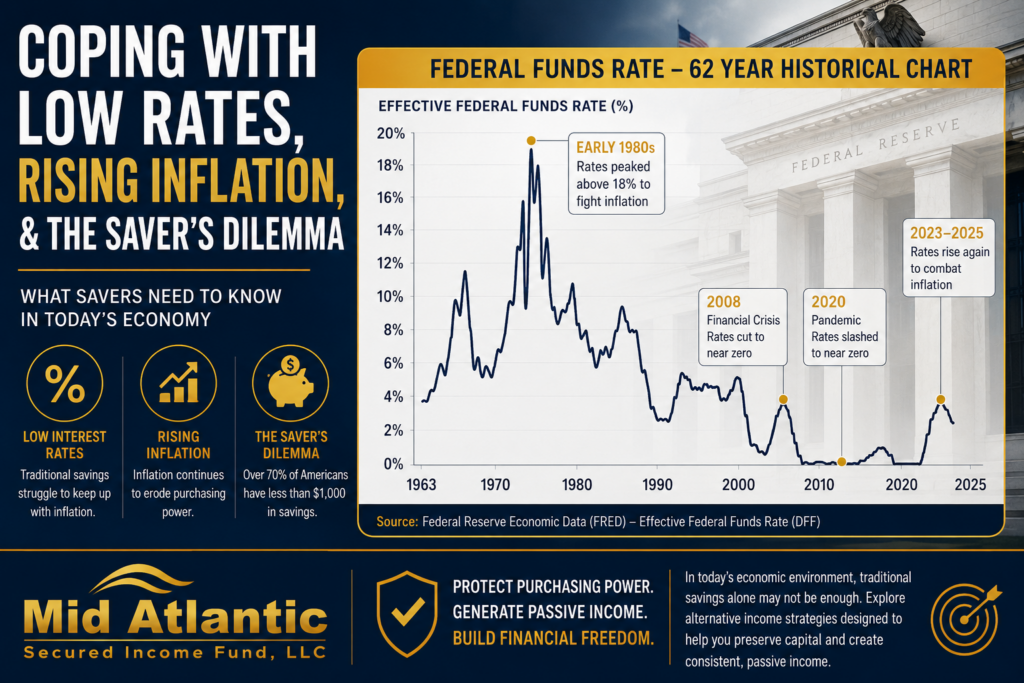
The appeal is rarely just access. Sophisticated investors usually look at private placements because they want a portfolio role that public securities may not fill efficiently. In a period marked by interest rate shifts, inflation pressure, and equity market drawdowns, many investors are reassessing how much of their income strategy should rely on traditional bond funds or dividend equities alone.
Private placements can offer exposure to specialized asset classes such as private credit, real estate-backed lending, energy, venture, or operating businesses. The category is broad, which is why due diligence matters so much. A 506(c) exemption tells you how the security is offered, not whether the underlying strategy is conservative, speculative, liquid, or suitable.
For income-oriented accredited investors, one of the more practical uses of this structure is access to private credit funds that originate short-duration, asset-backed loans. In that segment, the investment case is typically less about appreciation and more about current income, collateral coverage, and underwriting discipline. That distinction matters for retirees, rollover IRA investors, and family offices that prioritize cash flow and capital preservation over aggressive upside.
How the structure works in practice
In a typical 506(c) offering, the sponsor prepares offering documents that describe the strategy, terms, fees, risks, investor qualifications, and subscription process. Investors review the materials, complete subscription documents, and go through accredited investor verification before being admitted.
From there, outcomes depend entirely on the asset strategy. An equity-style real estate fund may rely on development profits or appreciation. A private credit fund may generate returns through interest income on originated loans. A business lending vehicle may focus on short-duration working capital transactions. The exemption itself is neutral. The underlying assets determine most of the economic behavior.
That is why experienced investors tend to look past headline yield first. They want to understand duration, leverage, collateral quality, loss history, distribution coverage, concentration risk, and the operator’s ability to source and manage assets through changing market conditions.
506c private placement investments in real estate-backed private credit
One of the more compelling applications of 506c private placement investments is in real estate-backed private debt. For investors who want income but prefer a senior secured position over direct property ownership, this structure can be a better fit than equity-heavy real estate exposure.
In a real estate-backed private credit fund, capital is typically deployed into loans secured by residential or commercial real estate. The focus is often on first-position mortgage loans, conservative loan-to-value ratios, and short loan durations. That structure can reduce some of the uncertainties tied to long holding periods, leasing risk, and property-level operating surprises.
It does not remove risk. Real estate values can decline, borrowers can default, and workout timelines can extend. But the underwriting framework is different from an equity investment. When a lender is secured by hard collateral and disciplined on valuation, sponsorship, and loan sizing, the risk management profile can be materially stronger than in speculative real estate strategies.
This is one reason income-focused investors often compare private real estate credit not to growth equities, but to a more durable alternative income sleeve. The key question is whether the manager is built around preserving principal through collateral and process, or simply using private market language to justify chasing yield.
The due diligence questions that matter most
A private placement deserves the same scrutiny you would apply to any institutional allocation. In practice, that means focusing less on the marketing pitch and more on the mechanics of downside protection.
Start with the asset strategy. Is the fund making senior secured loans, subordinated loans, or equity investments? How short is the average duration? What is the historical loan-to-value range? What happens if collateral values soften or refinancing markets tighten?
Next, evaluate the operator. Investors should want to see evidence of underwriting discipline, servicing capability, and performance consistency across cycles. A manager who originates and services its own loans often has more direct control, but that also means execution quality matters even more. If the team lacks experience in workouts, valuation discipline, or borrower monitoring, a good market can mask weak infrastructure.
Then assess cash flow reliability. If the investment is marketed for income, where do distributions come from? Are they supported by recurring interest collections, or are they dependent on asset sales, refinancing, or capital raises? A predictable income strategy should be rooted in recurring contractual cash flow, not financial engineering.
Liquidity deserves equal attention. Most 506(c) offerings are private, illiquid investments. That is not a flaw by itself, but investors should match the lockup and redemption terms to their actual liquidity needs. Capital set aside for near-term obligations generally does not belong in a private placement.
The trade-offs investors should understand
Private placements are not automatically safer because they are private. They are also not automatically better because they advertise higher yields. The advantage is access to strategies that may be less correlated to public markets and more directly tied to contractual income or asset value. The cost is reduced liquidity, greater complexity, and heavier reliance on manager quality.
That trade-off can be worthwhile when the strategy is understandable, collateral-backed, and conservatively run. It can be far less attractive when the underlying assets are opaque or the return target depends on aggressive assumptions.
This is especially relevant for retirement capital. Investors using self-directed IRAs, rollover IRAs, or old 401(k) assets for alternative income should think carefully about fit. If the goal is to improve portfolio income and diversify away from public market volatility, a private credit strategy with short-duration, asset-backed exposure may align well. If the investor may need ready access to capital or cannot evaluate private offering risk, the fit may be weaker.
Who 506(c) offerings are best suited for
506(c) offerings are generally best suited for accredited investors who can tolerate illiquidity, understand private market risk, and have the capacity to evaluate managers, structures, and asset quality. They often appeal to investors looking for passive income, portfolio diversification, and alternatives to traditional fixed-income products that may not keep pace with inflation or income needs.
Within that group, the strongest fit is usually investors who do not need every allocation to be liquid every day. Family offices, high-net-worth households, and retirement investors with a dedicated alternative sleeve often benefit most because they can size the position appropriately and let the strategy do its work over time.
A disciplined private credit allocation may be particularly relevant for investors who want current income with less dependence on equity market sentiment. That does not mean zero volatility or zero risk. It means the return driver may be more closely tied to loan performance, collateral value, and underwriting quality than to daily market pricing.
What a careful investor should look for next
If you are evaluating 506c private placement investments, the right next step is not to ask which offering has the highest stated yield. It is to ask which strategy has the clearest risk controls. In private markets, income quality matters more than headline income.
Look for alignment between the stated objective and the actual portfolio construction. If a fund emphasizes capital preservation, the structure should show it through senior secured lending, conservative leverage, disciplined collateral standards, and transparent reporting. If those pieces are missing, the messaging and the portfolio are not saying the same thing.
For accredited investors seeking dependable passive income, real estate-backed private credit can be a practical corner of the 506(c) market because it offers something tangible to underwrite – the loan, the collateral, the borrower, and the duration. In a market that often rewards noise, that kind of clarity is worth paying attention to.