
A former employer’s 401(k) can be easy to overlook until market volatility, changing interest rates, or the need for retirement income makes its limitations more visible. A 401k rollover for accredited investors may create access to a broader range of investment structures, including self-directed IRA opportunities in private, real estate-backed credit. The rollover itself is not an investment decision. It is a retirement-account transfer that deserves the same discipline as any capital allocation.
For an accredited investor, the central question is not simply whether to move an old account. It is whether the available options, risks, liquidity terms, tax treatment, and income objectives justify a move from an employer plan to an IRA structure.
What a 401(k) rollover can change
When an employee separates from service, an old 401(k) is often left in the former employer’s plan, moved to a new employer plan, taken as a distribution, or rolled into an IRA. A direct rollover to a traditional IRA generally preserves tax-deferred treatment when handled properly. By contrast, receiving the funds personally can create withholding, timing requirements, and potential tax complications.
For investors evaluating alternative assets, an IRA rollover can be particularly relevant because many employer plans offer a limited menu of mutual funds, exchange-traded funds, and other public-market investments. A self-directed IRA, administered by a qualified custodian, may permit investments in certain private placements, including private credit funds that make loans secured by real estate.
Accredited investor status does not determine whether someone may complete a 401(k) rollover. It may determine eligibility for certain private investment offerings, including Regulation D offerings available to accredited investors. That distinction matters. The retirement-account decision and the private-placement suitability decision should be evaluated separately.
Why accredited investors consider private credit in retirement accounts
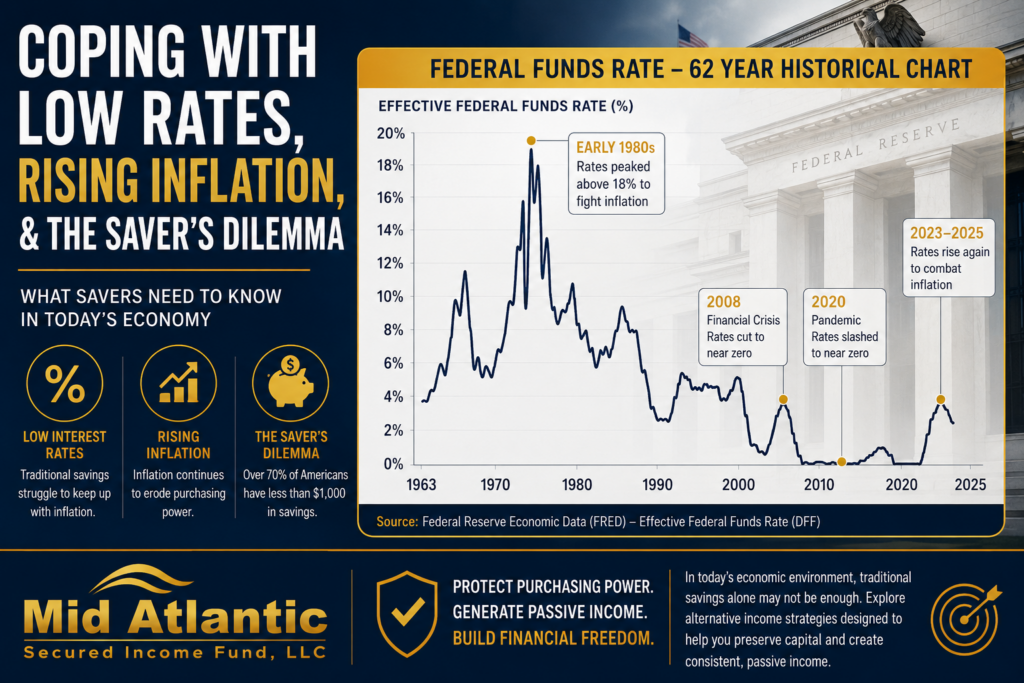
A conventional retirement portfolio often relies on public equities and traditional fixed income for growth and income. Those exposures can be useful, but they also carry distinct risks. Equity values can move sharply, while bond prices may decline when interest rates rise. Cash and short-term deposits can offer stability, yet may not provide the income some investors need over a long retirement horizon.
Private credit is a different category. Rather than owning a property directly or purchasing equity in a real estate project, an investor may gain exposure to loans made to borrowers. In a real estate-backed private credit strategy, the fund typically originates or participates in loans secured by real property. Income may be derived from borrower interest payments, fees, and the fund’s lending activity, subject to expenses, defaults, and other risks.
The appeal is understandable for investors seeking current income with collateral support. Short-duration lending can also allow a manager to reassess new loan opportunities as market conditions evolve. However, private credit is not a substitute for cash reserves, and it is not risk-free. Investments may be illiquid, valuations may be less frequent than public securities, and distributions can be reduced or suspended if loan performance weakens.
A disciplined lending strategy focuses on what protects principal before considering what produces yield. First-position liens, conservative loan-to-value ratios, borrower underwriting, property valuation, title review, loan documentation, and servicing capabilities all influence the risk profile. A stated yield alone reveals very little about the quality of an investment.
How a 401k rollover for accredited investors typically works
The cleanest path is usually a trustee-to-trustee transfer or direct rollover. In this process, retirement assets move from the former employer plan to the receiving IRA custodian without passing through the investor’s personal bank account.
After opening a traditional IRA or self-directed IRA, the investor provides the required rollover instructions to the existing plan administrator. Processing timelines differ by plan, and some administrators require paperwork or restrict how holdings must be liquidated before transfer. Once funds arrive at the new custodian, the account owner can evaluate eligible investments under the custodian’s procedures.
For a private fund investment, the subscription is made by the IRA, not the individual personally. Account titling, subscription documents, funding instructions, and distributions must all reflect the IRA’s ownership. This operational detail is fundamental. Mixing retirement assets with personal funds can create serious compliance issues.
Investors considering a Roth conversion should treat that as a separate decision. Moving pre-tax 401(k) assets to a traditional IRA is generally different from converting pre-tax assets to a Roth IRA, which may produce current taxable income. A qualified tax professional can help evaluate the consequences based on the investor’s tax position, age, required minimum distribution planning, and estate objectives.
Due diligence matters more than access
A self-directed IRA expands investment choice, but it does not perform due diligence for the account owner. Neither an IRA custodian nor a third-party administrator typically evaluates the merits of a private placement in the way an investment manager might. The responsibility to understand the investment rests with the investor and, where applicable, their professional advisors.
Before committing retirement capital to a real estate-backed private credit fund, review the offering documents closely. The key issue is not whether the fund calls itself asset-backed. The issue is how collateral, underwriting, concentration, servicing, and workout practices operate in real conditions.
Ask how loans are secured and whether the fund holds a first-position lien. Review typical loan-to-value parameters, the property types financed, borrower experience requirements, geographic concentration, loan duration, and whether loans are fixed or variable rate. Understand who originates, services, and monitors the loans after closing. A manager with direct control over underwriting and servicing may have better visibility into collateral performance, but that also makes the manager’s operating capability especially important.
It is equally necessary to examine the terms affecting the investor. These include minimum investment requirements, subscription timing, liquidity and redemption provisions, distribution policies, management fees, incentive allocations if any, and the circumstances in which distributions may change. Historical results can provide context, but they are not a promise of future performance.
A strong review also considers downside scenarios. What happens if a borrower misses payments, construction costs rise, a property sale is delayed, or collateral must be foreclosed upon? Real estate collateral can provide a meaningful layer of protection, but it does not eliminate market, legal, execution, or timing risk. The quality of the underwriting process and the manager’s ability to protect a lender’s position may matter most when conditions become difficult.
Avoid prohibited transaction problems
Self-directed IRAs require careful attention to prohibited transaction rules. In general, an IRA holder cannot use retirement assets for their own present benefit or transact improperly with certain disqualified persons, including close family members and entities they control. The rules are fact-specific and the consequences can be substantial.
For example, an investor should not use IRA assets to finance a property they personally own, personally guarantee an IRA investment, or receive a personal benefit from an IRA-held asset outside the retirement account. Private fund structures can reduce some operational complexity because the IRA may own an interest in the fund rather than a specific property. Still, investors should review the structure with qualified tax and legal advisors before investing.
Tax considerations can also vary. Certain IRA investments may generate unrelated business taxable income, commonly called UBTI, depending on the investment’s activities and financing. The applicable rules are technical. Investors should not assume that every investment held by an IRA is automatically free of tax reporting obligations.
Fit the allocation to the retirement plan, not the headline yield
Private credit may fit within a diversified retirement-income strategy, but allocation size should reflect the account’s liquidity needs and risk tolerance. An investor approaching required minimum distributions, for example, may need sufficient liquid assets outside a private fund to meet annual withdrawal obligations without relying on a redemption window.
It also helps to separate an income objective from a liquidity objective. Monthly or semi-annual distributions can be valuable, but a distribution schedule is not the same as daily liquidity. Investors should retain adequate reserves for taxes, spending needs, and unexpected expenses rather than treating a private investment as a checking account.
For accredited investors seeking an alternative use for an unused or former-employer 401(k), a direct rollover to a self-directed IRA can provide access to real estate-backed private credit with a more intentional income focus. The appropriate decision depends on the specific plan, investment terms, and personal retirement objectives. The most durable approach is to let collateral quality, underwriting discipline, and liquidity needs lead the decision – not the promise of a higher yield.