
A 1% change in borrowing costs can alter a property’s buyer pool, development economics, refinancing options, and holding-period returns. That is why interest rates and real estate deserve attention well beyond headline mortgage-rate forecasts. For accredited investors evaluating real estate-backed private credit, the central question is not simply whether rates will rise or fall. It is whether each loan can perform under realistic financing, valuation, and exit assumptions.
Public discussion often treats real estate as a single asset class. It is not. A stabilized apartment building, a new construction project, a fix-and-flip renovation, and a short-term bridge loan can respond very differently to the same rate environment. Understanding those differences is essential for investors seeking current income backed by tangible collateral rather than equity-style property speculation.
Why Interest Rates Affect Real Estate So Directly
Interest rates influence the cost of capital. When financing becomes more expensive, buyers may qualify for smaller loans, developers may face narrower project margins, and owners approaching maturity may have fewer refinancing choices. These pressures can affect transaction volume before they materially affect reported property values.
For owner-occupied housing, mortgage rates influence monthly affordability. A higher rate can substantially increase the payment required to finance the same purchase price. When affordability declines, demand can soften unless prices adjust, household incomes rise, or buyers contribute more equity.
Commercial real estate is similarly sensitive, although the mechanism is often more complex. Property values are frequently assessed using expected net operating income and market capitalization rates. If investors require higher returns because debt costs and Treasury yields have increased, capitalization rates may rise. All else equal, a higher cap rate produces a lower indicated value for the same income stream.
Yet all else is rarely equal. Rental growth, local supply constraints, lease quality, property condition, and neighborhood demand can offset or intensify the effect of rate changes. A property with durable occupancy and growing income may hold value better than one with weak tenants, deferred maintenance, or an uncertain redevelopment plan.
Interest Rates and Real Estate Credit Are Not the Same Investment
An equity investor generally participates in a property’s appreciation, income growth, and downside. A lender has a different position in the capital stack. The lender’s expected return is driven primarily by contractual interest and fees, repayment of principal, collateral coverage, and the borrower’s ability to execute a defined business plan.
That distinction matters in a changing-rate environment. A property owner may see projected equity returns decline if acquisition financing becomes more expensive or exit values compress. A first-position lender is principally focused on whether the collateral value, loan structure, and borrower execution provide a sufficient margin of safety for repayment.
This does not make real estate-backed lending immune to risk. Higher rates can raise carrying costs, slow property sales, reduce takeout financing availability, and increase the time needed to complete a project. A disciplined lender accounts for these conditions before funding, not after a borrower requests an extension.
For private credit investors, the appropriate lens is therefore credit quality rather than a directional forecast on property prices. The most relevant questions include the loan-to-value ratio, the nature and liquidity of the collateral, the borrower’s experience, the planned exit strategy, reserve requirements, and whether the loan term matches the project timeline.
The Role of Loan-to-Value in Rate Risk Management
Conservative loan-to-value, or LTV, is one of the most practical protections in real estate lending. It measures the loan amount against the value of the pledged collateral. A lower LTV leaves more borrower equity in the transaction and provides greater room for value fluctuations, project delays, or selling costs.
Consider a property valued at $1 million with a $700,000 first-position loan. If market conditions weaken and the property must be sold for less than its prior valuation, the equity cushion may help protect repayment of the senior loan. By contrast, a loan originated close to the full value of a property has little margin for error if costs rise or the exit is delayed.
LTV alone is not enough. The underlying valuation must be credible, and the lender must understand what that value represents. An as-is value, a completed-value estimate, and a broker opinion can produce materially different results. Construction and renovation loans require particular attention because the finished value depends on completion, budget control, market demand, and timing.
At Mid Atlantic Secured Income Fund, a capital-preservation-first approach centers on real estate collateral, first-position loan structures, and conservative LTV parameters generally in the 65% to 75% range. Those standards do not eliminate loss risk, but they create a more durable starting point than lending based solely on an optimistic future sale price.
Higher Rates Can Create Both Pressure and Opportunity
Higher interest rates are often described as universally negative for real estate. The reality is more nuanced. They can pressure highly leveraged owners and reduce transaction activity, but they can also create demand for flexible private financing when banks tighten lending standards or move more slowly than a borrower’s timeline allows.
For experienced builders and investors, a short-term bridge, construction, or redevelopment loan may be useful when the project has a clear value-creation plan and a credible exit. The lender must still underwrite the loan with care. In a higher-rate environment, assumptions about sales velocity, refinance availability, construction costs, and contingency reserves deserve more scrutiny, not less.
Private credit can also benefit from a rate environment where income-oriented investors are reassessing traditional fixed-income allocations. The attraction is not a promise that private loans will outperform every public-market alternative. Rather, it is the potential for contractual current income, short-duration exposure, and collateral-backed lending outside the daily price movements of public securities.
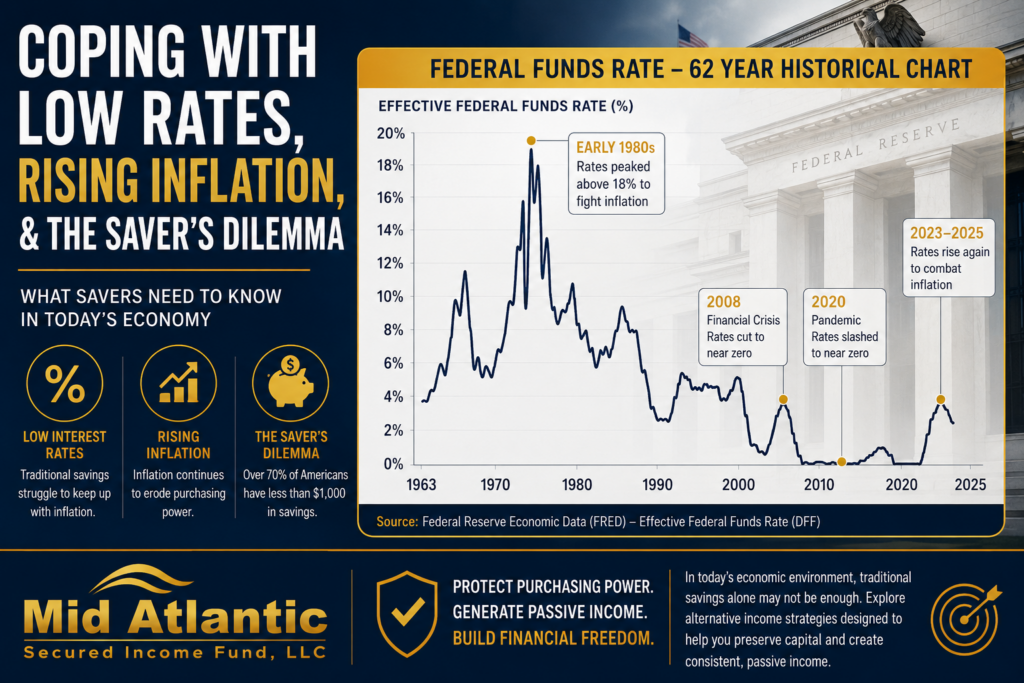
The Federal Reserve’s policy rate affects many financing markets, but private loans are individually negotiated. Their pricing, terms, and protections depend on the borrower, the asset, the loan purpose, and prevailing market conditions. This can allow private lenders to adjust new originations as the cost of capital changes, though existing fixed-rate loans will continue under their agreed terms until repayment.
What Investors Should Evaluate Beyond the Stated Yield
A stated yield is only one part of an investment decision. In private real estate credit, the underwriting process and servicing discipline often matter more over a full cycle. Investors should understand how a manager sources loans, verifies collateral values, evaluates borrower liquidity, monitors construction progress, and responds when a repayment timeline changes.
Short duration can be valuable because capital may be repaid and redeployed more frequently than in a long-term property ownership strategy. However, shorter duration also creates reinvestment risk. If market rates decline, future loans may be originated at lower yields. If rates remain elevated, borrowers may need more time or stronger financial capacity to secure permanent financing.
Distribution frequency should also be considered carefully. Monthly or semi-annual distributions can support cash-flow planning, particularly for retirees and investors using self-directed IRAs or rollover IRA capital. Still, distributions are not a substitute for evaluating the underlying assets, liquidity terms, fees, tax treatment, and the risks described in the offering documents.
A thoughtful review should include these four questions:
- Is each loan secured by a first-position mortgage or deed of trust on identifiable real estate collateral?
- Does the LTV leave adequate protection if the project takes longer or values decline?
- Is the repayment strategy supported by realistic market evidence rather than a best-case forecast?
- Does the manager have the operational capacity to service loans and address exceptions promptly?
Rate Scenarios That Matter to Private Credit Investors
If rates decline gradually, property transactions and refinancing activity may improve. This can support borrower exits, although new loan yields may adjust lower over time. Investors focused on income should recognize that a falling-rate environment can change the opportunity set as existing loans repay and capital is redeployed.
If rates remain higher for longer, careful underwriting becomes even more important. Borrowers with strong equity contributions, demonstrated project experience, and conservative assumptions may still find viable opportunities. Projects dependent on rapid appreciation, aggressive refinancing, or thin operating margins may face greater pressure.
If rates rise sharply, valuations and liquidity can be tested. In that environment, senior collateral position, conservative leverage, borrower guarantees where appropriate, and active servicing take on added significance. The objective is not to predict every market turn. It is to structure loans that are positioned to withstand reasonable adverse outcomes.
A More Disciplined Way to Think About Real Estate Income
For accredited investors, real estate-backed private credit offers a way to participate in real estate finance without taking on the operating responsibilities of direct ownership. Rather than managing tenants, construction schedules, or property sales, the investor evaluates the fund manager’s lending discipline, collateral standards, and ability to generate and service loans.
That approach is particularly relevant for investors seeking to diversify retirement income beyond conventional bonds or for those considering eligible self-directed IRA and rollover IRA strategies. Private placements carry meaningful risks, including illiquidity and the potential loss of principal, and they require careful review with qualified tax, legal, and investment professionals.
Interest rates will continue to influence real estate, but the strongest investment decisions are not built on a single rate forecast. They are built on prudent leverage, credible collateral, experienced borrowers, and a lending process designed to protect capital when conditions become less accommodating.