
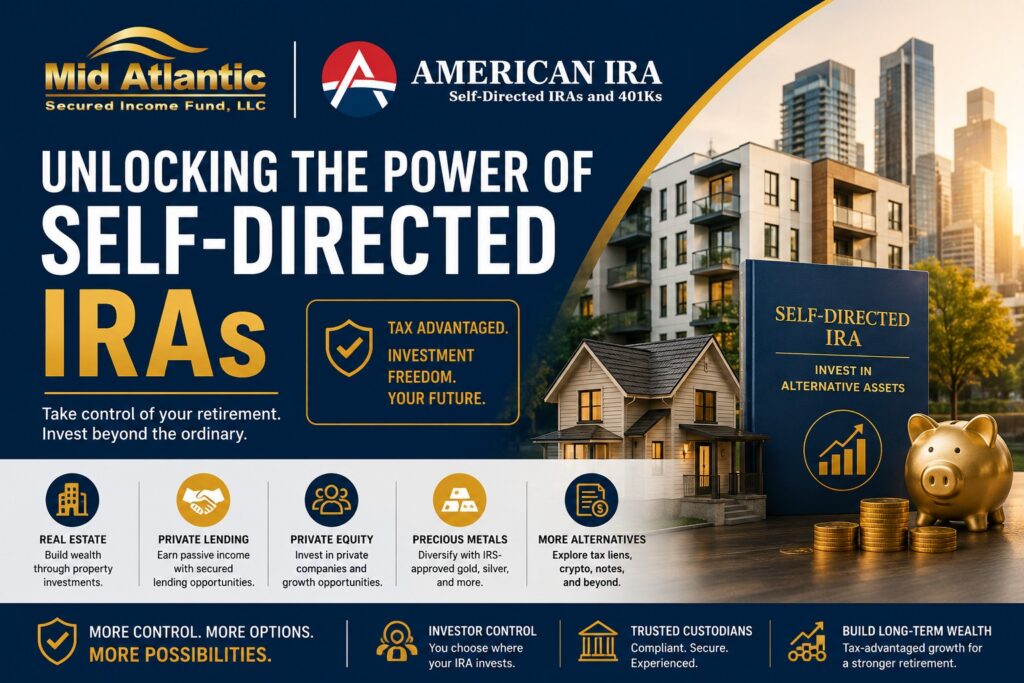
Unlocking the Power of Self-Directed IRAs
If you’re like many investors, your retirement journey likely began with stocks, bonds, mutual funds, or ETFs. While these traditional investments remain popular, they are not the only options available for building long-term wealth.
A Self-Directed IRA (SDIRA) allows investors to expand beyond conventional assets and invest in a broader range of opportunities while maintaining the same tax advantages associated with traditional retirement accounts.
For investors seeking greater control, diversification, and flexibility, understanding how Self-Directed IRAs work is an important first step.
What Is a Self-Directed IRA?
A Self-Directed IRA is a retirement account that gives the account holder authority to select and direct their own investments rather than being limited to the offerings of a traditional brokerage platform.
While a qualified custodian or administrator manages account administration, recordkeeping, and compliance, the investor is responsible for identifying and selecting investment opportunities.
Key Characteristics of a Self-Directed IRA
- Investor-directed investment decisions
- Access to alternative assets
- Tax-deferred or tax-free growth potential
- Available as Traditional or Roth IRA structures
- Subject to the same annual contribution limits as other IRAs
This flexibility allows investors to build a retirement portfolio that aligns with their expertise, interests, and long-term financial objectives.
Why Investors Choose Self-Directed IRAs
Many retirement investors seek greater control over how their capital is allocated.
A Self-Directed IRA provides the ability to diversify beyond traditional public markets and pursue opportunities that may not be available through standard retirement accounts.
Common Benefits of Self-Directed IRAs
Greater Investment Control
Investors make their own investment decisions rather than being limited to a predefined menu of securities.
Portfolio Diversification
Alternative assets may provide exposure to different market segments beyond stocks and bonds.
Tax Advantages
Depending on account structure, investments may grow on a tax-deferred or tax-free basis.
Access to Alternative Investments
Investors can participate in opportunities that align with their knowledge and experience.
What Can You Invest in With a Self-Directed IRA?
One of the primary advantages of a Self-Directed IRA is the broad range of eligible investments.
While all investments must comply with IRS regulations, investors often have access to significantly more options than traditional retirement accounts.
Real Estate
Real estate remains one of the most popular Self-Directed IRA investment categories.
Eligible investments may include:
- Single-family rental properties
- Multifamily housing
- Commercial real estate
- Raw land
- Investment properties
- Development opportunities
Income and gains generated by these investments flow back into the IRA, preserving the account’s tax advantages.
Private Lending
Many investors use Self-Directed IRAs to participate in private lending opportunities.
Examples may include:
- Real estate-backed loans
- Promissory notes
- Secured lending transactions
- Private credit investments
In these structures, interest payments generally flow directly back into the retirement account.
Private Businesses and Private Equity
Self-Directed IRAs may also invest in:
- Private companies
- Startups
- Limited partnerships
- Private equity opportunities
These investments can provide exposure to opportunities outside of public stock markets.
Precious Metals
Certain IRS-approved precious metals may be held within a Self-Directed IRA.
Eligible assets may include:
- Gold
- Silver
- Platinum
- Palladium
Specific purity requirements and storage rules apply.
Other Alternative Investments
Depending on account structure and custodian capabilities, investors may also explore:
- Tax liens
- Cryptocurrency
- Private debt
- Notes
- Alternative funds
Always verify eligibility and compliance requirements before investing.
Important Self-Directed IRA Rules Investors Should Know
While Self-Directed IRAs offer significant flexibility, they remain subject to IRS regulations.
Understanding these rules is essential for maintaining the tax-advantaged status of the account.
Prohibited Transactions
Investors generally cannot:
- Use IRA assets for personal benefit
- Purchase property they already own
- Live in or personally use IRA-owned real estate
- Conduct certain transactions with disqualified persons
Disqualified Persons
Examples may include:
- The IRA owner
- Spouses
- Parents
- Grandparents
- Children
- Certain business entities controlled by the account owner
Violating IRS rules can trigger penalties and tax consequences.
How Does a Self-Directed IRA Work?
The process is often simpler than many investors expect.
Step 1: Open a Self-Directed IRA
Establish an account with a qualified Self-Directed IRA custodian or administrator.
Step 2: Fund the Account
Funding can occur through:
- Annual contributions
- IRA transfers
- 401(k) rollovers
- Other eligible retirement account transfers
Step 3: Identify an Investment Opportunity
Research and evaluate investments that align with your objectives and risk tolerance.
Step 4: Direct the Investment
The custodian executes the transaction according to your instructions.
Step 5: Income Returns to the IRA
Rental income, interest payments, and investment proceeds generally flow back into the retirement account.
Is a Self-Directed IRA Right for You?
A Self-Directed IRA may be worth considering for investors who:
- Want greater control over retirement investments
- Understand alternative assets
- Seek diversification beyond public markets
- Have experience evaluating private investments
- Are comfortable conducting their own due diligence
As with any investment strategy, it is important to understand both the opportunities and risks involved.
Frequently Asked Questions About Self-Directed IRAs
What is the difference between a Self-Directed IRA and a traditional IRA?
A Self-Directed IRA offers access to a broader range of investments beyond traditional stocks, bonds, and mutual funds while maintaining the same tax advantages.
Can a Self-Directed IRA invest in real estate?
Yes. Many investors use Self-Directed IRAs to purchase rental properties, commercial real estate, land, and other eligible real estate investments.
Can I manage my own Self-Directed IRA investments?
Yes. The investor directs the investment decisions while the custodian handles administration and compliance.
Are Self-Directed IRAs tax-advantaged?
Yes. Traditional SDIRAs may provide tax-deferred growth, while Roth SDIRAs may provide tax-free qualified withdrawals.
What investments are prohibited inside a Self-Directed IRA?
Certain collectibles, life insurance, and prohibited transactions involving disqualified persons are generally not permitted.
Learn More About Self-Directed IRAs
Interested in learning more about Self-Directed IRAs?
Contact American IRA, LLC at 866-7500-IRA (472) for a complimentary consultation, educational resources, and investor guides.
American IRA, headquartered in Sioux Falls, South Dakota, serves as a neutral third-party administrator on behalf of the custodian, New Vision Trust Company, a South Dakota-chartered trust company.
American IRA does not provide investment advice, investment recommendations, or endorsements. Investors should conduct their own due diligence and consult qualified legal, tax, and financial professionals before making investment decisions.