How Accredited Investors Are Structuring Portfolios for Long-Term Wealth Preservation, Income & After-Tax Performance
Why After-Tax Returns Matter More Than Ever
For decades, investors primarily focused on one question:
“How much return can my portfolio generate?”
But increasingly, sophisticated investors, family offices, wealth advisors, and accredited investors are asking a more important question:
“How much of those returns do I actually keep after taxes?”
That distinction has become increasingly important entering 2026.
Higher investment income, elevated capital gains exposure, shifting tax policy discussions, inflationary pressures, and growing wealth concentration have made tax efficiency a central component of modern portfolio construction.
Institutional investors increasingly recognize that strong nominal returns alone are insufficient if portfolios are structured inefficiently from a tax perspective.
In many cases, improving after-tax efficiency can materially enhance long-term compounded wealth without requiring additional investment risk.
This shift explains why accredited investors are increasingly exploring:
- self-directed IRAs (SDIRAs),
- private credit,
- real estate-backed investments,
- tax-advantaged retirement structures,
- alternative income strategies,
- and diversified portfolio frameworks designed around long-term capital preservation.
The modern investment environment is no longer simply about chasing returns.
It is about structuring portfolios intelligently.
What Are Tax-Efficient Investment Strategies?
Direct Answer
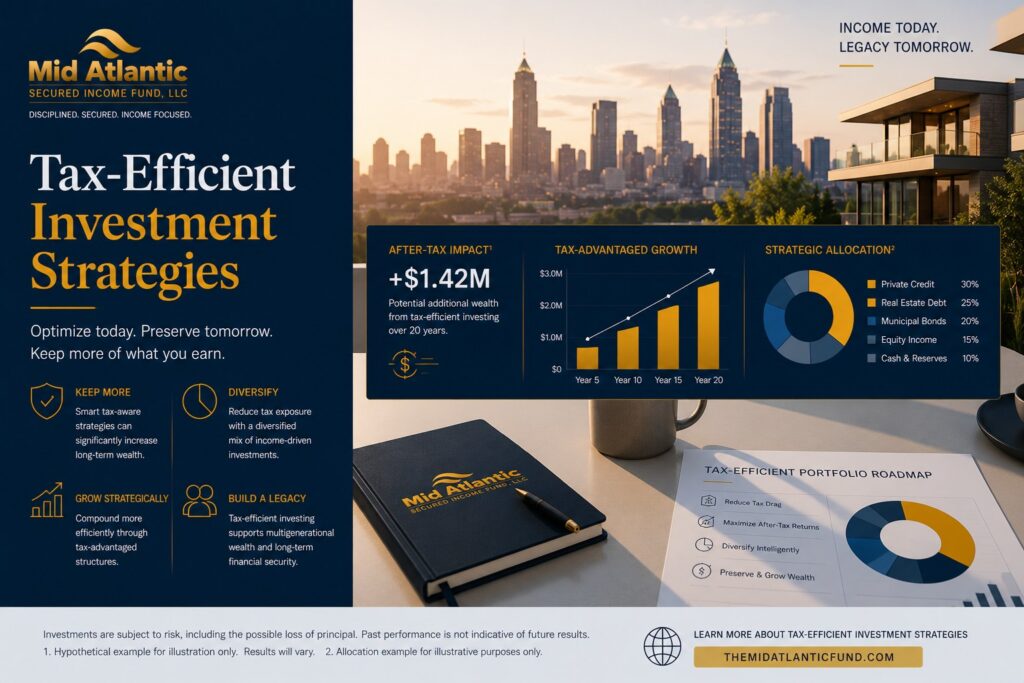
Tax-efficient investment strategies are portfolio management approaches designed to maximize after-tax returns by minimizing unnecessary tax liabilities through investment selection, asset location, diversification, income structuring, and long-term planning.
These strategies may involve:
- tax-advantaged retirement accounts,
- capital gains management,
- private market investments,
- municipal bonds,
- alternative income strategies,
- real estate structures,
- and diversified asset allocation.
The goal is not tax avoidance.
The goal is strategic tax optimization within existing regulatory frameworks.
Why Tax Efficiency Matters More in 2026
Several structural economic trends are increasing investor focus on tax-aware portfolio construction.
1. Higher Portfolio Income Creates Higher Tax Exposure
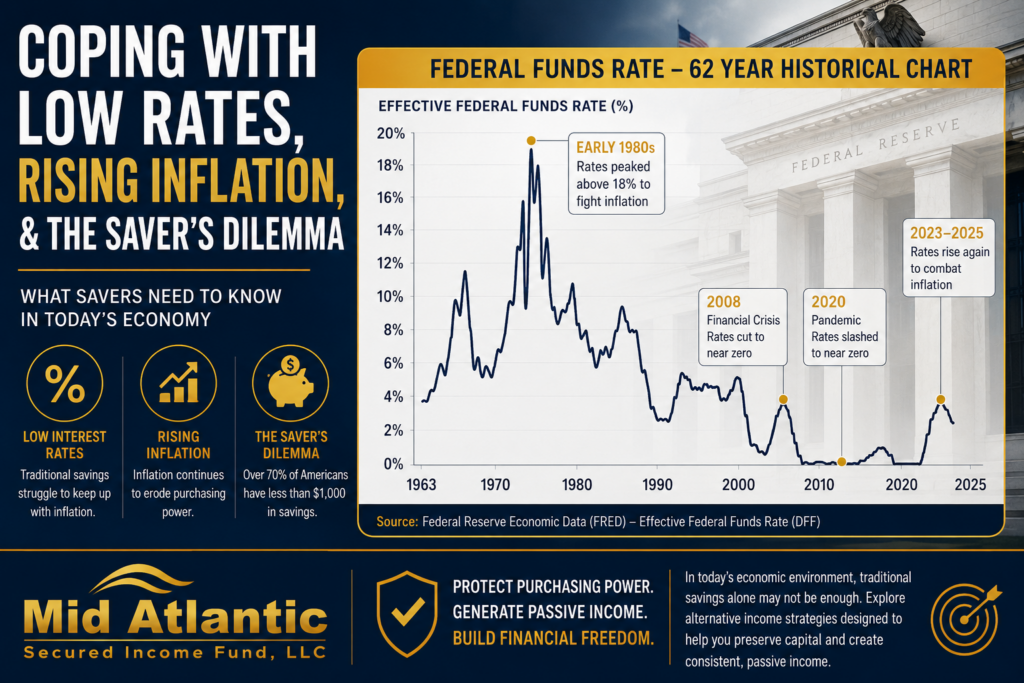
Rising interest rates have increased yields across many asset classes.
While higher yields can improve portfolio income, they may also increase taxable income exposure depending on account structure and investment selection.
Investors generating income from:
- bonds,
- private credit,
- dividends,
- rental cash flow,
- and alternative investments
must increasingly evaluate the after-tax implications of portfolio design.
2. Inflation Makes Tax Drag More Painful
Inflation reduces purchasing power.
Taxes can compound that erosion.
For example:
An investor earning a 7% return while paying combined federal and state taxes may retain substantially less real purchasing power after inflation is considered.
As a result, investors increasingly seek:
- tax-advantaged income,
- tax-deferred growth,
- and long-term compounding efficiency.
3. Public Market Volatility Has Increased Tax Awareness
Market volatility often creates both risks and opportunities.
Sophisticated investors increasingly use:
- tax-loss harvesting,
- rebalancing strategies,
- and diversification frameworks
to improve long-term after-tax outcomes.
The Difference Between Pre-Tax and After-Tax Returns
Many investors underestimate the long-term impact of taxes on compounding.
Consider two portfolios:
|
Portfolio |
Annual Return |
Effective Tax Rate |
After-Tax Return |
|---|---|---|---|
|
Portfolio A |
9% |
35% |
5.85% |
|
Portfolio B |
7.5% |
15% |
6.38% |
Over long time horizons, tax efficiency can materially alter wealth outcomes.
This is why institutional investors increasingly evaluate:
- tax-adjusted performance,
- after-tax yield,
- and tax-aware portfolio construction.
Core Components of Tax-Efficient Investing
1. Asset Location Strategy
Asset location refers to placing investments in the most tax-efficient account structures.
For example:
|
Asset Type |
Potential Preferred Location |
|---|---|
|
High-income investments |
Tax-advantaged accounts |
|
Growth equities |
Taxable accounts |
|
Alternative investments |
SDIRAs or retirement vehicles |
|
Municipal bonds |
Taxable accounts |
|
Real estate debt |
Tax-advantaged structures |
Strategic asset placement can improve long-term compounding.
2. Long-Term Capital Gains Management
Long-term capital gains rates are generally lower than ordinary income tax rates.
As a result, many investors emphasize:
- longer holding periods,
- tax-aware rebalancing,
- and lower-turnover strategies.
This differs significantly from short-term speculative trading.
3. Tax-Advantaged Retirement Structures
Retirement accounts remain central to tax-efficient investing.
Common structures include:
- Traditional IRAs,
- Roth IRAs,
- 401(k)s,
- SEP IRAs,
- and Self-Directed IRAs (SDIRAs).
These structures may provide:
- tax deferral,
- tax-free growth potential,
- or enhanced portfolio flexibility.
What Is an SDIRA?
Direct Answer
A Self-Directed IRA (SDIRA) is a retirement account that allows investors to access alternative investments beyond traditional stocks, bonds, and mutual funds.
SDIRAs may include:
- private credit,
- real estate,
- secured lending investments,
- private equity,
- and other alternative assets.
For accredited investors, SDIRAs can create opportunities for portfolio diversification and tax-advantaged alternative investing.
Why Accredited Investors Use SDIRAs
Sophisticated investors increasingly use SDIRAs because they may provide:
- broader investment flexibility,
- tax-deferred or tax-free growth,
- alternative asset access,
- and enhanced diversification.
In particular, SDIRAs have become increasingly popular for investors seeking exposure to:
- real estate-backed lending,
- private credit,
- and alternative income investments.
The Growing Role of Private Credit in Tax-Efficient Portfolios
Private credit has become one of the fastest-growing segments of alternative investing.
According to institutional research from Preqin and Goldman Sachs, private credit assets under management have expanded significantly as investors seek:
- yield,
- diversification,
- and reduced public market correlation.
What Is Private Credit Investing?
Direct Answer
Private credit investing involves non-bank lending structures where investors provide capital directly to borrowers through privately negotiated debt investments rather than publicly traded bonds.
Private credit investments may include:
- bridge lending,
- commercial lending,
- asset-backed lending,
- real estate-backed loans,
- and specialty finance structures.
These investments often emphasize:
- recurring income,
- collateral-backed security,
- and contractual cash flow.
Why Tax Structure Matters for Passive Income
Passive income is often viewed favorably by investors seeking:
- financial independence,
- retirement cash flow,
- and wealth preservation.
However, not all passive income is taxed equally.
Income from:
- dividends,
- interest,
- real estate,
- and private credit
may carry different tax implications depending on:
- account structure,
- holding period,
- investment vehicle,
- and investor circumstances.
This is why tax-efficient income planning has become increasingly important among high-net-worth investors.
Tax-Efficient Wealth Preservation Strategies
Wealth preservation and tax efficiency are closely connected.
Taxes can significantly impact long-term portfolio durability.
Modern wealth preservation strategies increasingly combine:
- diversification,
- tax-aware structuring,
- alternative investments,
- and income optimization.
Why Family Offices Emphasize Tax Efficiency
Family offices often focus heavily on:
- multigenerational wealth transfer,
- estate efficiency,
- tax minimization,
- and long-term capital durability.
According to Deloitte family office surveys, alternative investments continue gaining popularity among family offices seeking:
- diversification,
- inflation resistance,
- and tax-aware portfolio construction.
Real Estate and Tax Efficiency
Real estate has historically played a major role in tax-efficient investing.
Potential advantages may include:
- depreciation benefits,
- tax-deferred structures,
- income generation,
- and inflation-linked appreciation.
Additionally, real estate-backed lending structures can provide exposure to income-producing assets without direct property ownership responsibilities.
How Diversification Improves Tax Efficiency
Diversification is not only about risk management.
It can also improve tax flexibility.
Diversified portfolios may allow investors to:
- strategically harvest losses,
- rebalance tax-efficiently,
- manage income timing,
- and reduce concentrated tax exposure.
Institutional portfolios increasingly diversify across:
|
Asset Class |
Tax Consideration |
|---|---|
|
Equities |
Capital gains treatment |
|
Bonds |
Ordinary income |
|
Municipal bonds |
Potential tax advantages |
|
Private credit |
Income generation |
|
Real estate |
Depreciation opportunities |
|
Alternative investments |
Diversification benefits |
Are Alternative Investments More Tax Efficient?
Direct Answer
Alternative investments may offer certain tax advantages depending on structure, holding period, account type, and investor circumstances. However, tax treatment varies significantly across investments and should be evaluated carefully with qualified tax professionals.
Potential tax-efficient structures may include:
- SDIRAs,
- long-term holdings,
- real estate structures,
- and diversified private market investments.
Common Tax-Efficient Investment Mistakes
1. Focusing Only on Pre-Tax Returns
High nominal returns may not translate into superior after-tax wealth accumulation.
2. Overtrading
Frequent trading may increase taxable events.
3. Ignoring Asset Location
Placing income-heavy assets in taxable accounts may reduce efficiency.
4. Lack of Diversification
Concentrated positions can create unnecessary tax exposure.
5. Ignoring Long-Term Planning
Tax efficiency often compounds over decades.
Why Institutional Investors Think Long Term
Institutional investors frequently prioritize:
- after-tax durability,
- consistent income,
- downside protection,
- and long-term capital discipline.
This mindset differs significantly from speculative short-term investing.
As volatility increases globally, tax efficiency is increasingly viewed as part of overall portfolio resilience.
Tax-Efficient Investing and Retirement Planning
Retirement planning is no longer solely about accumulating assets.
It is increasingly about:
- preserving purchasing power,
- generating sustainable income,
- and minimizing unnecessary tax erosion.
This explains why many accredited investors are exploring:
- alternative investments,
- SDIRAs,
- private credit,
- and diversified income strategies.
The Future of Tax-Efficient Investing
Several trends are likely to shape tax-efficient investing moving forward:
- growth of alternative investments,
- expansion of private credit markets,
- rising use of SDIRAs,
- demographic aging,
- and increasing investor focus on after-tax income durability.
As investors become more sophisticated, portfolio construction will likely continue shifting from:
“highest nominal return”
toward:
“best long-term after-tax risk-adjusted outcome.”
Conclusion
Tax-efficient investment strategies have become increasingly important in modern wealth management.
For accredited investors, retirees, family offices, and high-net-worth individuals, portfolio success is no longer measured solely by returns generated — but by wealth retained after taxes, inflation, and volatility are considered.
The investment landscape entering 2026 increasingly favors:
- diversification,
- tax-aware portfolio construction,
- alternative income investments,
- private credit,
- and real asset exposure.
Sophisticated investors increasingly recognize that disciplined structuring, downside awareness, and long-term planning may play just as important a role in wealth creation as investment selection itself.
For investors seeking durable passive income, long-term capital preservation, and portfolio resilience, tax-efficient investing remains one of the most important — and often overlooked — components of modern financial strategy.
FAQ Section
What are tax-efficient investment strategies?
Tax-efficient investment strategies are approaches designed to maximize after-tax returns by minimizing unnecessary tax liabilities through portfolio structure, account selection, diversification, and long-term investment planning.
Why is tax efficiency important in investing?
Taxes can significantly reduce long-term compounded returns. Improving tax efficiency may enhance after-tax wealth accumulation without requiring additional investment risk.
What is the most tax-efficient investment account?
Common tax-efficient investment accounts include:
- Roth IRAs,
- Traditional IRAs,
- 401(k)s,
- SEP IRAs,
- and Self-Directed IRAs (SDIRAs).
The best option depends on an investor’s goals and circumstances.
How do SDIRAs help with tax-efficient investing?
SDIRAs allow investors to access alternative investments like private credit and real estate within tax-advantaged retirement structures.
Are private credit investments tax efficient?
Tax treatment varies depending on structure and account type. Many investors use private credit within tax-advantaged accounts such as SDIRAs.
What role does diversification play in tax efficiency?
Diversification may improve tax flexibility by helping investors manage gains, losses, income timing, and concentrated exposure.