
A rental property can produce attractive cash flow until a unit sits vacant, a roof fails, or financing costs reset at the wrong time. That is one reason many accredited investors are taking a closer look at private lending real estate investments – a strategy built around earning income from loans secured by real estate rather than relying on property appreciation or day-to-day ownership.
For investors focused on capital preservation and dependable distributions, that distinction matters. In a private lending structure, the investor is typically exposed to the income stream from debt, not the operational volatility of owning and managing the asset directly. The return profile is driven by interest payments, fee income, loan duration, collateral coverage, and underwriting discipline.
What private lending real estate investments actually are
Private lending real estate investments generally involve capital being deployed into loans made to real estate borrowers outside traditional bank channels. These borrowers may need financing for new construction, renovation, redevelopment, bridge situations, or short-term working capital tied to a real estate transaction. Instead of purchasing an ownership stake in a building, the investor participates in the credit side of the capital stack.
That difference changes the risk and reward equation. Equity investors benefit most when property values rise and business plans are executed well. Lenders, by contrast, are primarily focused on timely repayment, collateral value, and downside protection. In a well-structured private credit strategy, the objective is not to hit the highest possible return. It is to generate current income while managing risk through secured lending.
This is why first-position mortgage lending is often central to the conversation. A first-position lender has a senior claim on the collateral relative to junior lenders or equity holders. If a loan underperforms, the lender’s legal position and collateral rights can be materially stronger than those of parties lower in the stack. That does not eliminate risk, but it can improve recovery prospects.
Why investors are paying attention now
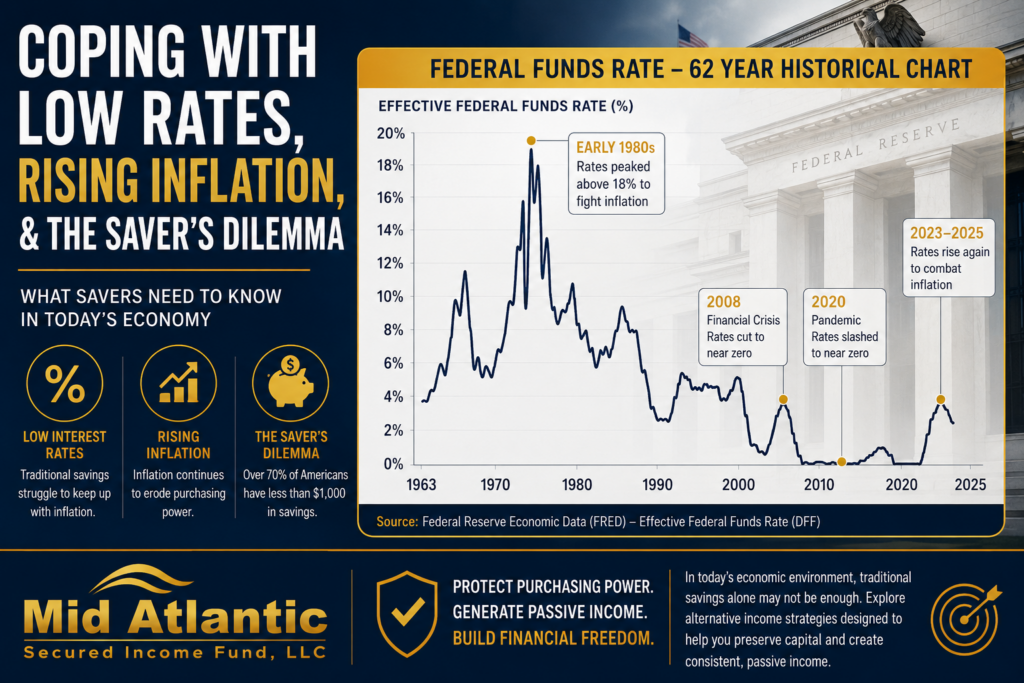
The appeal of private lending real estate investments tends to increase when traditional income options look less compelling on a risk-adjusted basis. Public fixed-income markets can be sensitive to interest rate moves, duration risk, and credit spread volatility. Public equities may offer long-term growth, but they can be a poor fit for investors prioritizing current income and lower correlation to daily market swings.
Private real estate credit occupies a different lane. Because loans are often short-duration and backed by hard assets, investors may have more visibility into where cash flow comes from and what stands behind it. According to Federal Reserve data, commercial bank lending standards have tightened at various points in recent years, which can create financing gaps for qualified borrowers who need speed, flexibility, or asset-specific underwriting. That gap is where experienced private lenders can operate selectively.
For accredited investors, the opportunity is not simply higher yield. It is the potential combination of predictable income, shorter duration, and collateral-backed exposure. That combination can be especially relevant for retirees, self-directed IRA investors, and those evaluating rollover IRA or old 401(k) capital for alternative income strategies.
How risk is managed in private lending real estate investments
Not all private lending platforms are built the same. The quality of the underwriting process often matters more than the headline yield. Conservative firms tend to spend less time marketing upside and more time analyzing borrower quality, project viability, repayment sources, and collateral value.
Loan-to-value discipline matters
One of the clearest indicators of lender discipline is loan-to-value, or LTV. A lender originating loans in a 65 to 75 percent LTV range typically leaves an equity cushion beneath the loan balance. That cushion can provide a margin of safety if construction costs rise, timelines slip, or property values soften. The lower the leverage, the more room there may be to protect principal in a downside scenario.
Short duration can reduce uncertainty
Many private real estate loans are structured as short-term instruments rather than long-dated commitments. That can be beneficial in changing rate environments because capital is not locked up for as long, and the lender may be able to reprice or redeploy sooner. Shorter duration does not guarantee better outcomes, but it can reduce exposure to long-horizon uncertainty.
Collateral is necessary, but not sufficient
A common mistake is assuming that a real estate-backed loan is automatically safe. Real collateral helps, but collateral quality, lien position, local market liquidity, borrower experience, and servicing capability all matter. A lender that can originate, underwrite, fund, and actively service loans has more control over outcomes than one relying on third parties with limited oversight.
Servicing and workout experience are often overlooked
The real test of a private lender is not how loans perform in ideal conditions. It is how the manager handles extensions, project delays, or borrower stress. Experienced operators usually have formal processes for construction draws, inspections, covenant monitoring, and, when needed, enforcement. For investors, operational infrastructure is not a side detail. It is part of the risk management framework.
Income potential versus direct property ownership
Private lending real estate investments can appeal to investors who want real estate exposure without tenant management, leasing risk, renovation oversight, or property-level capital calls. That simplicity has value, particularly for investors seeking passive income.
Still, there are trade-offs. Direct property ownership may offer greater upside if rents grow, leverage works in the owner’s favor, and appreciation is strong. Private lending usually sacrifices some of that upside in exchange for a more contractual income stream and a senior claim on the asset. For many income-oriented investors, that is an acceptable trade.
The better question is often not which strategy is superior in all cases. It is which strategy better fits the investor’s objective. If the goal is current income, lower volatility, and less operational complexity, private credit may align more closely than equity-style real estate investing.
Where this strategy can fit in a portfolio
For accredited investors, private real estate credit is often used as a complement rather than a replacement for all other holdings. It may sit alongside public fixed income, private equity, and real estate equity as a separate income-oriented allocation.
This is particularly relevant for investors evaluating retirement income. A self-directed IRA or rollover IRA can, in some cases, hold alternative assets such as private real estate debt, subject to custodial and regulatory requirements. For investors concerned about sequence-of-returns risk or equity market drawdowns near retirement, an income-oriented allocation backed by real assets may warrant consideration.
That said, private placements are not liquid in the same way as publicly traded securities. Investors need to assess liquidity needs, time horizon, concentration, and accreditation requirements before allocating capital. Higher current income does not make an investment appropriate if the investor may need immediate access to funds.
What to evaluate before investing
A disciplined investor should look beyond the offering summary and ask how the strategy actually functions. Start with the lender’s position in the capital stack. First-position mortgages generally provide stronger structural protection than junior liens or preferred equity structures that are marketed as debt-like.
Next, review underwriting standards. Ask how collateral is valued, what LTV range is typical, how borrowers are screened, and what repayment sources are relied upon. A lender that depends solely on refinancing assumptions may have a different risk profile than one underwriting to multiple exit scenarios.
Track record also matters, but it should be interpreted carefully. Investors should understand not just stated returns, but loss history, distribution consistency, default management, and the operational experience of the team. A credible manager should be able to explain how prior loans performed across different market conditions.
Finally, consider alignment. Managers that emphasize capital preservation, disciplined origination, and active servicing are generally better aligned with investors seeking stability than firms built around aggressive volume growth. Mid Atlantic Secured Income Fund, for example, positions its strategy around secured lending, conservative leverage, and income consistency rather than speculative appreciation.
The real appeal of private real estate credit
The strongest case for private lending real estate investments is not that they outperform every other asset class in every environment. It is that they can offer a more controlled way to pursue income. Investors are not relying primarily on cap rate compression, market momentum, or rent growth to meet return targets. They are relying on contractual loan payments supported by collateral, underwriting, and legal structure.
That framework can be attractive in uncertain markets, but only when executed with discipline. The difference between prudent private credit and avoidable risk often comes down to origination standards, leverage limits, asset selection, and servicing capabilities. For accredited investors who value current income and downside awareness, those are not minor details. They are the investment thesis.
A thoughtful allocation starts with a simple question: do you want your real estate exposure to depend on owning the property, or on lending against it with a margin of safety? For many investors seeking steadier income and a stronger emphasis on principal protection, that answer is becoming clearer.