How Institutional Portfolio Construction Is Evolving Beyond Traditional Stocks and Bonds
For decades, investment management services largely revolved around a familiar formula: public equities for growth, bonds for stability, and broad diversification across traditional asset classes. That framework shaped retirement portfolios, pension funds, family offices, and wealth management strategies for generations.
But the modern investment landscape looks materially different.
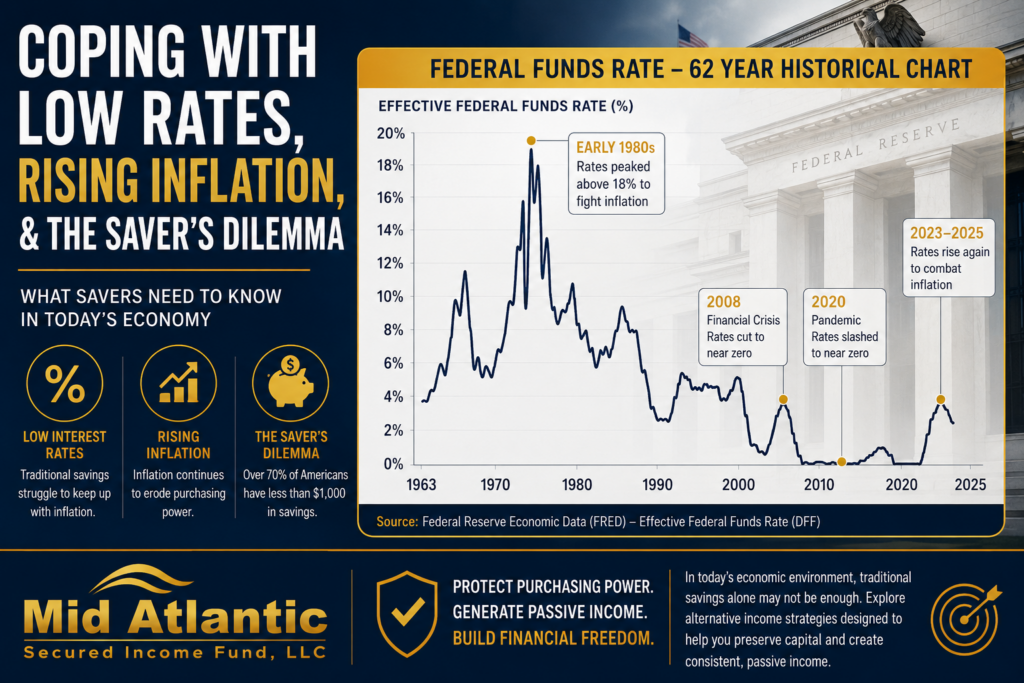
Persistent inflation pressures, higher interest rates, elevated public market volatility, and shifting demographic trends have changed how institutional and high-net-worth investors think about portfolio construction. According to the Federal Reserve’s 2025 Financial Stability Report, investors continue reallocating toward private markets and alternative income-producing assets as traditional diversification models face new challenges.
As a result, investment management services today increasingly involve more than selecting mutual funds or rebalancing stock allocations. Institutional portfolio management now incorporates:
- Alternative investments
- Private credit
- Real assets
- Income-oriented strategies
- Downside-risk mitigation
- Tax-aware portfolio construction
- Liquidity planning
- Inflation-sensitive allocation models
This evolution has accelerated especially among accredited investors, family offices, RIAs, and retirement-focused investors seeking more resilient income streams and lower correlation to public market volatility.
The core objective remains unchanged:
Preserve capital, generate sustainable long-term returns, and manage risk through disciplined portfolio construction.
The methods, however, are becoming far more sophisticated.
What Are Investment Management Services?
Direct Answer
Investment management services involve the professional oversight, allocation, monitoring, and adjustment of investment portfolios to help investors pursue long-term financial objectives such as income generation, capital appreciation, retirement planning, and risk management.
These services may include:
- Portfolio construction
- Asset allocation
- Risk management
- Alternative investment selection
- Retirement income planning
- Tax-aware investment strategies
- Rebalancing and monitoring
- Private market investment access
- Capital preservation planning
Institutional-quality investment management increasingly combines traditional public market exposure with alternative assets such as private credit, real estate debt, infrastructure, and private equity.
Why Investment Management Is Changing
The Traditional 60/40 Portfolio Faces New Pressure
For years, the traditional “60/40” allocation model — 60% equities and 40% bonds — served as a foundational retirement framework.
However, several structural changes have challenged that model:
1. Inflation Volatility
The U.S. experienced the highest inflation levels in decades following the pandemic-era economic cycle. Elevated inflation eroded the real purchasing power of fixed-income assets and cash-heavy portfolios.
2. Bond Market Repricing
Rising interest rates led to historic bond market drawdowns in 2022 and beyond. Investors who previously relied on fixed income for stability discovered that traditional bonds can experience meaningful volatility during rate-reset cycles.
3. Public Market Concentration Risk
Major equity indexes became increasingly concentrated in a small group of mega-cap technology companies. According to S&P Global data, a significant percentage of S&P 500 performance in recent years was driven by a limited number of stocks.
4. Growing Demand for Income
An aging population has increased investor demand for:
- Cash flow
- Monthly income
- Inflation-sensitive returns
- Capital preservation
This has contributed to the rapid expansion of private credit and alternative income strategies.
Preqin projects global private credit assets under management to continue growing materially through the decade as institutional investors seek yield diversification.
The Rise of Alternative Investment Management
Why Institutional Investors Are Expanding Beyond Traditional Assets
Alternative investments have become a major component of modern investment management services.
These may include:
- Private credit
- Real estate debt
- Infrastructure
- Real assets
- Private equity
- Structured income strategies
- Asset-backed lending
Historically, many of these opportunities were accessible primarily to:
- Pension funds
- Insurance companies
- Endowments
- Sovereign wealth funds
- Family offices
Today, accredited investors increasingly access these strategies through private funds and specialized investment managers.
What Is Private Credit?
Direct Answer
Private credit refers to non-bank lending conducted by private investment firms, debt funds, or institutional lenders rather than traditional banks.
These investments may include:
- Real estate-backed loans
- Commercial lending
- Bridge loans
- Construction financing
- Asset-backed lending
- Specialty finance
Private credit strategies often focus on contractual income generation rather than relying exclusively on public market appreciation.
According to IMF and Preqin research, private credit has become one of the fastest-growing institutional asset classes globally.
Why Investors Use Private Credit in Portfolio Construction
Many institutional investors incorporate private credit for several reasons:
1. Income Generation
Private credit investments may generate contractual interest income that differs structurally from dividend-based equity returns.
2. Lower Correlation to Public Markets
Certain private credit strategies may experience lower day-to-day price volatility than publicly traded equities.
3. Asset-Backed Structures
Some private lending strategies are secured by real estate or hard assets, creating additional collateral protections.
4. Capital Preservation Orientation
Many conservative private credit managers prioritize:
- Senior secured lending
- First-lien positioning
- Conservative underwriting
- Low loan-to-value structures
These factors can influence downside-risk management.
How Institutional Portfolio Construction Works
Asset Allocation Remains the Core Driver
According to BlackRock and Morningstar research, long-term portfolio outcomes are heavily influenced by asset allocation decisions.
Institutional portfolio construction typically evaluates:
- Return objectives
- Liquidity requirements
- Risk tolerance
- Time horizon
- Tax considerations
- Income needs
- Inflation sensitivity
- Correlation between assets
Rather than relying on a single investment category, sophisticated portfolios may combine multiple return drivers.
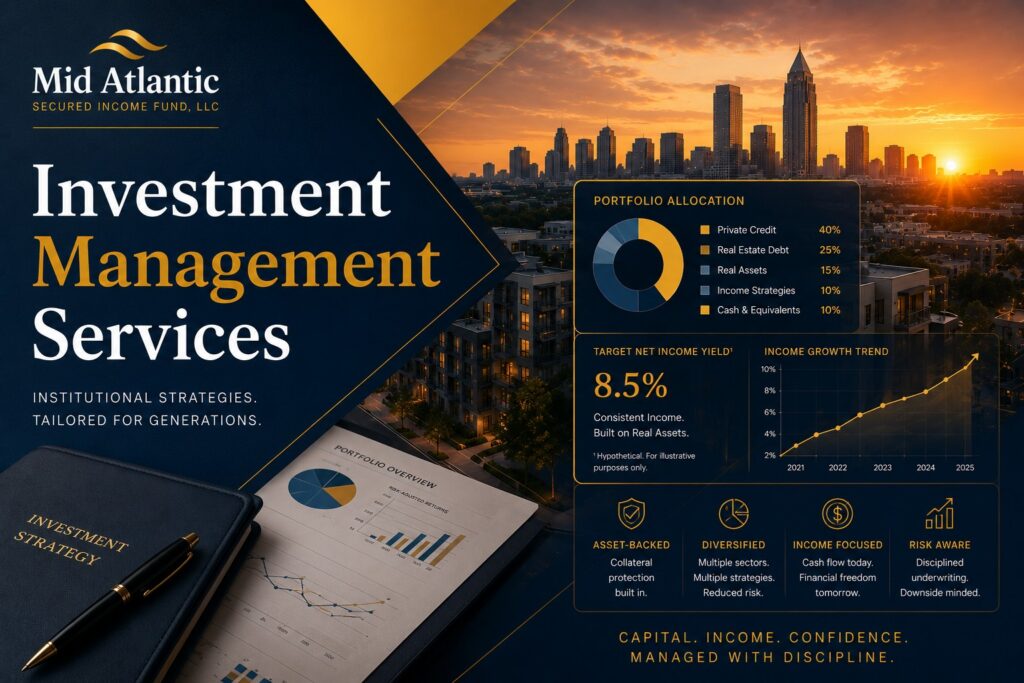
Example Institutional Allocation Framework
|
Asset Class |
Potential Objective |
|---|---|
|
Public Equities |
Long-term growth |
|
Investment-Grade Bonds |
Stability and liquidity |
|
Private Credit |
Income generation |
|
Real Estate Debt |
Asset-backed exposure |
|
Cash Equivalents |
Liquidity management |
|
Alternative Assets |
Diversification |
|
Infrastructure |
Inflation sensitivity |
Institutional investors often rebalance these allocations as macroeconomic conditions evolve.
The Importance of Risk Management
Investment Management Is Not Just About Maximizing Returns
Professional investment management increasingly focuses on risk-adjusted returns rather than headline performance alone.
Key risk management considerations include:
Liquidity Risk
Can investments be exited quickly if needed?
Interest Rate Risk
How sensitive are holdings to changing rates?
Credit Risk
What is the probability of borrower default?
Concentration Risk
Is the portfolio overly exposed to a single sector or asset?
Market Correlation
Do holdings move together during periods of stress?
Inflation Risk
Can the portfolio maintain real purchasing power?
Institutional managers frequently prioritize downside protection during uncertain market environments.
Why Accredited Investors Are Expanding Into Alternative Investments
Access Is Expanding
Historically, institutional-quality private investments were difficult for individual investors to access.
However, regulatory frameworks and technology platforms have expanded availability for accredited investors.
This includes access to:
- Private credit funds
- Real estate debt funds
- Alternative income strategies
- SDIRA-compatible investments
- Asset-backed lending opportunities
Many accredited investors seek:
- Diversification
- Income generation
- Reduced public market dependence
- Long-duration wealth planning
Are Debt Funds Safer Than Stocks?
Direct Answer
Debt funds and stocks involve different risk profiles and cannot be universally classified as “safer.” However, certain private debt strategies may emphasize capital preservation and income generation over equity-style growth exposure.
Key distinctions include:
|
Stocks |
Private Debt |
|---|---|
|
Equity ownership |
Loan-based exposure |
|
Higher upside potential |
Contractual income focus |
|
Higher market volatility |
Often lower market correlation |
|
Dependent on company growth |
Dependent on borrower repayment |
|
Junior in capital structure |
Often senior secured |
Some private credit funds prioritize:
- First-lien collateral
- Conservative underwriting
- Shorter durations
- Income stability
These characteristics may appeal to income-focused investors.
Retirement Planning and Investment Management
Income Matters More Near Retirement
As investors approach retirement, portfolio priorities often shift.
The focus may evolve from:
- Maximum growth
to: - Sustainable income
- Capital preservation
- Volatility management
- Tax efficiency
This has contributed to growing interest in:
- Passive income investments
- Real asset exposure
- Private lending
- Alternative retirement strategies
According to Census Bureau demographic data, the U.S. population over age 65 continues to expand materially, increasing demand for retirement income planning solutions.
The Role of SDIRAs in Alternative Investing
Self-Directed IRAs (SDIRAs) allow eligible retirement investors to allocate capital beyond traditional public securities.
Depending on custodian guidelines and investor eligibility, SDIRAs may hold:
- Private credit investments
- Real estate debt
- Private funds
- Certain alternative assets
This has become increasingly relevant as investors seek:
- Broader diversification
- Income alternatives
- Inflation-sensitive assets
- Non-correlated strategies
Investors should always review IRS rules, prohibited transaction guidelines, and custodian requirements carefully.
Technology Is Transforming Investment Management Services
Modern investment management increasingly relies on:
- Data analytics
- Real-time reporting
- AI-assisted portfolio analysis
- Digital investor portals
- Risk monitoring systems
Institutional investors increasingly expect:
- Transparency
- Reporting sophistication
- Operational efficiency
- Secure digital infrastructure
This evolution is reshaping both private markets and traditional wealth management.
What Investors Should Evaluate in an Investment Manager
Key Due Diligence Considerations
Before allocating capital, sophisticated investors often evaluate:
Investment Philosophy
Is the strategy growth-oriented, income-focused, or preservation-oriented?
Risk Management
How does the manager manage downside exposure?
Underwriting Standards
What credit and collateral criteria are used?
Transparency
What reporting and communication systems exist?
Alignment of Interests
How is the manager compensated?
Historical Experience
How has the strategy performed across market cycles?
Operational Infrastructure
Does the manager have institutional systems and controls?
Why Real Asset Exposure Matters
Real assets have become increasingly important within institutional portfolio construction.
Examples include:
- Real estate debt
- Infrastructure
- Asset-backed lending
- Industrial assets
These assets may provide:
- Inflation sensitivity
- Income generation
- Collateral support
- Diversification benefits
This has contributed to significant institutional allocations toward private markets over the past decade.
The Behavioral Side of Investment Management
Emotional Discipline Matters
One of the most overlooked aspects of investment management services is behavioral risk management.
Investor behavior during volatile periods often influences outcomes more than market timing models alone.
Common behavioral challenges include:
- Panic selling
- Chasing performance
- Over-concentration
- Short-term thinking
- Yield chasing
Institutional portfolio management frameworks aim to reduce emotional decision-making through disciplined processes.
How Investment Management Is Evolving for the Next Decade
Several structural trends continue reshaping the industry:
1. Private Markets Growth
Institutional allocations toward private assets continue increasing.
2. Income-Focused Strategies
Higher demand for durable cash flow investments.
3. Technology Integration
AI, automation, and analytics are improving transparency.
4. Personalization
Customized portfolio construction is becoming more common.
5. Alternative Retirement Planning
Investors increasingly seek diversified retirement income solutions beyond traditional markets.
Investment Management Services and Long-Term Wealth Planning
The strongest investment management frameworks are typically built around:
- Discipline
- Diversification
- Risk management
- Long-term thinking
- Income sustainability
- Capital preservation
Rather than chasing short-term market trends, institutional investors often focus on building resilient portfolios capable of navigating multiple economic environments.
This increasingly includes thoughtful exposure to:
- Alternative investments
- Private credit
- Asset-backed lending
- Real assets
- Income-oriented strategies
As market complexity continues to rise, sophisticated investment management services may play an increasingly important role in helping investors align portfolios with long-term objectives.
FAQ Section
What are investment management services?
Investment management services involve professional portfolio oversight, asset allocation, risk management, and investment selection designed to help investors pursue financial objectives such as retirement income, wealth preservation, and long-term growth.
What do institutional investment managers do?
Institutional investment managers oversee portfolio construction, risk management, asset allocation, due diligence, and investment monitoring for individuals, family offices, retirement accounts, and institutional investors.
Why are investors using alternative investments?
Many investors use alternative investments for diversification, income generation, lower public market correlation, and exposure to private markets such as private credit and real estate debt.
What is private credit investing?
Private credit investing involves non-bank lending through private debt funds or institutional lenders. Strategies may include real estate-backed loans, bridge lending, construction financing, and asset-backed credit investments.
Are private credit investments risky?
Yes. All investments involve risk. Private credit strategies may involve borrower default risk, illiquidity risk, economic sensitivity, and underwriting risk. Investors should conduct careful due diligence.
Can retirement accounts invest in alternative assets?
Certain self-directed retirement accounts (SDIRAs) may allow eligible investors to hold alternative assets such as private credit or real estate-related investments, subject to IRS and custodian rules.
What is portfolio diversification?
Portfolio diversification involves allocating investments across different asset classes, sectors, and strategies to reduce concentration risk and improve long-term risk-adjusted outcomes.