
A dormant 401(k) can quietly become a costly form of inaction. If the account is sitting in a former employer’s plan, limited to a narrow menu of mutual funds, and still exposed to public market swings, it may no longer match your income objectives or risk tolerance. For many accredited investors, the question is not whether to redeploy retirement assets, but how to invest an old 401k into real estate without taking on unnecessary complexity or speculative exposure.
That question deserves a disciplined answer. Real estate inside a retirement account can mean very different things, from directly owning rental property to investing through private real estate funds or real estate-backed private credit. The structure you choose matters because it affects liquidity, administrative burden, income consistency, and downside protection.
How to invest an old 401k into real estate without creating avoidable risk
In most cases, the starting point is not the 401(k) itself. Employer-sponsored plans usually do not allow broad direct real estate investing, especially once you want access to private placements, mortgage funds, or asset-backed lending strategies. The usual path is to move the old 401(k) into an IRA that permits a wider range of investments.
For investors seeking real estate exposure, that often means a rollover IRA or a self-directed IRA. A rollover IRA is simply an IRA funded by assets moved from a former employer’s retirement plan. A self-directed IRA is an IRA administered by a custodian that allows alternative assets, including certain real estate-related investments that traditional brokerage IRAs generally do not offer.
The distinction matters because access is only part of the decision. The more important question is what type of real estate exposure belongs inside the account. Many investors assume direct property ownership is the obvious choice. It is not always the most efficient one.
Owning a rental property through an IRA can introduce concentrated risk, uneven cash flow, repair exposure, property-level vacancy, and strict compliance rules around expenses and personal use. By contrast, a professionally managed real estate debt strategy may offer exposure to real estate collateral without the day-to-day burden of ownership. For investors prioritizing passive income and capital preservation, that difference is material.
The basic rollover process
If you are no longer employed by the company that sponsored the 401(k), you can generally request a rollover. The cleanest approach is usually a direct rollover, where assets move from the old plan to the new IRA custodian without passing through your personal bank account. That helps avoid withholding issues and reduces the chance of an accidental taxable event.
Before initiating anything, investors typically confirm three things. First, whether the account is eligible for rollover. Second, whether the receiving IRA custodian supports the type of real estate investment being considered. Third, whether the target investment is permitted under IRA rules and the custodian’s procedures.
This is where many mistakes begin. Investors often choose a custodian first and only later discover that the custodian’s platform, paperwork requirements, or transaction timelines do not fit the investment they want. In private real estate offerings, operational competence matters. Delays in funding can mean missed allocations or unnecessary friction.
Once the rollover IRA or self-directed IRA is established and funded, the IRA – not the individual personally – makes the investment. All documents, subscriptions, and cash movements must be handled in the name of the IRA. That sounds procedural, but it is central to maintaining compliance.
Direct ownership vs. passive real estate exposure
At a high level, there are two broad ways to put retirement capital into real estate. One is direct ownership of a property. The other is passive exposure through a professionally managed vehicle such as a private fund, note strategy, or real estate-backed credit investment.
Direct ownership appeals to investors who want control. They can choose the asset, market, and business plan. The trade-off is that control comes with operational burden. In an IRA, that burden can be even heavier because the account owner cannot personally perform services for the property, pay expenses outside the IRA, or use the asset in any way that creates a prohibited transaction.
Passive structures reduce that complexity. Investors gain exposure to real estate through a manager or fund sponsor that sources, underwrites, services, and monitors the underlying investments. The trade-off is reduced control over individual property decisions. For many retirement investors, that is a reasonable exchange if the strategy is designed around income generation, strong collateral, and disciplined underwriting.
A more conservative path: real estate debt instead of real estate speculation
Not all real estate strategies carry the same risk profile. Equity-style real estate investing depends heavily on appreciation, successful exits, market timing, and operational execution. Debt-oriented investing is different. The investor is positioned as a lender, not an owner, with repayment tied to contractual loan terms and secured by real estate collateral.
That distinction is especially relevant for retirement assets. If your objective is dependable income rather than development upside, private real estate credit may align more closely with the role that retirement capital is supposed to play. In a disciplined lending strategy, the focus is typically on borrower quality, collateral value, loan structure, and conservative loan-to-value ratios rather than projected appreciation.
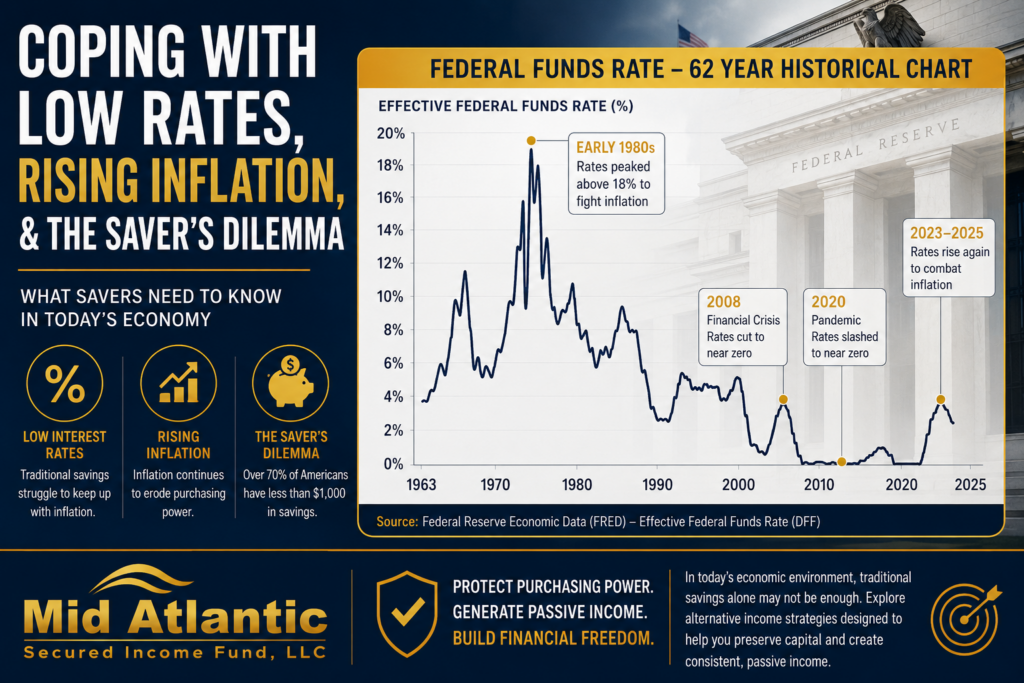
According to Federal Reserve data, many retirement savers remain concentrated in public market assets even as rate cycles, equity volatility, and inflation pressure have changed the income landscape. That is one reason alternative income strategies have drawn more attention from rollover IRA and self-directed IRA investors. The appeal is not novelty. It is the search for current income that is tied to real assets and less correlated to daily market sentiment.
A real estate-backed private credit strategy can offer several features that matter inside retirement accounts: short-duration loans, first-position collateral, defined income distributions, and underwriting standards that emphasize downside protection. That does not remove risk, but it changes the nature of it.
Due diligence matters more than the asset label
“Real estate” is not a risk category by itself. An overleveraged land deal, a speculative condo project, and a diversified pool of first-lien bridge loans should not be evaluated the same way. Sophisticated investors look past the label and into the structure.
When evaluating a private real estate opportunity for IRA capital, pay attention to the collateral position, target loan-to-value, loan duration, borrower underwriting, geographic concentration, manager track record, servicing capabilities, distribution policy, and loss history. A disciplined manager should be able to explain how capital is protected before discussing projected yield.
This is where private credit firms with a capital-preservation-first approach tend to stand apart. If the strategy is built around secured lending rather than appreciation-driven ownership, the investor may gain access to real estate exposure with lower operational friction and a more income-oriented profile.
Common issues investors should not overlook
Taxes and legal rules are not the only concern. Practical fit matters too. Some retirement investors move an old 401(k) into a self-directed structure because they want broader opportunity, then end up in investments that are illiquid, overly complex, or misaligned with their need for dependable distributions.
Liquidity is the first trade-off. Private real estate investments often require a multi-year hold, even when the underlying loans are short term. Investors should understand redemption terms, distribution frequency, and how the manager handles repayment timing.
The second issue is concentration. A single property inside an IRA can expose retirement capital to one neighborhood, one tenant profile, one contractor, and one exit outcome. Diversified debt funds or pooled note strategies may reduce single-asset exposure, although they introduce manager selection risk.
The third issue is administration. Self-directed accounts involve custodial paperwork, funding instructions, and investment-specific documentation. That is manageable, but it works best when the sponsor, custodian, and investor all understand the process.
How to invest an old 401k into real estate with the right expectations
A sound rollover decision starts with a simple question: what role should this capital play in your broader portfolio? If the answer is current income, lower volatility than public equities, and tangible asset backing, then a real estate credit strategy may deserve serious consideration. If the answer is maximum upside through property redevelopment or appreciation, the fit may be different and the risk higher.
For accredited investors, an old 401(k) can often become more useful once moved into a rollover IRA or self-directed IRA with access to private real estate opportunities. But broader access should not be confused with better discipline. The strongest outcomes tend to come from matching the vehicle to the objective, then selecting managers with transparent underwriting standards and a track record of protecting capital through multiple market environments.
That is why many sophisticated investors do not begin with the question, “Which property should I buy?” They begin with, “What structure gives me real estate exposure, income potential, and risk controls that belong in a retirement account?” In many cases, the answer is not direct ownership. It is a professionally managed, collateral-focused strategy designed to prioritize income and principal protection.
If you are evaluating what to do with an old 401(k), the next useful step is not rushing into a transaction. It is clarifying whether you want to be a property operator, an equity speculator, or a secured lender through a retirement-friendly structure. That choice will shape everything that follows.