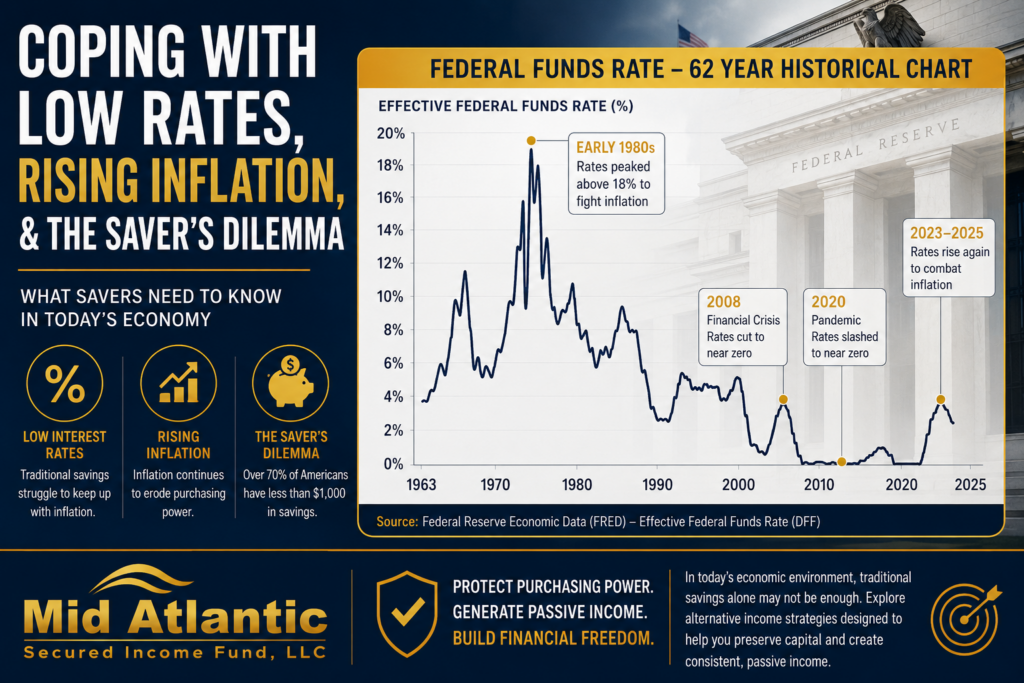

A retirement plan can look sufficient on paper and still lose ground in practice. That is how inflation impacts retirement income: the dollars arriving in an account may remain unchanged while the goods, services, and care those dollars must cover become more expensive. For retirees and investors nearing retirement, the relevant question is not simply how much income a portfolio produces. It is whether that income can sustain purchasing power through a period that may last decades.
Inflation is not a single line item in a household budget. It affects groceries, property taxes, insurance, travel, utilities, home maintenance, and health-related costs differently. The result is personal rather than theoretical. A retiree who spends more on medical care and housing may experience a different cost increase than a published inflation measure suggests.
Purchasing Power Is the Core Retirement Risk
Retirement income is often discussed in nominal dollars – the stated amount received from Social Security, pensions, portfolio distributions, interest, or other sources. Retirees spend real dollars, meaning dollars adjusted for what they can buy. When costs rise faster than income, the shortfall must be absorbed by reducing spending, drawing more from savings, or both.
Consider a household with a fixed monthly income stream. If recurring expenses rise while that income does not, the household has less flexibility every year. This can be manageable for a short period. Over a long retirement, however, repeated price increases can materially change the standard of living that a plan was intended to support.
This is why retirement planning should separate income sources into two categories: those that may adjust over time and those that remain fixed. The distinction is not a judgment that one source is inherently better. Fixed income can improve predictability, while variable income may provide some capacity to respond to changing conditions. A durable plan generally considers the role of both.
How Inflation Impacts Retirement Income Withdrawals
Inflation can make a withdrawal strategy less durable even when investment values appear stable. A retiree who needs a larger withdrawal each year to maintain the same lifestyle may gradually increase pressure on the portfolio. If markets or portfolio income do not keep pace, the remaining capital has less opportunity to support future spending.
The timing of this pressure matters. Higher withdrawals early in retirement can be particularly consequential if they occur alongside weak investment performance or reduced income from portfolio holdings. Selling assets or drawing principal during a difficult period can reduce the capital available for later recovery and income generation.
There is no universal withdrawal amount that fits every household. The appropriate approach depends on spending needs, other income, liquidity reserves, time horizon, health considerations, estate objectives, and the structure of the investment portfolio. Investors should also distinguish between discretionary expenses, which may be reduced, and essential expenses, which may not be easily deferred.
A practical retirement cash-flow review should test more than one inflation assumption. It should examine what happens if essential expenses rise faster than expected, if a major repair occurs, or if income is temporarily lower than planned. Stress testing does not predict the future. It helps identify where a plan depends on favorable conditions.
Health Care, Housing, and Taxes Can Change the Picture
Broad inflation measures are useful reference points, but household budgets are more specific. Health care needs can increase with age. Insurance premiums, property assessments, maintenance costs, and rent can alter housing expenses. Tax treatment can affect the amount of spending money left after withdrawals, depending on the account type and an investor’s individual circumstances.
For that reason, a retirement budget should be refreshed regularly rather than treated as a one-time calculation. Investors should work with qualified tax, legal, and financial advisers on issues that require individualized advice.
Income Planning Requires Liquidity as Well as Return Potential
A portfolio intended to support retirement spending needs accessible capital. Liquidity is the ability to obtain cash when needed without relying on a sale at an unfavorable time or waiting through a restriction period. It deserves the same attention as projected income.
Cash reserves and highly liquid holdings can help cover planned expenses, emergencies, and near-term withdrawals. They may also reduce the need to make investment decisions under pressure. The trade-off is that assets held for immediate access may not provide the same income or long-term return potential as less liquid investments.
Private-market investments introduce another layer of consideration. They may have limited redemption features, valuation practices that differ from publicly traded securities, fees and expenses, concentration risk, credit risk, and loss risk. Their income characteristics, if any, should be evaluated alongside the possibility that capital may not be available on the investor’s preferred timetable.
For accredited investors evaluating private credit, the question is not whether an allocation can produce income in a favorable scenario. The more useful due-diligence question is how the investment is structured, what collateral and seniority may support the loans, what risks remain, how liquidity works, and how the manager reports performance and portfolio developments.
Where Senior-Secured Real Estate Credit May Fit
Private credit can serve different purposes in an overall allocation, but it is not a replacement for a household liquidity plan. A strategy focused on senior-secured, first-position real estate lending may place priority on collateral quality, underwriting discipline, and structural seniority. Those features can be relevant to risk evaluation, but they do not eliminate borrower default, collateral-value, servicing, market, or illiquidity risk.
Mid Atlantic Secured Income Fund presents Safe, Simple, Secured as a positioning framework centered on capital preservation objectives, disciplined underwriting, collateral quality, and transparent investor reporting. Eligible accredited investors should evaluate the fund solely through its current offering documents, including disclosures regarding objectives, risks, fees, conflicts, valuation, liquidity, and suitability considerations. Past performance does not guarantee future results.
It is also essential to keep the investor offering separate from the broader lending platform. The platform may provide qualified borrowers with business-purpose financing across commercial real estate and other specialized financing categories. That availability does not mean every borrower product is held by, collateralizes, or generates returns for the fund. Investors should not infer portfolio composition from the lending platform’s full product range.
Questions Worth Asking Before Allocating Retirement Capital
Before committing retirement assets to a private investment, an investor or adviser should understand the investment’s legal structure, investor eligibility requirements, holding-period expectations, redemption limitations, fees, use of leverage if applicable, collateral practices, concentration limits, valuation methodology, and reporting cadence. They should also review who makes underwriting and servicing decisions and how conflicts are addressed.
For self-directed IRA and rollover IRA investors, the account structure adds further diligence. Custodial requirements, prohibited-transaction considerations, required distributions, valuation needs, and available liquidity can all affect whether an investment fits the account’s broader plan. These issues are fact-specific and should be reviewed with qualified advisers before an investment decision is made.
Build a Plan That Can Absorb Change
Inflation planning is less about forecasting one precise number than about preserving options. Retirees can identify core expenses, separate near-term spending from long-term capital, review income sources for adjustment features, and assess whether their liquid reserves match their actual needs. They can then evaluate less liquid income-oriented investments within the portion of capital that can reasonably tolerate their risks and time horizon.
A disciplined retirement plan does not assume that every expense will behave the same way or that every investment will perform as expected. It makes room for changing prices, changing needs, and periods when flexibility matters most. Before making a private-market allocation, review the current offering documents carefully and discuss the decision with advisers who understand your complete financial picture.
How Inflation Impacts Retirement Income Plans?
Learn how inflation impacts retirement income, purchasing power, withdrawals, and private-credit due diligence for accredited investors and their advisers.
- Check the source date, geography, and assumptions behind market or economic claims.
- Assess property cash flow, collateral values, borrower quality, and refinancing conditions together.
- Stress-test liquidity and downside scenarios rather than treating a market trend as a return forecast.
Investors can use the advisor diligence resources to frame questions about portfolio fit, documents, and material risks.