
For decades, investors pursuing higher returns were often forced into a difficult tradeoff: accept elevated volatility in pursuit of growth or settle for lower-yielding conservative assets focused primarily on capital preservation.
That landscape has changed dramatically.
Today’s investment environment increasingly rewards investors who understand how to combine income generation, risk management, diversification, and alternative investment strategies into a disciplined portfolio framework. As interest rates, inflation pressures, and public market volatility continue reshaping traditional portfolio construction, sophisticated investors are reevaluating what constitutes a “high return investment.”
Increasingly, the answer extends beyond publicly traded equities.
Private credit, real estate-backed lending, alternative income strategies, and institutional-quality asset-backed investments have become an increasingly important component of modern wealth management portfolios. According to Preqin, global private credit assets under management surpassed $1.7 trillion in recent years, reflecting substantial institutional demand for yield-oriented alternatives with differentiated risk-return characteristics.
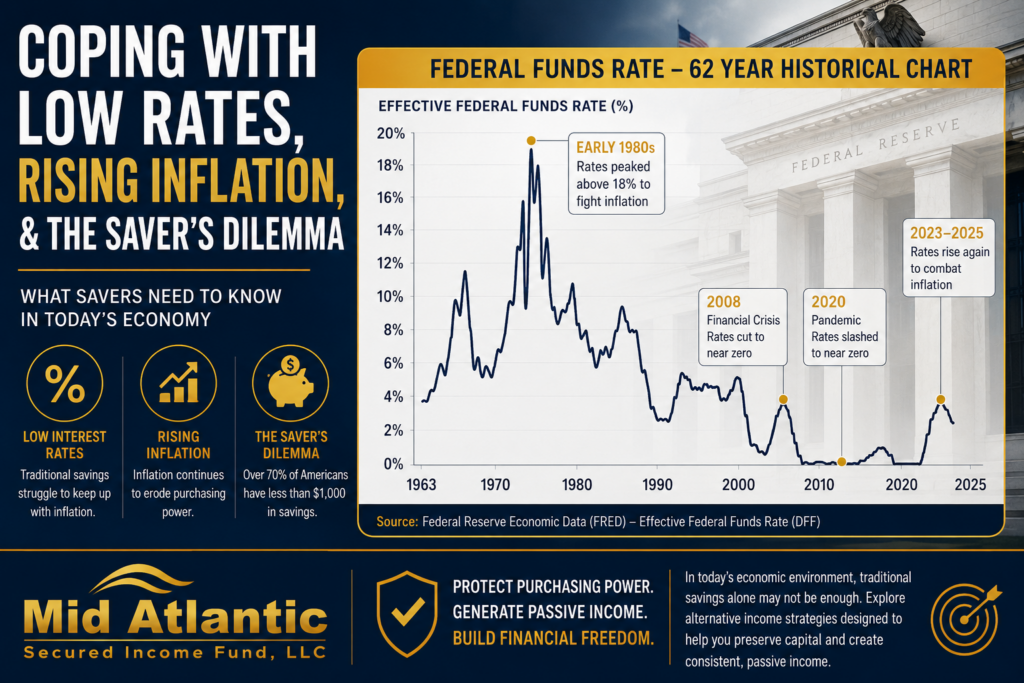
At the same time, the Federal Reserve’s higher-rate environment has fundamentally changed the investment conversation. Investors are no longer evaluating opportunities solely on upside potential. They are increasingly focused on:
- downside protection,
- income consistency,
- inflation resilience,
- diversification,
- liquidity considerations,
- and capital preservation.
This evolution is especially relevant for retirees, accredited investors, business owners, and high-net-worth individuals seeking sustainable passive income without relying exclusively on traditional stocks and bonds.
This guide explores the modern landscape of high return investments, including:
- how private credit works,
- why institutional investors are increasing allocations to alternatives,
- the role of real estate-backed lending,
- how income-focused investing differs from speculative investing,
- and how sophisticated portfolios pursue attractive returns while emphasizing risk management.
What Are High Return Investments?
Definition
High return investments are assets or investment strategies designed to generate returns above traditional savings accounts, Treasury securities, or conventional fixed-income products.
These investments may include:
- private credit,
- real estate debt,
- alternative investment funds,
- private equity,
- infrastructure,
- dividend-producing assets,
- private lending,
- and institutional income strategies.
Importantly, higher return potential almost always involves additional risks, including:
- illiquidity,
- credit risk,
- market risk,
- operational risk,
- and economic sensitivity.
Sophisticated investors evaluate high return investments not solely based on yield, but based on:
- risk-adjusted return potential,
- portfolio diversification benefits,
- downside mitigation,
- and long-term income sustainability.
Why Investors Are Reconsidering Traditional Portfolios
The 60/40 Portfolio Challenge
For decades, the traditional 60/40 portfolio—60% equities and 40% bonds—served as the cornerstone of retirement and institutional investing.
However, recent macroeconomic conditions exposed vulnerabilities in this framework.
During periods of elevated inflation and rising interest rates:
- bonds experienced historic drawdowns,
- equity valuations compressed,
- and traditional diversification became less effective.
According to Morningstar and BlackRock research, correlations between stocks and bonds increased materially during certain inflationary periods, reducing the effectiveness of conventional diversification strategies.
This has accelerated institutional interest in:
- alternative investments,
- private markets,
- real asset exposure,
- and non-correlated income strategies.
The Rise of Private Credit
What Is Private Credit?
Private credit refers to non-bank lending strategies where capital is deployed directly into privately negotiated loans instead of publicly traded securities.
These loans may include:
- real estate bridge loans,
- asset-backed lending,
- commercial loans,
- senior secured lending,
- construction financing,
- receivables financing,
- and specialty finance strategies.
Private credit has become one of the fastest-growing sectors in alternative investing.
According to Preqin, private credit AUM is projected to continue expanding as banks reduce certain lending exposures due to regulatory capital constraints.
Why Institutional Investors Favor Private Credit
Large institutional investors—including pension funds, insurance companies, endowments, and family offices—have increasingly allocated capital toward private credit because it may offer:
- attractive yields,
- floating-rate income,
- lower correlation to public markets,
- collateral-backed structures,
- and enhanced downside protection.
Unlike unsecured corporate bonds, many private credit investments are secured by:
- real estate,
- business assets,
- receivables,
- or contractual cash flows.
This collateralization can materially improve risk management compared to unsecured lending structures.
Understanding Risk vs Return
Are Higher Returns Always Riskier?
Not necessarily.
One of the most misunderstood concepts in investing is the assumption that all high returns require excessive speculation.
Institutional investing focuses heavily on risk-adjusted returns.
For example:
A speculative technology stock may offer substantial upside but can experience significant volatility.
By contrast, a senior secured private credit investment backed by real estate collateral may generate attractive income while prioritizing downside protection through conservative underwriting and collateral coverage.
The distinction matters.
Sophisticated investors evaluate:
- collateral quality,
- borrower strength,
- loan-to-value ratios,
- cash flow durability,
- and structural protections.
What Makes Asset-Backed Investing Different?
Real Estate as Collateral
One reason many investors favor real estate-backed lending is because tangible assets may provide an additional layer of security.
In private real estate credit structures, lenders often maintain:
- first-lien positions,
- conservative LTV ratios,
- contractual repayment obligations,
- and legal collateral protections.
This differs materially from speculative growth investments dependent primarily on future valuation expansion.
Income-Focused Investing vs Speculative Investing
Two Very Different Philosophies
Speculative investing often relies on:
- market momentum,
- valuation appreciation,
- or aggressive growth assumptions.
Income-focused investing prioritizes:
- cash flow generation,
- consistency,
- contractual income,
- and preservation of principal.
For retirees and income-oriented investors, the distinction is critical.
A portfolio heavily reliant on asset appreciation may become vulnerable during prolonged market volatility.
Income-producing strategies can potentially provide:
- recurring distributions,
- improved cash flow visibility,
- and reduced reliance on market timing.
Why Passive Income Matters More Than Ever
Retirement Dynamics Are Changing
Americans are living longer than previous generations.
According to U.S. Census Bureau projections:
- the population aged 65+ continues growing rapidly,
- retirement durations are extending,
- and reliance on employer pensions has declined significantly.
At the same time:
- inflation pressures have increased retirement costs,
- healthcare expenses continue rising,
- and traditional savings vehicles may struggle to keep pace with long-term purchasing power erosion.
This has intensified demand for:
- passive income,
- alternative yield strategies,
- and diversified retirement income planning.
Inflation and the Search for Yield
Why Inflation Changes Everything
Inflation fundamentally alters portfolio construction.
When inflation rises:
- purchasing power declines,
- fixed cash holdings lose value,
- and low-yield savings vehicles become less attractive.
This is one reason institutional investors increasingly allocate capital toward:
- real assets,
- floating-rate credit,
- infrastructure,
- and income-producing alternatives.
Private credit strategies tied to real estate or floating-rate structures may provide improved inflation resilience compared to certain fixed-rate investments.
High Return Investments Sophisticated Investors Often Consider
Common Institutional Alternatives
Private Credit
- Senior secured lending
- Real estate debt
- Asset-backed finance
- Specialty lending
Real Estate Investments
- Multifamily properties
- Industrial real estate
- Workforce housing
- Income-producing commercial assets
Infrastructure
- Energy infrastructure
- Data centers
- Logistics assets
- Transportation systems
Dividend & Income Strategies
- Dividend equities
- Preferred securities
- REITs
- Covered call strategies
Alternative Investment Funds
- Private equity
- Hedge funds
- Credit funds
- Interval funds
What Accredited Investors Often Prioritize
Sophisticated investors frequently focus on:
- capital preservation,
- tax efficiency,
- diversification,
- downside mitigation,
- and income durability.
This is particularly true during uncertain economic cycles.
High-net-worth investors often allocate portions of portfolios toward:
- private market strategies,
- income-producing alternatives,
- and non-correlated investments.
The Role of Diversification
Why Diversification Still Matters
Diversification remains one of the most important principles in portfolio management.
A diversified portfolio may include exposure across:
- public equities,
- fixed income,
- private credit,
- real estate,
- and alternative assets.
The objective is not eliminating risk entirely.
The objective is improving portfolio resilience across varying economic environments.
How Real Estate Debt Funds Work
Understanding the Structure
Real estate debt funds typically invest in loans secured by real estate collateral.
These may include:
- bridge loans,
- acquisition financing,
- construction loans,
- refinancing solutions,
- and short-duration commercial lending.
Returns are generally generated through:
- interest income,
- origination fees,
- and structured loan economics.
Conservative underwriting standards often emphasize:
- borrower quality,
- collateral valuation,
- market conditions,
- and loan structure protections.
Why First-Lien Lending Matters
Senior Secured Positioning
First-lien lending provides lenders priority repayment rights in the capital structure.
In practical terms:
If a borrower defaults, first-lien lenders generally maintain senior claim rights against the collateral before subordinate lenders or equity participants.
This structural positioning can significantly improve downside protection.
Public Markets vs Private Markets
|
Feature |
Public Markets |
Private Markets |
|---|---|---|
|
Liquidity |
High |
Lower |
|
Volatility |
Higher short-term volatility |
Typically lower mark-to-market volatility |
|
Transparency |
High daily pricing |
Less daily pricing |
|
Income Focus |
Variable |
Often income-oriented |
|
Correlation |
Higher correlation |
Lower correlation potential |
|
Access |
Broad retail access |
Often accredited investors |
The Psychological Advantage of Income Investing
One overlooked aspect of investing is behavioral discipline.
Portfolios dependent entirely on market appreciation can create emotional volatility during downturns.
Income-oriented investments may help some investors:
- remain invested longer,
- avoid panic selling,
- and maintain focus on long-term objectives.
This behavioral advantage can be significant during uncertain market periods.
What Are the Risks of High Return Investments?
Important Risk Considerations
All investments involve risk.
Higher-return strategies may include:
- illiquidity risk,
- credit risk,
- interest rate sensitivity,
- operational risk,
- economic cycle exposure,
- and borrower default risk.
Investors should carefully evaluate:
- investment structure,
- collateral quality,
- sponsor experience,
- and overall portfolio fit.
No investment strategy guarantees positive outcomes.
How Sophisticated Investors Evaluate Opportunities
Institutional due diligence often focuses on:
- underwriting discipline,
- manager experience,
- historical performance,
- risk management,
- portfolio concentration,
- and alignment of interests.
Key questions include:
- Is the investment asset-backed?
- What protections exist in downside scenarios?
- How conservative is underwriting?
- What economic assumptions are embedded?
- How experienced is management?
The Importance of Long-Term Thinking
Short-term speculation often dominates headlines.
Institutional wealth creation typically relies on:
- discipline,
- patience,
- diversification,
- and consistency.
Long-term investors often prioritize:
- durable cash flow,
- downside mitigation,
- and strategic asset allocation.
How Mid Atlantic Secured Income Fund Approaches Income Investing
The Mid Atlantic Secured Income Fund focuses on:
- asset-backed private credit,
- senior secured lending structures,
- real estate-backed investments,
- and income-oriented strategies.
The fund emphasizes:
- collateral-focused underwriting,
- conservative lending philosophy,
- and long-term income consistency.
Rather than relying primarily on speculative appreciation, the approach centers around structured lending and contractual income generation.
Why Atlanta & the Southeast Matter
Regional Economic Tailwinds
The Southeast continues attracting:
- population migration,
- corporate relocations,
- infrastructure investment,
- and real estate development.
According to U.S. Census migration trends, metropolitan areas across the Southeast—including Atlanta—remain among the fastest-growing economic regions in the United States.
This regional growth may support:
- housing demand,
- commercial development,
- and lending opportunities tied to real assets.
The Future of High Return Investing
The future of investing increasingly points toward:
- alternative income strategies,
- private market exposure,
- and institutional-quality diversification.
As investors navigate:
- inflation,
- market volatility,
- and evolving retirement dynamics,
the role of private credit and asset-backed investing is likely to continue expanding.
Final Thoughts
High return investing is no longer defined solely by speculative growth.
Modern sophisticated investing increasingly emphasizes:
- income durability,
- collateral protection,
- diversification,
- and long-term stability.
Private credit, real estate-backed lending, and alternative income strategies are becoming central components of institutional portfolio construction because they may provide differentiated return characteristics alongside disciplined risk management.
For accredited investors and income-focused portfolios, understanding these strategies has become increasingly important in today’s evolving economic environment.
FAQ Section
What are high return investments?
High return investments are investment strategies designed to generate returns above traditional savings accounts or conventional fixed-income products. Examples include private credit, real estate debt funds, alternative investments, and private lending strategies.
Are high return investments risky?
All investments involve risk. Higher-return investments may include credit risk, illiquidity risk, and economic sensitivity. Sophisticated investors often focus on risk-adjusted returns and downside protection rather than yield alone.
What is private credit investing?
Private credit investing involves directly financing loans outside traditional banking systems. These loans are often secured by real estate or business assets and may generate income through interest payments.
Why are institutional investors increasing allocations to private credit?
Institutional investors are increasingly attracted to private credit because it may offer:
- attractive yields,
- diversification,
- floating-rate structures,
- and asset-backed downside protection.
Are debt funds safer than stocks?
Debt funds and stocks carry different risks. Certain senior secured debt strategies backed by collateral may experience lower volatility than equities, though no investment is risk-free.
How do accredited investors use private credit?
Accredited investors often allocate portions of portfolios toward private credit to pursue:
- passive income,
- diversification,
- inflation resilience,
- and lower correlation to public markets.