
Commercial real estate borrowers are entering 2026 with a different set of choices than they had during the period of near-zero interest rates. The commercial real estate lending outlook is improving in select areas as transaction activity and lending liquidity begin to normalize, but it remains defined by refinancing pressure, uneven property performance, and lenders that are still highly selective.
For accredited investors evaluating real estate-backed private credit, that distinction matters. A healthier lending environment does not eliminate risk. It makes underwriting discipline more valuable. The opportunity is not simply to lend against real estate, but to lend against assets, borrowers, and exit plans that can withstand a range of market outcomes.
What Is Shaping the Commercial Real Estate Lending Outlook?
Three forces are setting the tone for commercial lending: the cost of capital, the large volume of maturing debt, and a sharp separation between property sectors and locations.
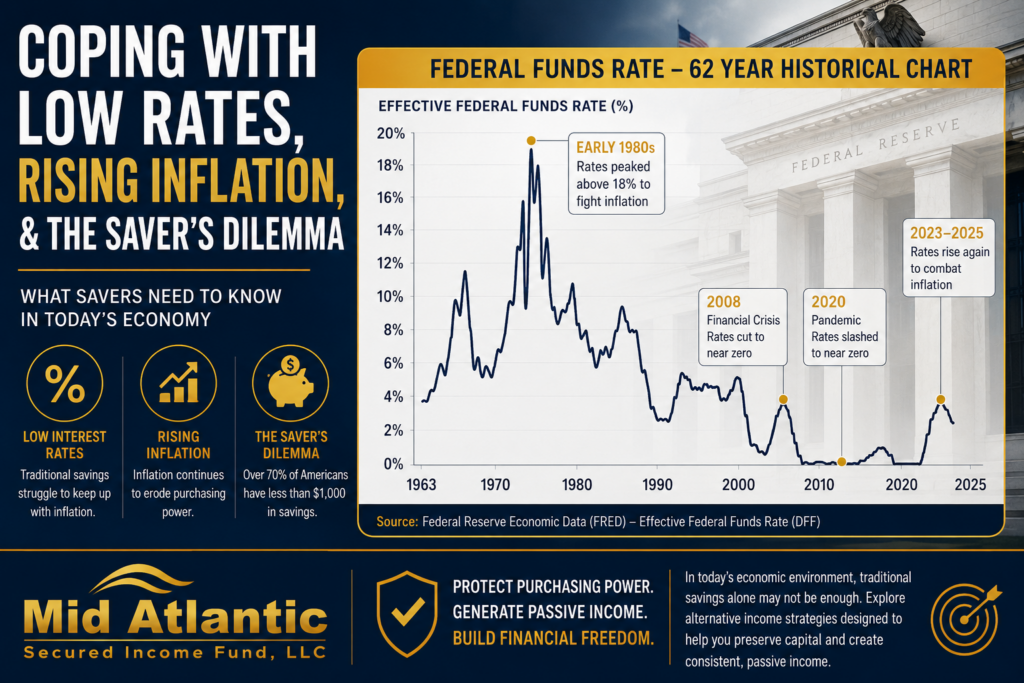
Interest rates remain the central variable. The Federal Reserve’s policy decisions influence base borrowing costs, while Treasury yields, bank funding costs, and credit spreads determine what borrowers ultimately pay. Even if policy rates decline from prior highs, the market should not assume a return to the ultra-low borrowing costs that supported valuations earlier in the decade. Many owners will need to refinance at materially higher rates than their existing loans.
That creates a practical issue: a property may still have positive operating income yet be unable to support a new loan large enough to retire its old debt. Lower valuations, higher debt-service requirements, and conservative lender underwriting can produce an equity gap at maturity. Some borrowers can contribute additional capital. Others may sell, extend debt, or seek bridge financing while stabilizing the asset.
The Mortgage Bankers Association has repeatedly identified commercial and multifamily mortgage maturities as a significant consideration for the market. The exact volume moving through the system changes with extensions and paydowns, but the underlying challenge is clear: refinancing is no longer automatic. Lenders are scrutinizing property cash flow, sponsor liquidity, lease rollover, and the credibility of the proposed exit.
Property Type Matters More Than Market Headlines
A single commercial real estate narrative can be misleading. Lending conditions for a well-located industrial building or a needs-based medical property may bear little resemblance to conditions for an older office building with declining occupancy.
Multifamily remains a major lending category, although supply conditions deserve close attention. In markets that experienced significant new apartment deliveries, rent growth and occupancy may take time to recover. A lender should stress-test projected income rather than rely on a sponsor’s most optimistic rent assumptions.
Industrial properties continue to benefit from long-term logistics demand, but pricing and rent growth have become more market-specific. Retail has shown greater resilience in locations supported by daily-needs tenants and durable household demand. Hospitality can perform well but is more sensitive to economic conditions and management execution. Office remains the sector requiring the greatest selectivity, particularly where remote-work patterns, capital needs, or tenant concentration create uncertainty.
For private lenders, collateral quality is therefore more than a property category. It includes location, current condition, tenant demand, replacement cost, title position, insurance coverage, and the realistic value that could be achieved if the loan must be resolved rather than repaid as planned.
Bank Lending Is Available, but Not Uniformly Available
Banks remain important providers of commercial real estate credit. However, their appetite varies widely by institution, asset class, geography, and borrower relationship. Federal Reserve Senior Loan Officer Opinion Survey results have shown how banks can tighten commercial real estate standards when they perceive weaker collateral values, funding pressure, or economic uncertainty.
Borrowers with strong balance sheets, stabilized cash flow, and established banking relationships may still obtain conventional financing at attractive terms. But borrowers with transitional assets, construction timelines, renovation plans, short lease terms, or time-sensitive acquisitions often face a more limited set of options.
This is where private credit can serve a defined purpose. A short-term first-position mortgage loan may provide capital for a renovation, a construction draw schedule, a bridge period before permanent financing, or a property acquisition that requires certainty and speed. The value is not in replacing prudent bank lending in every situation. It is in providing structured capital when a conventional lender’s process, parameters, or timing do not fit the transaction.
That flexibility should never be confused with looser standards. A sound private loan requires clear documentation, a verified collateral position, realistic loan-to-value parameters, and a credible repayment source.
Why Conservative Loan-to-Value Ratios Matter
In a market where property values may still adjust, loan-to-value discipline is a lender’s primary margin of safety. A loan made at a conservative percentage of verified collateral value has room to absorb costs, delays, and a decline in value that could occur during a workout or sale.
The valuation process itself deserves careful attention. An appraisal is informative, but it is not a guarantee of future sale proceeds. Underwriting should consider comparable transactions, local demand, construction costs, time to disposition, and any condition or legal issues that could affect marketability. For income-producing properties, debt service coverage and durable net operating income should also be evaluated.
A 65% to 75% loan-to-value range may be appropriate in many private lending situations, depending on property type, borrower experience, liquidity, and the complexity of the business plan. The right ratio is not a fixed rule. A completed, stabilized asset with strong market liquidity may support a different structure than a redevelopment project with permits, contractor dependencies, and leasing risk.
The essential question is straightforward: if the borrower cannot execute the original plan, does the lender have a defensible path to preserving principal? That is the question that should guide every credit decision.
What Accredited Investors Should Evaluate
Real estate-backed private credit can offer a different income profile from publicly traded bonds or equity real estate investments. Loans may have defined maturities, stated contractual interest, and collateral secured by a mortgage or deed of trust. Shorter loan durations can also allow capital to be redeployed as lending conditions change.
Yet private credit is not risk-free, and investors should evaluate the structure behind the distribution rate. A disciplined review includes the manager’s underwriting process, lien position, historical loss experience, servicing capabilities, diversification practices, valuation methods, and approach to extensions or troubled loans.
Investors should also understand liquidity. Private fund interests are generally illiquid and should be evaluated as part of a broader allocation, not as a substitute for cash reserves. Distributions are not guaranteed, and a fund’s ability to make them depends on loan performance, expenses, reserves, and the terms of the offering.
For investors using self-directed IRAs or rollover IRA assets, private real estate credit can be a way to seek income from collateralized lending without directly managing a property. However, IRA investors should confirm custody procedures and consider prohibited-transaction rules with qualified tax and legal professionals before investing. The structure must be appropriate for the account, the investor’s liquidity needs, and the investor’s overall risk tolerance.
The Borrower Perspective: Certainty Has Value
Borrowers should expect lenders in 2026 to request more documentation and ask more pointed questions. A credible loan request will show the sources and uses of capital, project budget, borrower cash contribution, experience with similar projects, current financial statements, and a realistic repayment strategy.
For construction and redevelopment loans, contingency planning is especially important. Higher material costs, labor constraints, permitting delays, and sales velocity can all change a project’s timeline. A lender is more likely to support a transaction when the borrower has accounted for those realities rather than treating them as remote possibilities.
At Mid Atlantic Secured Income Fund, the emphasis on short-term, first-position mortgage lending and conservative collateral analysis reflects this environment. Borrowers need capital that can move at the pace of a transaction. Investors need to know that speed is paired with meaningful diligence, protective loan structures, and active servicing.
A Selective Market Can Create Better Lending Conditions
The most constructive commercial real estate lending outlook is not one in which every property receives easy financing. It is one in which capital is priced for risk, lenders can enforce sound terms, and borrowers with viable projects have access to appropriate funding.
For accredited investors, the focus should remain on quality of underwriting rather than broad market predictions. Interest rates will move, valuations will vary, and individual property sectors will continue to diverge. A disciplined first-lien lending strategy built around conservative leverage, tangible collateral, and short-duration loans can provide a measured way to pursue current income while keeping capital preservation at the center of the decision.