
A rollover IRA can quietly become one of the largest pools of investable capital you control. That matters because the best investments for rollover IRA accounts are not always the ones that get the most attention. For many accredited investors, the real question is not how to chase the highest headline return. It is how to position retirement assets for income, downside discipline, and less dependence on public market swings.
That is where rollover IRA decisions deserve more rigor than a generic asset-allocation checklist. If you are moving funds from a former employer plan, you have a chance to reassess what role this account should play. Growth still matters, but so do cash flow, volatility, inflation pressure, liquidity needs, and the structure of the assets you own.
What makes the best investments for rollover IRA accounts?
A rollover IRA should be evaluated based on function, not just product labels. Some investors want long-term appreciation. Others want current income to support retirement spending or to reduce reliance on selling assets during market drawdowns. In practice, the best fit usually comes from balancing four factors: expected income, principal stability, liquidity, and sensitivity to broad market repricing.
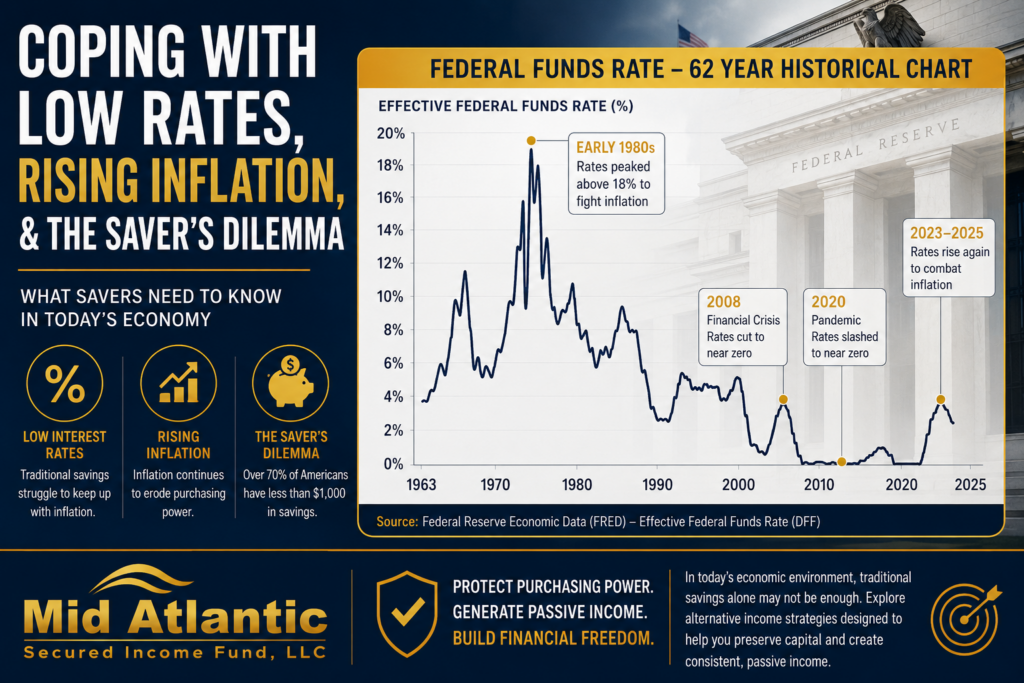
That framework matters even more in periods when traditional stock and bond allocations are under pressure. Federal Reserve policy, inflation expectations, and credit conditions can all affect public securities at the same time. A rollover IRA built only around conventional market exposure may be diversified by ticker, but still concentrated in the same macro risks.
1. Short-duration bonds and bond funds
Short-duration fixed income remains a practical starting point for conservative rollover IRA capital. Compared with longer-maturity bonds, short-duration holdings generally carry less interest rate sensitivity, which can help preserve principal when yields move higher.
The trade-off is straightforward. Lower duration usually means lower upside when rates fall and often lower yields than taking more credit or duration risk. Still, for investors who value liquidity and relative stability, these holdings can serve as a reserve allocation inside a broader retirement portfolio.
Credit quality matters here. Reaching for yield through lower-quality bonds can change the risk profile quickly, especially during economic stress. A disciplined rollover IRA investor should understand whether income is coming from duration, credit risk, or both.
2. Treasury securities and cash equivalents
Treasuries, money market instruments, and similar cash-equivalent holdings will not satisfy every retirement objective, but they can play an important role. They offer liquidity, transparency, and lower default risk than most income options.
Their weakness is purchasing power. If inflation stays elevated over time, holding too much of a rollover IRA in cash-like instruments can create a slow erosion problem. These are best viewed as dry powder, liquidity reserves, or a volatility buffer rather than a complete retirement income solution.
3. Dividend-focused equity funds
Dividend-paying stocks and dividend-focused funds are often included among the best investments for rollover IRA portfolios because they can combine income with long-term capital appreciation. For investors with a longer time horizon, that can be attractive.
But dividends do not make equities defensive in every market. Public stocks still carry valuation risk, earnings risk, and broad market correlation. In a selloff, a dividend fund may decline right along with the broader market. The income stream can help, but it does not eliminate volatility.
That makes dividend strategies useful, but not interchangeable with true income-oriented credit allocations. Investors relying on rollover IRA assets for steadier distributions should recognize that distinction.
4. REITs and listed real estate securities
Real estate investment trusts can provide exposure to income-producing property sectors without requiring direct ownership. They also bring liquidity and relatively easy access in many IRA structures.
However, publicly traded REITs often behave more like equities than many investors expect. They can be heavily influenced by interest rates, financing costs, and stock market sentiment. In other words, owning listed real estate is not the same as owning conservatively underwritten, asset-backed loans secured by real property.
REITs can still have a role, particularly for diversification across property sectors. But investors looking for lower-volatility retirement income should distinguish between equity exposure to real estate and debt exposure backed by real estate collateral.
5. Private credit in a self-directed rollover IRA
For accredited investors, private credit is increasingly part of the conversation around rollover IRAs, particularly through self-directed structures. This category deserves attention because it shifts the focus from market-priced securities to contractual income generated by loans.
When private credit is backed by tangible collateral and disciplined underwriting, it can address several retirement concerns at once. It may offer current income, lower correlation to public markets, and a more defined risk framework than equity-style real estate investing. Structure matters, though. There is a significant difference between unsecured lending, highly leveraged strategies, and first-position loans supported by real assets.
Real estate-backed private credit is often most compelling when loans are short duration, senior in the capital stack, and originated at conservative loan-to-value ratios. In that setup, the investor is not depending primarily on appreciation. The emphasis is on contractual yield and collateral coverage.
For rollover IRA investors focused on capital preservation first, this is a meaningful distinction. A secured lender has a different risk profile than an equity owner waiting for a property sale or refinance to create value.
6. Real estate-backed private debt funds
Among alternative income options, real estate-backed private debt funds stand out for investors seeking passive exposure rather than direct loan selection. These funds typically pool capital and deploy it into loans secured by residential or commercial real estate, often with a focus on bridge loans, construction financing, redevelopment lending, or other short-term credit needs.
The appeal inside a rollover IRA is practical. Investors may gain access to income-producing credit without the operational burden of sourcing, underwriting, servicing, and monitoring individual loans themselves. The quality of the manager becomes central. Track record, underwriting standards, loss history, servicing capability, and collateral discipline all matter more than marketing language.
This is where due diligence should be exacting. Investors should evaluate how the manager handles borrower defaults, what position the fund takes in the capital stack, how loan-to-value is measured, how distributions are sourced, and whether the portfolio is diversified by borrower and project type. A conservative private credit manager will usually speak more about downside controls than upside projections.
For example, firms like Mid Atlantic Secured Income Fund position this strategy around first-position mortgage lending, conservative collateral coverage, and predictable income rather than speculative real estate appreciation. That framework tends to align well with rollover IRA investors who want retirement capital working in income-producing assets while keeping risk management at the center of the allocation decision.
7. A blended allocation built around role clarity
Often, the best answer is not a single investment. It is a portfolio in which each component has a defined job. Liquidity reserves can protect near-term flexibility. Public equities can support long-run growth. Short-duration fixed income can dampen volatility. Alternative income assets such as secured private credit can provide contractual cash flow that is less tied to daily market pricing.
This role-based approach is especially useful for rollover IRAs because these assets often sit at the intersection of retirement security and legacy planning. A concentrated bet on any one category may create avoidable stress. A more disciplined structure can improve resilience across different rate and market environments.
How to choose among the best investments for rollover IRA needs
The right allocation depends on what the rollover IRA needs to do for you over the next five to ten years. If the account is decades from distribution, growth exposure may remain the priority. If retirement income is closer, sequence-of-returns risk becomes more relevant. Selling public assets during a downturn to meet income needs can damage long-term outcomes.
That is why many accredited investors are revisiting assets that emphasize current yield and collateral support. According to Federal Reserve data, retirement assets remain heavily concentrated in market-based vehicles. That concentration can leave investors exposed to valuation resets even when their primary objective is stability and income rather than maximum appreciation.
A disciplined rollover IRA review should ask a few hard questions. How much of the portfolio depends on equity market direction? How much income is contractual versus discretionary? How much risk is tied to interest rate movements alone? And how much of the account is backed by tangible collateral rather than sentiment and market multiples?
Those questions do not eliminate uncertainty, but they improve portfolio design. In retirement investing, the strongest decisions are often the ones that reduce dependence on favorable market conditions.
A rollover IRA is more than a transfer event. It is a chance to rebuild retirement capital around purpose. For investors who value predictable income, lower volatility, and asset-backed structures, the best opportunities are often found not in what is most popular, but in what is most disciplined.