
A dormant 401(k) often sits in the background for years, still invested in a narrow menu of mutual funds while your goals have changed. That is why unused 401k investment strategies deserve a closer look. For many accredited investors, the real question is not whether an old account should stay where it is, but whether that capital could be repositioned for better income, more control, and a risk profile that better matches retirement needs.
An old employer plan can be easy to ignore. It may still be allocated to target-date funds, public bond funds, or equity-heavy options selected years ago under very different market conditions. Yet retirement planning becomes more sensitive to sequence risk, drawdowns, and cash flow reliability as investors move closer to income distribution years. What worked during accumulation does not always work during preservation and income generation.
Why unused 401k investment strategies matter
Unused 401k investment strategies are not about chasing higher headline returns. In a disciplined portfolio, they are about aligning idle retirement assets with current objectives. That usually means asking three practical questions: Do you need more dependable income, do you want broader investment choice, and are you comfortable taking responsibility for due diligence beyond a standard plan menu?
Many legacy 401(k)s are limited by design. Employer plans often emphasize administrative simplicity and broad market exposure, not customization. Participants may have only a dozen or two investment choices, most tied to public markets. If rates fall, traditional fixed income can lose its income appeal. If equity markets become volatile, the account can swing more than expected precisely when stability matters most.
That does not mean every old 401(k) should be moved. Fees, plan quality, creditor protections, and available investment options all matter. But for investors evaluating retirement income alternatives, an unused plan can represent trapped flexibility.
The first decision: leave it, roll it, or consolidate
Before evaluating specific allocations, the structural choice comes first. In most cases, an old 401(k) can remain in the prior employer plan, be rolled into a new employer plan if permitted, or be transferred into an IRA. For investors seeking a wider opportunity set, the IRA path usually creates the most flexibility.
A standard rollover IRA expands access to traditional income and growth investments, but a self-directed IRA can go further by permitting alternative assets, subject to custodian rules and IRS requirements. That distinction matters. If the objective is exposure to private credit, asset-backed income, or real estate lending rather than public securities alone, a self-directed structure may be the relevant vehicle.
The rollover process itself needs to be handled carefully. A direct trustee-to-trustee transfer is generally preferred because it reduces the risk of withholding errors or accidental taxable events. Operational discipline matters here. Retirement accounts are powerful, but they are also highly regulated.
Building a better framework for old 401(k) assets
The strongest unused 401k investment strategies start with portfolio function, not product selection. In practice, old retirement assets are often best evaluated through three lenses: liquidity needs, income requirements, and tolerance for valuation volatility.
If an investor expects to need near-term liquidity, then keeping a portion in traditional liquid vehicles may still make sense. If the priority is current income with less day-to-day market fluctuation, then private, asset-backed credit can become more relevant. If long-term growth remains the main goal, a larger allocation to public or private growth-oriented assets may still be appropriate.
This is where many investors make a category error. They compare alternatives only on stated yield. A more disciplined comparison asks what supports that yield, how often cash flow is distributed, how principal risk is mitigated, and how the investment may behave during periods of equity or bond market stress.
Using a rollover IRA to expand income options
For accredited investors, one of the most practical unused 401k investment strategies is moving an old plan into a rollover IRA and then evaluating income-producing alternatives that may not exist inside an employer plan. This is not about abandoning diversification. It is about improving the menu.
In a self-directed IRA, eligible investors may gain access to private market strategies, including real estate-backed private credit. That can be meaningful for those who want passive income exposure tied to collateral rather than direct property ownership. Instead of managing tenants, repairs, or leasing risk, the investor participates in a lending strategy where repayment is structured through loan documents and secured by underlying real estate.
That distinction is important. Equity real estate can offer upside, but it also carries operational variability, market sensitivity, and often more unpredictable timing of cash flows. Senior secured lending is a different part of the capital stack. It generally prioritizes income and collateral protection over appreciation.
Where private credit may fit in unused 401k investment strategies
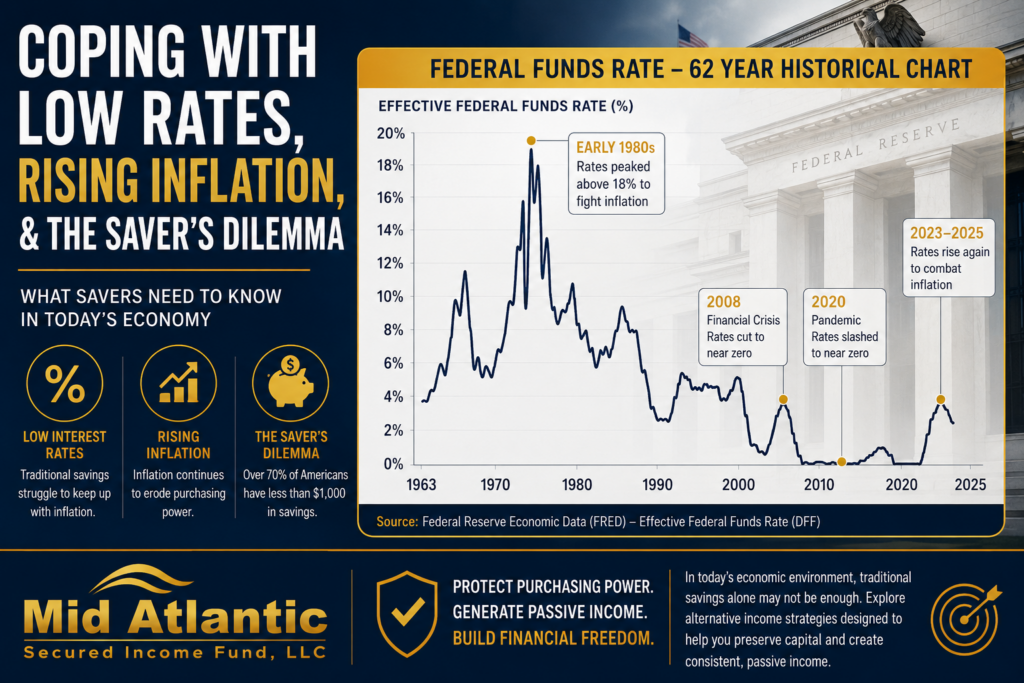
Private credit is not a universal answer, but it has become increasingly relevant as investors look for alternatives to low-yield conventional fixed income and volatile public markets. Federal Reserve rate policy, inflation pressure, and changing bond market dynamics have all pushed more sophisticated investors to reconsider how retirement assets generate income.
Within private credit, structure matters more than labels. A retirement investor should care about whether loans are first-position or subordinated, whether they are secured by tangible collateral, what loan-to-value standards are used, how underwriting is performed, and whether the portfolio emphasizes short-duration exposures or longer-term commitments.
A conservative real estate-backed private credit strategy may appeal to investors who value capital preservation and current income. In that framework, the investment thesis is not based on property appreciation alone. It rests on loan structure, borrower quality, collateral coverage, and active servicing. Those are materially different risk drivers than a stock fund or a speculative real estate development equity position.
For example, a fund focused on first-position mortgage loans with disciplined loan-to-value ratios can offer a more defensive profile than unsecured lending or common equity real estate exposure. That does not eliminate risk. Real estate values can change, projects can be delayed, and borrower performance can vary. But secured lending introduces collateral and legal protections that many conventional income products do not offer in the same way.
The trade-offs sophisticated investors should weigh
Every strategy involves constraints. That is particularly true when retirement assets move from highly liquid public markets into private investments.
Liquidity is the first trade-off. An old 401(k) invested in mutual funds can usually be reallocated quickly. A private credit fund may have holding periods, redemption terms, or capital call structures that are less flexible. For investors with long time horizons and other liquid reserves, that may be acceptable. For others, it may not.
Transparency is the second trade-off. Public funds provide daily pricing, but daily pricing does not necessarily mean lower risk. Private vehicles may report on a different cadence, often with less visible mark-to-market movement. The key is to understand whether the underlying assets are understandable, whether the manager provides meaningful reporting, and whether the risk controls are observable in loan terms and portfolio construction.
Manager selection is the third. In public markets, investors often outsource diligence to index exposure. In private markets, manager quality is central. Track record, underwriting standards, servicing capabilities, realized loss history, and alignment of interest matter significantly more.
That is why investors considering real estate-backed private credit inside a rollover IRA should focus on fundamentals: collateral position, loan duration, borrower vetting, concentration limits, and distribution history. A credible strategy should be able to explain not only how income is generated, but how risk is managed when projects do not go exactly as planned.
A disciplined way to evaluate alternatives
The most effective unused 401k investment strategies are usually built through careful screening rather than broad assumptions. Investors should examine whether the retirement account is truly underutilized, what fees are currently being paid, and whether the present allocation still serves its purpose.
From there, the due diligence process becomes more specific. If considering an IRA rollover into alternative income investments, ask what role the capital is expected to play. Is it intended to produce monthly or periodic income? Reduce correlation to public markets? Preserve capital with lower volatility? The answer shapes the appropriate strategy.
For accredited investors, funds that focus on short-duration, first-lien real estate loans may deserve attention because they pair current income objectives with collateral-based underwriting. Firms such as Mid Atlantic Secured Income Fund position this approach around principal protection, conservative loan-to-value discipline, and predictable distributions rather than speculation. That framing is useful because it treats retirement capital as something to be managed carefully, not stretched for maximum risk.
When staying put may still be the better answer
Not every old 401(k) is a problem that needs solving. Some employer plans have excellent low-cost options, strong institutional share classes, and enough diversification for an investor who values simplicity above all else. If the account is well allocated, fees are competitive, and the investor does not need broader access, then leaving it alone may be entirely reasonable.
But that decision should be active, not accidental. Too many unused accounts remain parked in outdated allocations simply because paperwork is inconvenient or the balance feels separate from the rest of the portfolio. Retirement assets should work as hard as any other capital pool, especially when income generation becomes more important than abstract long-term growth.
A well-structured rollover can turn a forgotten account into a deliberate source of passive income, provided the strategy fits the investor, the custodian setup is correct, and the diligence is as disciplined as the capital deserves.
Old retirement money should not be left on autopilot. If an unused 401(k) no longer reflects your income goals, risk standards, or desire for broader access to asset-backed investments, it may be time to give that capital a clearer assignment.