
If you have an old 401(k) sitting in mutual funds you no longer want, the real question is not whether you can move it. It is whether you can move it without triggering taxes, penalties, or avoidable compliance mistakes. For investors researching how to roll over 401k into real estate investment, the path is workable, but it is more regulated than many online summaries suggest.
The appeal is straightforward. A rollover can reposition retirement capital from a market-based allocation into real estate exposure that may offer collateral support, income potential, and lower correlation to public equities. But the structure matters. The IRS does not allow you to simply take 401(k) cash and buy a rental house in your own name while keeping the tax advantages of a retirement account. To do this correctly, you typically need a self-directed IRA, a qualified custodian, and a very clear understanding of prohibited transaction rules.
How to roll over 401k into real estate investment the right way
For most investors, the first checkpoint is whether the 401(k) is eligible for rollover. If the account is tied to a former employer, the answer is often yes. If it is with a current employer, access may depend on the plan document and whether in-service distributions are permitted. That detail matters because employer plans vary, and not every participant can move money out on demand.
Once eligibility is confirmed, the usual next step is establishing a self-directed IRA with a custodian that permits alternative assets. This is the legal vehicle that can hold certain forms of real estate exposure. The rollover is then completed from the 401(k) into that IRA, ideally as a direct trustee-to-trustee transfer to avoid withholding issues and accidental taxable events.
From there, the account can invest in eligible real estate-related assets. That could mean direct real property, private real estate funds, debt instruments secured by property, or other alternative structures allowed by the custodian and governing documents. For income-focused investors, this is often where the conversation shifts from owning property to owning exposure to real estate-backed cash flow.
Direct ownership versus passive real estate exposure
Many investors begin with the idea of buying a rental property through an IRA. That is possible in some cases, but it comes with operational friction. All income and expenses must flow through the IRA, personal use is prohibited, and disqualified persons cannot benefit from the property. You also cannot personally repair the property, guarantee certain financing arrangements, or mix personal funds with retirement assets.
Those restrictions are why many sophisticated investors look at passive structures instead. A self-directed IRA can, subject to offering terms and custodian rules, invest in private real estate debt or fund structures where the retirement account owns the investment rather than the investor managing the property. That can reduce operational complexity while still maintaining real estate exposure.
This distinction matters because not all real estate investments deliver the same risk profile. Equity-style real estate can offer appreciation, but it is more exposed to lease-up risk, construction overruns, cap rate compression, and property-level volatility. Real estate-backed private credit is different. It is generally structured around loan income, collateral position, and underwriting discipline. For retirement investors who prioritize current income and capital preservation, that difference is not academic. It goes to the center of portfolio behavior.
Why many rollover investors prefer debt over direct property ownership
A retirement account is often expected to compound steadily, not become a second job. Directly owned property inside an IRA can create administrative burden, custody delays, valuation requirements, and liquidity constraints. It can also produce surprises if debt is involved, because certain financed transactions may create unrelated debt-financed income issues.
By contrast, passive private credit strategies tied to real estate may offer a cleaner fit for investors seeking income without day-to-day property involvement. The quality of that fit depends on underwriting standards, lien position, loan-to-value discipline, borrower quality, and servicing capability. In a conservative structure, the focus is less about chasing appreciation and more about generating yield from contractual payments secured by real assets.
The rollover process in practical terms
If you are evaluating how to roll over 401k into real estate investment, the sequence should be deliberate.
First, confirm plan eligibility with the current 401(k) administrator. Second, select a self-directed IRA custodian that supports the specific asset class you intend to hold. Third, open the new account before initiating movement of funds. Fourth, request a direct rollover rather than receiving the money personally. Fifth, wait until funds settle fully in the IRA before subscribing to any investment.
That sounds simple, but execution risk lives in the details. If a distribution is made payable to you rather than the new custodian for the benefit of your IRA, withholding may apply and a 60-day deadline can become critical. Missing that deadline can convert a rollover into a taxable event. For investors under age 59 1/2, that may also create penalties.
There is another practical point that experienced investors respect: custodian timing. Alternative investments often involve subscription documents, anti-money-laundering reviews, and asset acceptance procedures. If an offering has a closing window, waiting until the last minute can create unnecessary pressure.
Rules that can derail a real estate rollover
The most common mistake is misunderstanding prohibited transactions. Retirement accounts are meant to benefit the account holder in retirement, not provide current personal use or indirect personal benefit. That means the IRA generally cannot buy property from you, sell property to you, lease to you, lease to close family members defined as disqualified persons, or pay you for services related to the asset.
The same caution applies to control. If the investment structure allows too much personal involvement, the risk of stepping over compliance lines increases. A self-directed IRA broadens what you can invest in, but it does not relax IRS rules.
Fees also deserve careful attention. Self-directed accounts often carry custodial and transaction fees that are higher than standard brokerage IRAs. Those costs are not necessarily a problem, but they should be weighed against expected income, liquidity terms, and the complexity of the asset.
Liquidity is another trade-off. Public securities can usually be sold quickly. Private real estate investments often cannot. If the retirement objective is long-term income, that may be acceptable. If the investor expects frequent reallocations, it may not be.
Due diligence matters more than the asset label
The phrase real estate investment covers a wide range of structures, from speculative land plays to senior secured short-duration loans. Treating them as interchangeable is a mistake. Conservative investors should look beyond the label and examine what actually supports the investment.
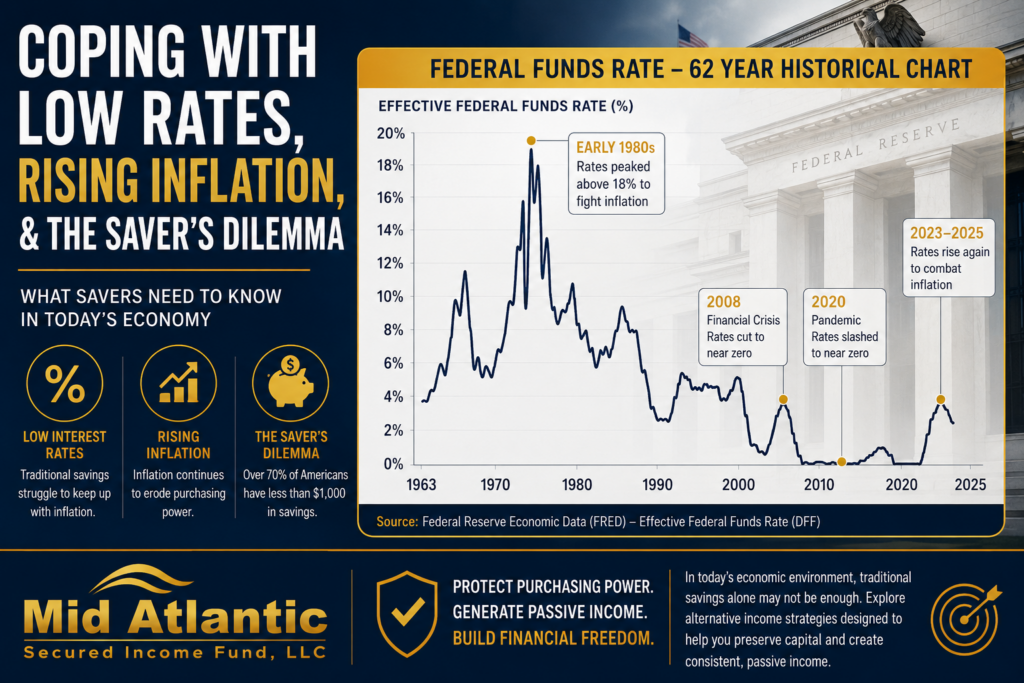
That includes asking whether the strategy is debt or equity, whether collateral is pledged, whether the lender holds a first-position lien, what loan-to-value range is targeted, how assets are serviced, how defaults are handled, and whether distributions come from operating cash flow or from capital activity. Research from institutions such as the Federal Reserve and FDIC has repeatedly shown that rate cycles and credit conditions can reshape traditional fixed-income behavior. In that context, asset-backed private credit has drawn attention from investors seeking yield with a more defined collateral framework.
A disciplined real estate credit strategy is not risk free. No private investment is. But there is a meaningful difference between a structure built around senior secured lending and one built around appreciation assumptions. Accredited investors evaluating rollover capital should recognize that difference before committing retirement assets.
Is a self-directed IRA the best route for every investor?
Not always. It depends on account size, investment horizon, liquidity needs, and tolerance for complexity. For some investors, a rollover into a conventional IRA with standard market exposure remains the simpler choice. For others, especially those seeking passive income alternatives outside traditional stock and bond allocations, a self-directed IRA can be a practical tool.
The best use case is usually an investor with an old 401(k), a long-term time horizon, and a clear preference for real estate-backed alternatives that emphasize underwriting and downside protection. That investor is typically less interested in speculation and more interested in reliability, cash flow visibility, and a disciplined manager selection process.
Firms such as Mid Atlantic Secured Income Fund operate in the part of the market where those priorities matter most, focusing on income-oriented private credit secured by real estate rather than equity-style property speculation. For the right accredited investor, that can align more closely with retirement income goals than direct property ownership inside an IRA.
Before moving funds, coordinate with your plan administrator, IRA custodian, and qualified tax or legal professionals so the structure is set up correctly from the start. A rollover can be a strong strategic move, but retirement capital deserves process discipline every step of the way.
A well-executed rollover is not just about getting money out of a former employer plan. It is about putting that capital into a structure that matches your risk standards, your income goals, and your definition of investment control.