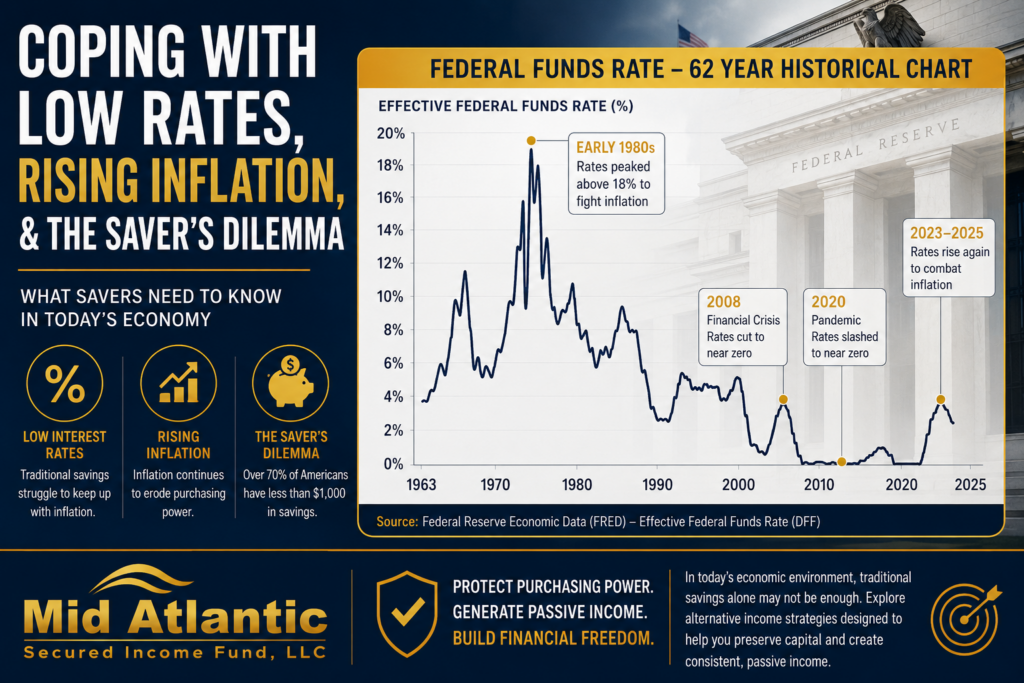

A dollar of portfolio income has less purchasing power when the cost of labor, materials, insurance, and essential services rises. That practical concern is why accredited investors often evaluate asset backed investments inflation protection through a more demanding lens than headline income alone. The central question is not whether an investment can eliminate inflation risk. It is whether its collateral, loan structure, underwriting discipline, and cash-flow profile may help support capital-preservation objectives across changing economic conditions.
For investors considering private credit, asset backing can add an important layer of analysis. It does not make an investment immune to loss, illiquidity, borrower default, declining collateral values, or broader market stress. It does, however, provide a defined source of potential recovery that should be evaluated alongside the borrower’s ability to perform.
What Asset Backed Investments Can and Cannot Do
Asset-backed investments are generally supported by identifiable collateral, such as real estate, equipment, receivables, inventory, or other business assets. The quality of that support depends on the specific asset, the lender’s legal position, the documentation, the borrower’s financial condition, and the practical ability to realize value if a loan does not perform.
Inflation can affect both sides of that equation. Certain real assets may benefit from rising replacement costs, higher rents, or constrained supply. At the same time, inflation can increase a borrower’s operating expenses, construction costs, refinancing needs, and debt-service pressure. Collateral is meaningful only when it has durable value relative to the outstanding obligation and can be effectively controlled under the loan documents.
That distinction matters. Asset backing is not a shorthand for automatic inflation protection. A loan secured by a volatile or difficult-to-sell asset may offer limited protection in a stressed market. Conversely, a conservatively structured loan secured by well-underwritten real estate may have a different risk profile than an unsecured obligation, even though both remain subject to investment risk.
Why Senior-Secured Real Estate Credit Deserves Separate Analysis
Senior-secured, first-position real estate lending is often evaluated differently from equity real estate ownership. An equity investor generally participates directly in a property’s upside and downside. A senior lender’s return profile is ordinarily defined by the loan agreement, while its protection depends on repayment sources, collateral value, loan seniority, and enforcement rights.
For a private credit fund focused on first-position real estate lending, disciplined underwriting should begin with the property and the borrower rather than a broad macroeconomic view. The analysis may consider the asset’s location, condition, marketability, intended use, project budget where applicable, borrower experience, exit strategy, title matters, insurance, and the relationship between the loan amount and supported collateral value. No single factor is sufficient on its own.
Inflation may influence property values and rents over time, but it can also create pressure through higher financing costs and reduced buyer demand. A prudent lending approach recognizes both possibilities. The objective is not to predict every economic turn. It is to structure and monitor loans with a margin of protection appropriate to the transaction and its risks.
At Mid Atlantic Secured Income Fund, the investor offering centers on private credit and senior-secured, first-position real estate lending, subject to the governing offering documents. Investors should review those documents carefully to understand the fund’s investment strategy, risks, fees, valuation practices, liquidity provisions, and eligibility requirements.
The Components of Asset Backed Investments Inflation Protection
A useful assessment goes beyond asking whether a loan is “secured.” Investors should examine the type of security and the lender’s position in the capital structure.
Collateral quality and marketability
The most valuable collateral is not necessarily the most expensive asset. It is collateral with a supportable value, clear ownership, practical marketability, and a credible path to disposition if necessary. In real estate lending, location, property condition, local demand, zoning, title, and project completion risk can all affect marketability.
Collateral values can move in either direction during inflationary periods. Rising construction costs may increase replacement costs, yet higher borrowing costs can reduce what buyers are able or willing to pay. Underwriting should account for uncertainty rather than rely on appreciation assumptions.
Seniority and legal position
A first-position lien generally places a lender ahead of junior lienholders in the collateral recovery hierarchy, subject to the terms of the transaction and applicable law. That priority can be a meaningful risk-control feature, but it is not a guarantee of full recovery. Foreclosure, bankruptcy, title disputes, servicing issues, and declines in collateral value can all affect outcomes.
Investors should understand whether a strategy is focused on first liens, junior debt, preferred equity, or another structure. These positions can have materially different rights, return expectations, and loss exposure.
Cash flow and repayment path
Income from a private credit investment is influenced by borrower payments, loan terms, prepayments, defaults, expenses, reserves, and fund-level decisions. It should not be viewed as a direct or automatic adjustment for inflation. Fixed contractual payments, for example, may provide defined income but may not rise with consumer prices.
A credible repayment path matters as much as collateral. For a real estate loan, repayment may depend on a sale, refinancing, stabilization, construction completion, or operating cash flow. Each path has different sensitivity to economic conditions. A transaction dependent on refinancing may face added risk when credit conditions tighten.
Liquidity and valuation discipline
Private funds and private credit investments are commonly less liquid than publicly traded securities. An investor may not be able to sell or redeem an interest when desired, and valuation may involve judgments rather than continuously quoted market prices. Inflation concerns do not remove this liquidity trade-off.
For that reason, an allocation to private credit should be considered within a broader liquidity plan. Investors should not commit capital that may be needed for near-term expenses, tax obligations, business needs, or other planned uses.
Due Diligence Questions for Accredited Investors
Before evaluating an asset-backed private credit opportunity as part of an inflation-conscious allocation, investors should request enough information to assess both the strategy and the manager’s process. The focus should be on evidence, not labels.
Consider how loans are sourced, approved, documented, monitored, and worked out when performance deteriorates. Ask how collateral is evaluated, how lien priority is confirmed, how conflicts are managed, and what reporting investors receive. It is also reasonable to understand concentration exposures by property type, geography, borrower, loan maturity, and economic use, where such information is available through approved materials.
Fund structure deserves equal attention. Review the offering documents for fees and expenses, distributions, valuation methodology, transfer restrictions, redemption provisions if any, conflicts of interest, and the risks associated with leverage or borrowing. Past performance does not guarantee future results, and a target, projection, or historical result should never be treated as a promise.
Self-directed IRA investors, family offices, RIAs, and institutional allocators may have additional operational questions involving custody, reporting, entity documentation, and portfolio-level liquidity. These matters should be reviewed with qualified tax, legal, and investment advisers. Nothing in this discussion is individualized investment, legal, or tax advice.
Keep Borrower Financing and Fund Investing Separate
Alternative lending platforms may offer qualified borrowers business-purpose financing for commercial real estate, construction, renovation, development, receivables, inventory, purchase orders, automotive businesses, or other commercial needs. Each product has its own underwriting standards, documentation requirements, collateral considerations, and risks.
Those borrower financing products should not be assumed to be held by a private credit fund, to collateralize fund interests, or to generate returns for fund investors. The relationship between a lending platform’s products and a particular investment vehicle can only be determined from current, approved offering and transaction documentation.
For borrowers, the appropriate next step is to evaluate whether the proposed financing matches the business purpose, repayment capacity, collateral profile, and documentation available. For investors, the appropriate next step is separate: review the fund’s current offering materials and determine, with qualified advisers, whether the investment’s objectives, risks, and illiquidity fit their broader plan.
Asset backing is most useful when it supports disciplined decision-making rather than replaces it. Inflation may change the backdrop, but careful underwriting, clear legal priority, collateral quality, and transparent reporting remain the work that gives a private credit strategy its foundation.
What should I know about asset Backed Investments Inflation Protection?
Understand asset backed investments inflation protection: how collateral, underwriting, income, and liquidity shape private-credit risk for US investors.
- Check the source date, geography, and assumptions behind market or economic claims.
- Assess property cash flow, collateral values, borrower quality, and refinancing conditions together.
- Stress-test liquidity and downside scenarios rather than treating a market trend as a return forecast.
Investors can use the advisor diligence resources to frame questions about portfolio fit, documents, and material risks.