
Owning rental property sounds attractive until the first vacancy, repair overrun, or refinancing problem reminds you that real estate income is rarely passive in practice. For accredited investors, passive income real estate without owning property is often less about chasing appreciation and more about choosing structures that can produce cash flow without tenant calls, renovation risk, or direct asset management.
That distinction matters in a market where traditional fixed-income products may not keep pace with income needs, and public markets can introduce a level of volatility many income-focused investors do not want. The better question is not whether real estate can generate passive income. It is which type of real estate exposure aligns with your priorities for consistency, downside protection, liquidity, and control.
What passive income real estate without owning property actually means
At its core, this approach gives investors exposure to the economics of real estate without taking title to a building or managing one. Instead of becoming a landlord, you allocate capital to a vehicle that either owns real estate, finances real estate, or participates in real estate cash flow indirectly.
That creates a wide range of outcomes. Some structures are built around appreciation and equity upside. Others are built around current income. Some trade daily on public exchanges, while others are private and less liquid but may offer lower correlation to public markets. For investors focused on dependable distributions, those differences are more important than the general label of “real estate investing.”
The main ways to earn passive income real estate without owning property
The most common options fall into three broad categories: public REITs, private real estate funds, and real estate-backed private credit.
Public REITs
Real Estate Investment Trusts allow investors to buy shares in companies that own or finance income-producing real estate. They are accessible and liquid, which explains their popularity. If you want same-day pricing and the ability to exit quickly, public REITs are often the simplest route.
The trade-off is that public REITs are still publicly traded securities. Their prices can move with interest rate expectations, equity market sentiment, and fund flows even when the underlying properties are relatively stable. That can be frustrating for investors who entered the space for income but end up absorbing stock-market-like volatility.
Private real estate equity funds
Private equity-style real estate funds pool investor capital to acquire, develop, or reposition properties. These can provide exposure to multifamily, industrial, self-storage, hospitality, or specialized sectors. In the right environment, they may offer both income and appreciation.
But this is usually not the cleanest fit for investors prioritizing current yield and capital preservation. Equity investors sit behind debt in the capital stack, so their outcomes depend heavily on occupancy, rent growth, exit pricing, and execution. If construction costs rise or leasing takes longer than expected, the income stream can be delayed or reduced.
Real estate-backed private credit
Private credit is a different model. Instead of owning the property, the investment vehicle lends against it. Income is generated from borrower interest payments rather than from rents or appreciation. In a disciplined structure, loans are secured by real estate collateral, often in first-position mortgages, with conservative loan-to-value parameters intended to create a margin of safety.
For accredited investors focused on predictable cash flow, this distinction can be significant. A lender does not need a property to sell at a premium for the investment thesis to work. The core objective is simpler: underwrite the borrower and collateral carefully, structure the loan conservatively, and collect contractual interest.
Why private credit stands out for income-focused investors
Not all passive real estate strategies are designed for the same outcome. If your primary goal is monthly or periodic income rather than speculative upside, real estate-backed credit deserves close attention.
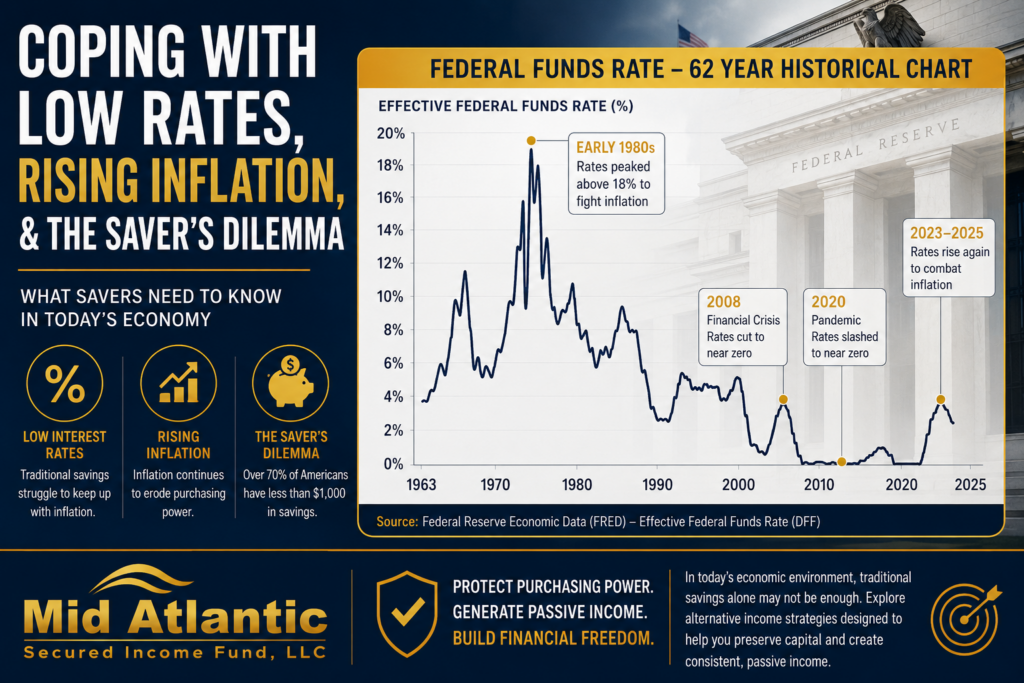
The Federal Reserve and other market observers have highlighted how higher-rate environments can strain borrowers and pressure property valuations in certain sectors. That backdrop tends to expose the difference between equity exposure and senior secured lending. Equity depends on what is left after expenses, debt service, and market conditions. Senior debt, especially first-position lending, starts from a more defensive place in the capital structure.
This does not eliminate risk. It does, however, change the nature of the risk. In private credit, the key questions become underwriting quality, collateral coverage, borrower strength, loan duration, and servicing discipline. For many accredited investors, those are more measurable variables than betting on future cap rates or exit valuations.
A conservatively managed private credit fund may also offer a feature many retirees and rollover IRA investors care about: current distributions tied to loan income rather than long-dated appreciation assumptions. When the strategy is centered on short-duration, asset-backed lending, investors may be able to target income with less exposure to the operational complexity of owning property outright.
What to evaluate before investing
The phrase passive income can make every structure sound interchangeable. They are not. The quality of the income matters as much as the yield.
Start with the collateral and capital stack. Is the investment backed by equity ownership in properties, mezzanine financing, preferred equity, or senior secured first-lien loans? The farther down the stack you go, the more loss exposure you typically assume.
Then look at underwriting standards. Conservative loan-to-value ratios, borrower due diligence, and local market knowledge are not marketing details. They are the foundation of principal protection. In real estate credit, a 65-75% loan-to-value approach generally provides more downside cushion than aggressive leverage structures, although the exact margin of safety still depends on asset quality and valuation discipline.
Track record matters as well. Investors should ask whether a manager has maintained distributions through multiple market environments, how defaults or workouts have been handled, and whether realized losses have occurred. Consistency is usually a better indicator of process quality than a single headline return number.
Liquidity deserves equal attention. Public vehicles offer more flexibility. Private funds often require longer holding periods and may limit redemptions. That does not make private structures inferior. It simply means the investment should match the investor’s time horizon and cash needs.
Finally, understand how income is generated. Is the fund relying on property sales, refinancing events, or appreciation to support returns? Or is it producing contractual income from borrowers making scheduled payments? For investors who want predictable cash flow, that difference is not minor.
Where retirement capital fits in
Many accredited investors exploring passive income real estate without owning property are not starting from scratch. They are reallocating idle cash, an old 401(k), or retirement assets into a more income-oriented strategy. That is why self-directed IRAs and rollover IRAs often come up in this conversation.
A retirement account that is heavily concentrated in public stocks and bonds may leave investors exposed to the exact issues they are trying to reduce: volatility, rate sensitivity, and inconsistent income. Real estate-backed private credit can offer a complementary sleeve inside a broader portfolio, particularly for those seeking alternative retirement income sources rooted in tangible collateral.
The right fit depends on liquidity needs, account structure, and overall asset allocation. But the broader point is clear: passive real estate exposure does not have to mean buying another rental or accepting public-market swings as the price of admission.
The trade-offs most articles skip
Passive investing always involves giving up something. With direct ownership, you may gain control but inherit operational burden. With public REITs, you gain liquidity but may accept market volatility. With private equity real estate funds, you gain access to larger projects but take on execution and valuation risk. With private credit, you may prioritize income and collateral protection, but you give up some of the upside that equity can capture in a strong market.
That is not a flaw. It is simply the structure doing what it was designed to do.
For an investor whose main objective is dependable income with a focus on downside discipline, giving up part of the upside may be entirely rational. In fact, it may be preferable. Many sophisticated investors are not trying to maximize every possible return. They are trying to build a portfolio that can withstand market stress while continuing to generate cash flow.
That is where manager selection becomes decisive. A disciplined private lender with conservative underwriting, strong servicing capabilities, and a clear capital-preservation-first mandate is operating very differently from a sponsor stretching for yield. Firms such as Mid Atlantic Secured Income Fund position this strategy around secured lending, short-duration loans, and investor protection rather than speculative real estate ownership.
Choosing the right structure for your goals
If you want full liquidity and can tolerate price swings, public REITs may fit. If you want appreciation potential and accept longer timelines and more variable outcomes, private real estate equity may deserve a place. If your priority is high current income, lower volatility, and security tied to real estate collateral, private credit is often the more direct path.
The most useful frame is not asking which vehicle is best in the abstract. It is asking which one is best for the job you need it to do.
For investors who want real estate exposure without becoming landlords, passive income starts with structure. The closer that structure is to contractual income, conservative underwriting, and strong collateral coverage, the more likely it is to support the kind of consistency that matters when income is meant to be used, not just reported on a statement.