
A self-directed IRA gets interesting the moment an investor stops asking, “What can I buy?” and starts asking, “What can produce dependable income without creating a second job?” That is the real question behind the best SDIRA investments for passive income. In practice, the right answer usually comes down to structure, collateral, liquidity, and how much operational risk you are willing to accept inside a retirement account.
For accredited investors, an SDIRA can open access to assets that sit outside the public markets, including real estate debt, private funds, and other alternative income strategies. But broader access does not automatically mean better outcomes. Some SDIRA investments offer attractive cash flow but require hands-on oversight. Others can deliver more predictable income because they are built around contractual payments and asset-backed underwriting rather than appreciation assumptions.
What makes an SDIRA investment suitable for passive income?
Passive income inside an SDIRA should be evaluated with more discipline than headline yield. The first issue is whether the cash flow is contractual or variable. A loan paying a stated interest rate is different from an equity investment that depends on occupancy, rent growth, or a future sale.
The second issue is operational burden. Directly owning property inside an SDIRA may sound straightforward, but it can involve custodial administration, expense handling, and strict prohibited transaction rules. By contrast, a professionally managed private credit fund or debt investment may provide income without the day-to-day friction of ownership.
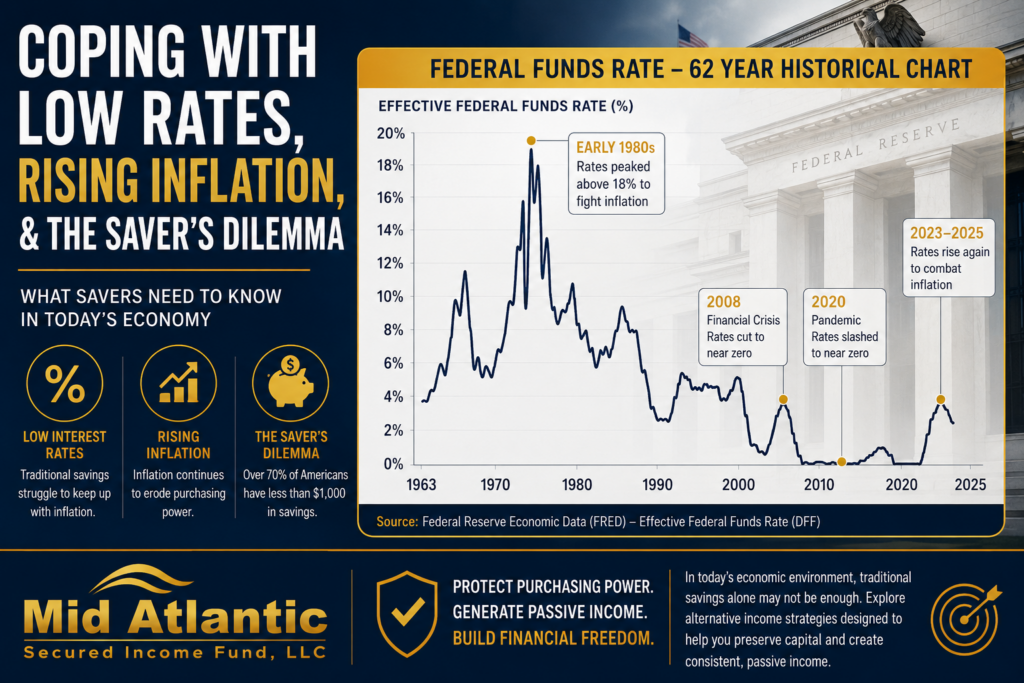
The third issue is downside protection. For retirement capital, collateral quality, loan-to-value discipline, borrower underwriting, and duration matter. The Federal Reserve and FDIC have both highlighted how interest-rate changes and market volatility can pressure traditional income vehicles. That is one reason many sophisticated investors look beyond conventional bonds and bank products when seeking current income.
1. Real estate-backed private credit
Among the best SDIRA investments for passive income, real estate-backed private credit deserves serious attention. This strategy typically involves lending against residential or commercial real estate, often through short-term first-position mortgage loans. Income is generated from interest payments rather than from trying to time a property sale.
For passive investors, the appeal is straightforward. Cash flow can be more predictable because it is based on loan terms, and risk can be moderated when loans are secured by tangible collateral and underwritten at conservative loan-to-value ratios. That does not eliminate risk, but it does create a different risk profile than equity-style real estate investing.
The details matter. First-lien position is generally stronger than junior liens. Shorter duration may reduce exposure to long-term market shifts. Conservative underwriting and asset servicing are not marketing phrases here – they are the mechanism that supports capital preservation. For accredited investors using SDIRAs, a private credit fund focused on collateralized lending can offer a cleaner passive-income structure than owning and operating real estate directly.
2. Private debt funds
Private debt funds can also be strong SDIRA candidates when the manager has a disciplined mandate and a clear income strategy. These funds may invest in secured business loans, bridge loans, specialty finance, or real estate credit. The primary benefit is diversification across multiple loans rather than exposure to a single borrower or project.
This can improve efficiency for retirement investors who want professional underwriting and servicing. Instead of evaluating one note at a time, the investor gains exposure to a managed portfolio. The trade-off is control. You are underwriting the manager as much as the underlying assets.
A prudent investor should look at asset selection standards, historical loss experience, distribution history, fee structure, and whether the fund relies on leverage. A fund that prioritizes current income and principal protection is very different from one stretching for yield in lower-quality credits.
3. Private mortgage notes
Holding private mortgage notes directly inside an SDIRA can generate attractive income, especially for investors comfortable reviewing loan files and collateral. In this structure, the IRA owns the note, and the borrower makes payments into the account.
The advantage is direct exposure to a secured cash-flowing instrument. The challenge is concentration and execution. If a single borrower defaults, the SDIRA may need to navigate workout or foreclosure procedures through the custodian and servicing framework. That is a meaningful difference from investing through a diversified fund.
For experienced investors, direct notes can make sense when underwriting is strong and collateral coverage is conservative. For many retirees and rollover IRA investors, however, note funds or managed credit strategies may offer a better balance of passivity and risk control.
4. Rental real estate held in an SDIRA
Direct rental real estate is often one of the first ideas investors consider, but it is not always one of the best passive options. Yes, rental property can produce income. Yes, real estate has historically offered inflation sensitivity through rising rents and tangible asset value. But inside an SDIRA, direct ownership comes with administrative and compliance complexity.
All expenses must generally be paid from the IRA, and income must flow back into the IRA. Personal use is prohibited. Certain interactions with disqualified persons can create serious compliance problems. Vacancy, repairs, leasing delays, and local market weakness can also interrupt cash flow. CoreLogic and the Mortgage Bankers Association regularly publish housing and mortgage data that underscore how local conditions and financing costs can materially affect property performance.
That does not make rental real estate a poor SDIRA asset. It simply makes it less passive than many investors expect. It tends to fit investors who want direct control and are comfortable with uneven income and operational oversight.
5. Real estate investment funds focused on income
An income-oriented real estate fund can solve some of the operational challenges of direct ownership. Instead of managing a property, the investor owns an interest in a professionally managed vehicle that may hold debt, income-producing properties, or a blend of both.
The key distinction is whether the strategy is debt-led or equity-led. Equity funds may offer income, but returns often depend on leasing success, appreciation, and eventual asset sales. Debt-oriented real estate funds are usually easier to model from an income perspective because the return stream is driven more by loan payments than by property-level business execution.
For SDIRA investors seeking lower-volatility income, that distinction matters. If your objective is dependable distributions rather than long-duration appreciation, debt-focused real estate funds may be the more aligned choice.
6. Tax liens and tax deeds
Tax liens and tax deeds are sometimes promoted as niche SDIRA opportunities. They can produce yield or discounted acquisition potential, but they are rarely simple. Rules vary by jurisdiction, timelines can be unpredictable, and outcomes often depend on local legal procedures.
These investments can work for specialized investors who understand the process and can source opportunities carefully. For most passive-income-oriented SDIRA investors, however, they are too operationally specific to rank near the top. The return may look attractive on paper, but the path to realizing it is not always smooth or scalable.
7. Farmland and other alternative real assets
Farmland, timberland, and similar real assets can have a place in a diversified retirement strategy, particularly for investors focused on inflation resistance and low correlation to public markets. Some structures can produce periodic income through leases or revenue-sharing arrangements.
Still, these assets are generally less straightforward for pure passive-income needs. Income may be seasonal, manager-dependent, or tied to commodity and regional factors. They can be useful diversifiers, but they are not usually the first answer for investors prioritizing regular distributions and shorter-duration risk.
How to evaluate the best SDIRA investments for passive income
The best opportunities usually score well on five criteria: income visibility, collateral quality, manager discipline, liquidity terms, and administrative simplicity. A high stated yield means less if the structure is opaque or the downside is poorly controlled.
This is where private real estate credit often stands out. Properly structured, it can combine contractual income, tangible collateral, shorter duration, and professional servicing. That combination is particularly relevant for accredited investors rolling over old retirement assets and looking for alternatives to low-yield fixed income or volatile equity exposure.
It also fits how many experienced investors think about retirement capital. They are not necessarily trying to maximize upside. They are trying to generate current income while controlling for avoidable risks. A first-position lending strategy backed by real estate can support that objective more directly than appreciation-driven alternatives.
Where many investors get it wrong
The most common mistake is confusing access with suitability. Just because an SDIRA can hold a broad range of assets does not mean every permissible asset belongs in a retirement income allocation. Another mistake is overemphasizing gross yield while underestimating manager risk, legal complexity, or cash-flow variability.
A disciplined approach starts with the role the asset is meant to play. If the goal is dependable passive income, the investment should be designed for income first. That typically favors secured lending and professionally managed credit strategies over highly operational equity deals.
For investors evaluating SDIRA options today, the strongest opportunities are often the ones with the least drama: shorter-duration assets, contractual payments, conservative underwriting, and real collateral behind the investment. That may not be the flashiest part of the alternative investment market, but for retirement income, boring can be a feature, not a flaw.
A helpful place to end is with the question that matters most: if this investment underperforms, what stands between your capital and a permanent loss? In an SDIRA built for passive income, the best answers usually involve collateral, underwriting discipline, and a manager whose first priority is protecting principal.