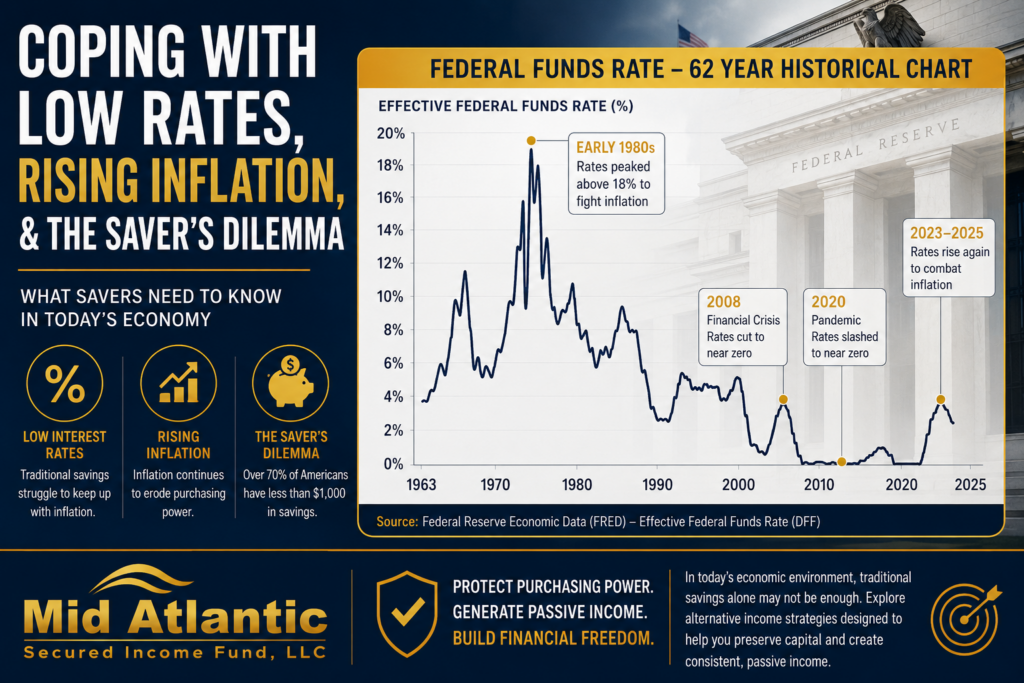

Over the past decade, alternative investments have evolved from niche institutional strategies into a mainstream allocation within sophisticated investment portfolios. As traditional stock and bond markets experience increasing volatility, higher interest-rate sensitivity, and changing macroeconomic conditions, many investors are reevaluating how they generate income, preserve capital, and diversify risk.
Institutional investors—including pension funds, endowments, family offices, and sovereign wealth funds—have steadily increased allocations to alternative assets in search of:
- diversification,
- downside protection,
- stable income,
- inflation resilience,
- and lower correlation to public markets.
According to BlackRock, global alternatives assets under management surpassed $16 trillion in recent years and are projected to continue expanding as investors seek more resilient portfolio structures in an increasingly uncertain economic environment.
For accredited investors and sophisticated investors, understanding alternative investments is no longer optional—it is becoming a core component of long-term wealth management and retirement income planning.
This guide explores:
- what alternative investments are,
- why investors allocate capital to them,
- how private credit and real estate debt funds work,
- key risks and benefits,
- and how alternative assets can complement traditional investment portfolios.
What Are Alternative Investments?
Definition of Alternative Investments
Alternative investments are financial assets that fall outside traditional publicly traded stocks, bonds, and cash equivalents.
They often include:
- private credit,
- real estate,
- hedge funds,
- private equity,
- infrastructure,
- commodities,
- venture capital,
- and other non-traditional asset classes.
Unlike traditional investments traded daily on public exchanges, many alternative investments are privately structured and less correlated to broader market volatility.
Why Alternative Investments Matter in 2026
The investment landscape has changed dramatically over the past several years.
Investors today face:
- elevated inflation uncertainty,
- rising geopolitical risks,
- interest-rate volatility,
- increased public market correlations,
- and persistent retirement income challenges.
Traditional 60/40 stock-and-bond portfolios have faced pressure during periods where both equities and fixed income decline simultaneously.
For example:
During 2022, U.S. Treasury bonds experienced one of the worst drawdowns in modern history as rapidly rising interest rates significantly impacted bond valuations. According to Bloomberg and Morningstar data, many traditional bond indexes experienced double-digit declines.
This environment accelerated investor interest in:
- private credit,
- real estate-backed lending,
- floating-rate investments,
- and asset-backed income strategies.
Types of Alternative Investments
Private Credit
Private credit refers to non-bank lending strategies where capital is deployed directly into privately negotiated loans.
Examples include:
- senior secured lending,
- bridge loans,
- real estate debt,
- receivables financing,
- and direct lending.
Private credit has become one of the fastest-growing alternative asset classes globally.
According to Preqin and BlackRock estimates, the private credit market has surpassed $1.7 trillion globally and continues expanding as banks reduce certain lending exposures.
Real Estate Investments
Real estate alternatives may include:
- multifamily housing,
- commercial real estate,
- industrial assets,
- self-storage,
- and real estate debt funds.
Many sophisticated investors favor real estate-backed investments because tangible collateral can provide additional downside protection compared to unsecured investments.
Private Equity
Private equity involves investing directly into private companies or acquiring controlling stakes in businesses.
These investments often target:
- operational improvements,
- long-term value creation,
- and eventual exits through sales or IPOs.
Hedge Funds
Hedge funds utilize a wide range of investment strategies including:
- long/short equity,
- macroeconomic trading,
- arbitrage,
- and derivatives strategies.
These investments are typically available only to accredited or institutional investors.
Why Sophisticated Investors Allocate to Alternative Investments
Diversification Benefits
One of the primary reasons investors use alternative investments is diversification.
Alternative assets often exhibit:
- lower correlation to public equity markets,
- unique return drivers,
- and differentiated risk profiles.
This can help reduce overall portfolio volatility over time.
Income Generation
Many alternative investment strategies are designed specifically for income-focused investors.
Private credit and real estate debt funds may generate:
- recurring interest payments,
- monthly or quarterly distributions,
- and potentially more predictable income streams than traditional dividend-paying equities.
For retirees and income-focused investors, this may help address retirement cash-flow needs.
Inflation Resilience
Certain alternative assets may offer protection during inflationary periods.
Examples include:
- floating-rate private loans,
- real estate-backed lending,
- and income-producing real estate assets.
These strategies may adjust more dynamically to changing interest-rate environments than traditional fixed-rate bonds.
Understanding Private Credit Investing
What Is Private Credit?
Private credit involves privately negotiated loans made outside traditional banking systems.
These loans are commonly:
- collateralized,
- senior secured,
- and structured with negotiated terms.
Borrowers may include:
- real estate developers,
- operating businesses,
- or commercial borrowers.
How Private Credit Works
Private credit investments generally involve:
- underwriting the borrower,
- evaluating collateral,
- structuring loan terms,
- collecting interest payments,
- managing repayment risk.
Unlike public bonds traded daily on exchanges, private loans are typically held until maturity.
This can reduce mark-to-market volatility but may reduce liquidity.
Senior Secured Lending Explained
What Is Senior Secured Lending?
Senior secured lending refers to loans backed by collateral and positioned first in repayment priority.
Collateral may include:
- real estate,
- receivables,
- equipment,
- or other assets.
In the event of default, senior secured lenders generally have stronger legal claims than subordinate creditors or equity holders.
This downside-protection framework is one reason institutional investors increasingly allocate capital to private credit.
Real Estate Debt Funds Explained
What Is a Real Estate Debt Fund?
A real estate debt fund pools investor capital to originate or participate in real estate-backed loans.
Common loan types include:
- bridge loans,
- construction loans,
- acquisition financing,
- stabilized asset lending,
- and short-duration commercial lending.
Unlike equity real estate investments, debt funds focus primarily on:
- income generation,
- collateral protection,
- and contractual interest payments.
Alternative Investments vs Traditional Fixed Income
|
Feature |
Traditional Bonds |
Private Credit |
|---|---|---|
|
Daily Market Pricing |
Yes |
Typically No |
|
Interest Rate Sensitivity |
High |
Moderate |
|
Collateral Backing |
Often Unsecured |
Frequently Asset-Backed |
|
Yield Potential |
Lower |
Potentially Higher |
|
Liquidity |
Higher |
Lower |
|
Volatility |
Market-Driven |
Less Mark-to-Market Exposure |
Risks of Alternative Investments
Alternative investments are not risk-free.
Key risks may include:
- illiquidity,
- borrower default,
- economic downturns,
- real estate market declines,
- underwriting errors,
- and interest-rate changes.
Sophisticated investors should evaluate:
- management experience,
- collateral quality,
- underwriting discipline,
- portfolio diversification,
- and transparency.
Accredited Investors and Alternative Investments
What Is an Accredited Investor?
An accredited investor is generally defined by the SEC as an individual meeting certain income, net worth, or professional qualification requirements.
Many private investment opportunities are limited to accredited investors due to securities regulations.
Why Accredited Investors Use Alternatives
Sophisticated investors often seek:
- portfolio diversification,
- inflation mitigation,
- stable income generation,
- and access to non-public opportunities.
Alternative investments may complement traditional equity and bond allocations when structured prudently.
Retirement Income and Alternative Investments
Many retirees face a growing challenge:
Generating reliable income without taking excessive market risk.
Alternative income strategies may help supplement:
- dividend portfolios,
- traditional fixed income,
- and retirement accounts.
This is one reason SDIRA investing and private credit strategies continue gaining popularity among retirement-focused investors.
For additional retirement insights, explore:
- /ira-investing/
- /knowledge-hub/
- /secured-lending-investments/
Atlanta and Southeast Market Opportunity
The Southeast United States—particularly Atlanta—has experienced significant economic and population growth over the past decade.
According to U.S. Census Bureau estimates:
- Metro Atlanta continues ranking among the fastest-growing metropolitan areas in the United States.
- Georgia remains a major business relocation destination.
- Infrastructure and housing demand continue expanding.
These macroeconomic trends can create opportunities within:
- real estate lending,
- multifamily development,
- and regional private credit markets.
How Institutional Investors Think About Alternatives
Institutional portfolio construction increasingly focuses on:
- diversification,
- downside management,
- income durability,
- and risk-adjusted returns.
Large institutions now allocate substantial portions of portfolios toward:
- private credit,
- infrastructure,
- private equity,
- and real assets.
Sophisticated investors are increasingly adopting similar frameworks.
The Future of Alternative Investments
Several macroeconomic trends continue supporting growth in alternative investments:
- aging demographics,
- retirement income demand,
- tighter bank lending standards,
- inflation concerns,
- and institutional demand for private credit.
BlackRock, Apollo, KKR, and other major asset managers continue emphasizing private markets as a long-term structural investment trend.
Final Thoughts
Alternative investments are becoming increasingly important within modern portfolio construction.
For sophisticated investors seeking:
- diversification,
- income generation,
- downside protection,
- and lower correlation to public markets,
private credit and real estate-backed lending strategies may offer compelling long-term opportunities when approached with disciplined underwriting and risk management.
As always, investors should evaluate:
- liquidity needs,
- risk tolerance,
- investment objectives,
- and portfolio allocation strategies carefully.
The Mid Atlantic Secured Income Fund focuses on:
- asset-backed lending,
- senior secured structures,
- disciplined underwriting,
- and income-focused investing strategies.
To learn more, explore:
- https://themidatlanticfund.com/knowledge-hub/
- https://themidatlanticfund.com/ira-investing-with-mid-atlantic-fund/
- https://themidatlanticfund.com/why-invest-in-mid-atlantic-fund/
- https://themidatlanticfund.com/passive-income-investment-calculator/
FAQ Section
What are alternative investments?
Alternative investments are assets outside traditional publicly traded stocks and bonds, including private credit, real estate, hedge funds, and private equity.
Are alternative investments risky?
Yes. Alternative investments carry risks including illiquidity, borrower default, market declines, and economic downturns. Proper diversification and underwriting are critical.
What is private credit investing?
Private credit investing involves lending capital directly to borrowers outside traditional banking systems, often through asset-backed or senior secured loans.
How do real estate debt funds work?
Real estate debt funds pool investor capital to originate or participate in loans backed by real estate collateral.
Why do sophisticated investors use alternative investments?
Many sophisticated investors use alternatives for diversification, income generation, inflation resilience, and reduced correlation to public markets.